
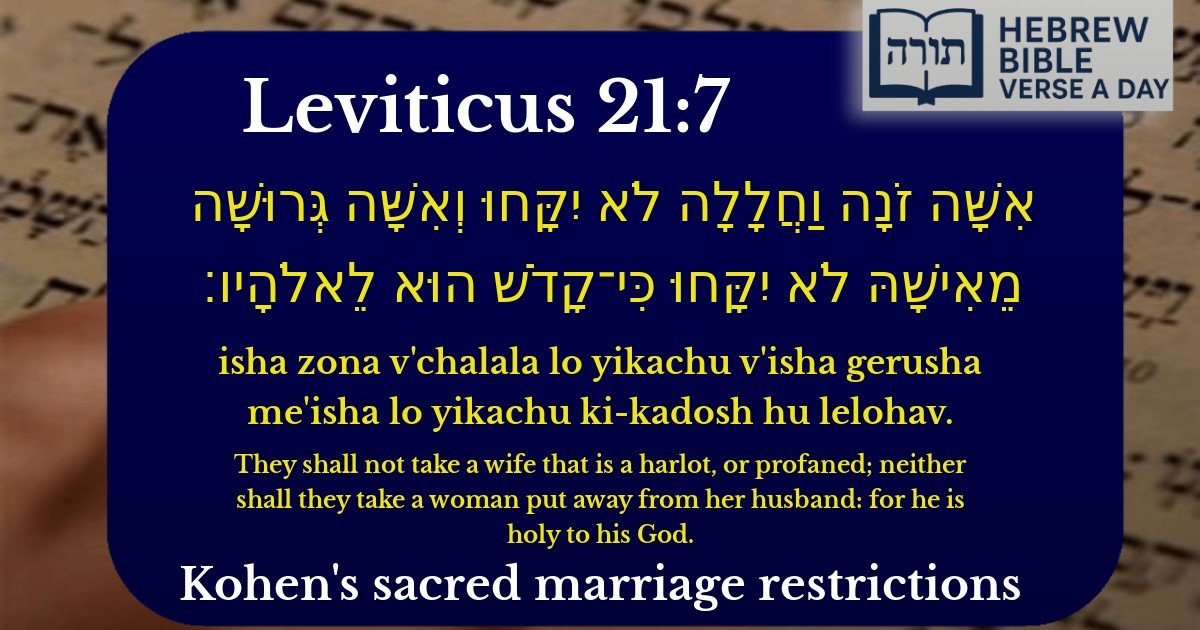

Leviticus 21:7 - Kohen's sacred marriage restrictions

Leviticus 21:7 - ויקרא 21:7

Hebrew Text

אִשָּׁה זֹנָה וַחֲלָלָה לֹא יִקָּחוּ וְאִשָּׁה גְּרוּשָׁה מֵאִישָׁהּ לֹא יִקָּחוּ כִּי־קָדֹשׁ הוּא לֵאלֹהָיו׃

English Translation

They shall not take a wife that is a harlot, or profaned; neither shall they take a woman put away from her husband: for he is holy to his God.

Transliteration

Isha zona v'chalala lo yikachu v'isha gerusha me'isha lo yikachu ki-kadosh hu lelohav.

Hebrew Leining Text

אִשָּׁ֨ה זֹנָ֤ה וַחֲלָלָה֙ לֹ֣א יִקָּ֔חוּ וְאִשָּׁ֛ה גְּרוּשָׁ֥ה מֵאִישָׁ֖הּ לֹ֣א יִקָּ֑חוּ כִּֽי־קָדֹ֥שׁ ה֖וּא לֵאלֹהָֽיו׃

🎵 Listen to leining

Parasha Commentary

Context and Source

The verse (Vayikra 21:7) is part of the Torah's laws concerning the sanctity of kohanim (priests). It prohibits kohanim from marrying certain categories of women due to their elevated holiness. The restrictions apply specifically to male kohanim, as their lineage and marital status impact their service in the Mishkan (Tabernacle) and later the Beit HaMikdash (Temple).

Categories of Prohibited Women

  • אִשָּׁה זֹנָה (a harlot): Rashi explains this refers to a woman who engaged in forbidden relations, even once (based on Sifra). Rambam (Hilchot Issurei Bi'ah 18:1) defines it as a woman who had relations with a man forbidden to her, such as a mamzer or non-Jew.
  • וַחֲלָלָה (or profaned): A chalalah is a woman born from a union that disqualified a kohen, such as the daughter of a kohen who married a divorcee (Rashi, based on Vayikra 21:14). The Talmud (Kiddushin 77a) elaborates on the laws of chalalim.
  • אִשָּׁה גְּרוּשָׁה (a woman put away from her husband): This refers to a divorcee. The Talmud (Yevamot 59b) clarifies that this applies even if she was divorced after betrothal (erusin) but before marriage (nisu'in).

Reason for the Prohibition

The verse concludes with the reason: "כִּי־קָדֹשׁ הוּא לֵאלֹהָיו" ("for he is holy to his God"). The kohen is held to a higher standard of sanctity, as his role involves divine service. The Rambam (Hilchot Issurei Bi'ah 17:1) emphasizes that these laws preserve the purity of the priestly line and their unique spiritual status.

Exceptions and Additional Details

  • The prohibition applies only to male kohanim; female kohanot are permitted to marry divorcees or chalalim (Talmud, Kiddushin 78a).
  • A kohen gadol (high priest) has additional restrictions (Vayikra 21:13-14) and may not marry even a widow.
  • The Midrash (Torat Kohanim) connects this law to the broader theme of maintaining the sanctity of the priesthood, linking it to the honor of the Mishkan and the divine presence.

📚 Talmud Citations

This verse is quoted in the Talmud.

📖 Yevamot 61b
The verse is discussed in the context of the laws regarding whom a priest is permitted to marry, emphasizing the prohibition against marrying a harlot or a divorced woman.
📖 Kiddushin 77a
The verse is referenced in a discussion about the sanctity of priests and the restrictions on their marriages, particularly the prohibition against marrying certain women.

Frequently Asked Questions

Q: What does Leviticus 21:7 mean?
A: Leviticus 21:7 states that a Kohen (Jewish priest) is forbidden from marrying a woman who is a zonah (often translated as a harlot or promiscuous woman), a chalalah (a woman profaned by improper relations with a Kohen), or a divorcee. This is because a Kohen must maintain a higher level of holiness (kedushah) in his personal life, as he serves in the Temple.
Q: Why is this restriction important for Kohanim?
A: The restriction is important because Kohanim have a unique role in serving Hashem in the Temple and must uphold a higher standard of sanctity. The Torah emphasizes this by stating, 'for he is holy to his God.' Rashi explains that this holiness extends to his family life, ensuring that his lineage remains pure and fitting for sacred service.
Q: What is the difference between a zonah and a chalalah?
A: A zonah refers to a woman who has engaged in forbidden relations (such as promiscuity or relations with a man she cannot marry). A chalalah, according to Rashi and the Talmud (Yevamot 69a), is a woman born from a forbidden union involving a Kohen (e.g., the daughter of a Kohen who married a divorcee). Both are prohibited to Kohanim to preserve their sanctity.
Q: Does this law apply to all Jewish men or only Kohanim?
A: This law applies specifically to Kohanim (priests). While all Jews must follow the Torah's laws of marriage and morality, Kohanim have additional restrictions due to their elevated role in the Temple service. The Rambam (Hilchot Issurei Bi'ah 17:1) clarifies that these marital limitations are unique to the priestly class.
Q: How does this verse apply today when there is no Temple?
A: Even though the Temple is not standing, Kohanim still maintain their sanctity and are bound by these laws. The Shulchan Aruch (Even HaEzer 6:1) rules that these restrictions remain in effect, and a Kohen who marries a zonah, chalalah, or divorcee violates a Torah prohibition. This preserves the spiritual distinction of the priestly lineage for future service.