

Join Our Newsletter To Be Informed When New Videos Are Posted
Hebrew Text
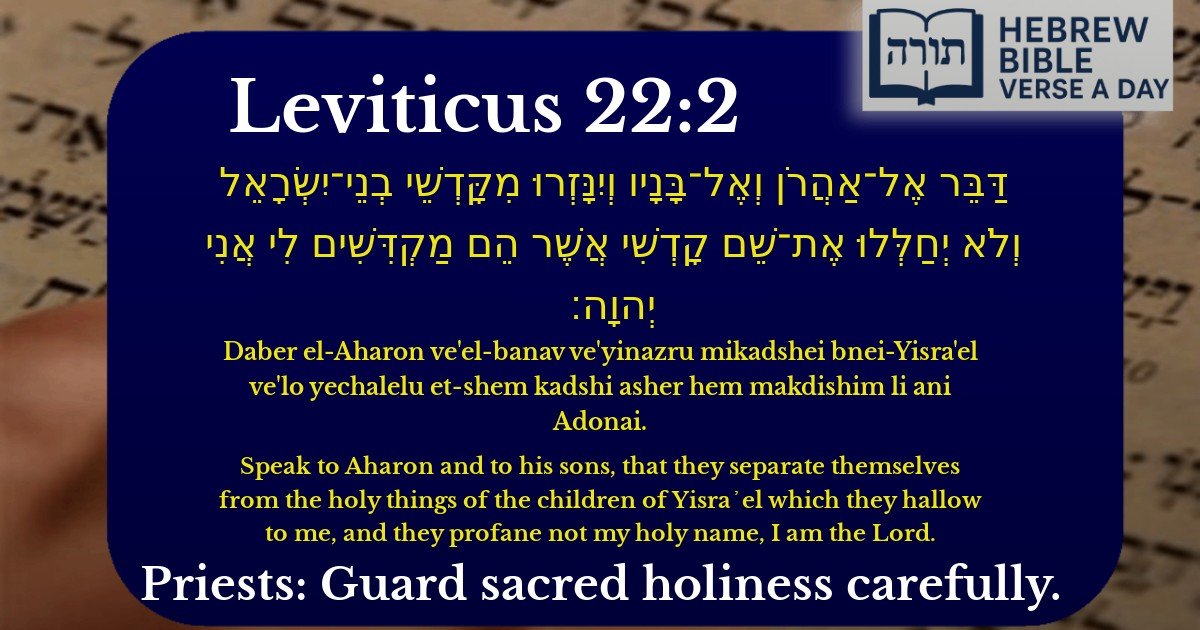
דַּבֵּר אֶל־אַהֲרֹן וְאֶל־בָּנָיו וְיִנָּזְרוּ מִקָּדְשֵׁי בְנֵי־יִשְׂרָאֵל וְלֹא יְחַלְּלוּ אֶת־שֵׁם קָדְשִׁי אֲשֶׁר הֵם מַקְדִּשִׁים לִי אֲנִי יְהוָה׃
English Translation
Speak to Aharon and to his sons, that they separate themselves from the holy things of the children of Yisra᾽el which they hallow to me, and they profane not my holy name, I am the Lord.
Transliteration
Daber el-Aharon ve'el-banav ve'yinazru mikadshei bnei-Yisra'el ve'lo yechalelu et-shem kadshi asher hem makdishim li ani Adonai.
Hebrew Leining Text
דַּבֵּ֨ר אֶֽל־אַהֲרֹ֜ן וְאֶל־בָּנָ֗יו וְיִנָּֽזְרוּ֙ מִקׇּדְשֵׁ֣י בְנֵֽי־יִשְׂרָאֵ֔ל וְלֹ֥א יְחַלְּל֖וּ אֶת־שֵׁ֣ם קׇדְשִׁ֑י אֲשֶׁ֨ר הֵ֧ם מַקְדִּשִׁ֛ים לִ֖י אֲנִ֥י יְהֹוָֽה׃
🎵 Listen to leining
Parasha Commentary
📚 Talmud Citations
This verse is quoted in the Talmud.
📖 Yevamot 86b
The verse is referenced in a discussion about the sanctity of the priests and their obligations to avoid profaning holy things.
📖 Pesachim 22b
The verse is cited in the context of discussing the laws of sanctity and the prohibitions against profaning holy items.
Context and Overview
The verse (Vayikra 22:2) is part of a larger section addressing the kohanim (priests) regarding their obligations and restrictions concerning the sacred offerings (kodshim) brought by Bnei Yisrael. The Torah emphasizes the need for the priests to maintain a high level of sanctity and avoid any actions that might desecrate Hashem's holy name.
Rashi's Explanation
Rashi explains the phrase "וְיִנָּזְרוּ מִקָּדְשֵׁי בְנֵי־יִשְׂרָאֵל" ("that they separate themselves from the holy things of Bnei Yisrael") as a warning to the priests to distance themselves from partaking of the sacred offerings while in a state of ritual impurity (tumah). He cites the Talmud (Pesachim 82b), which derives from this verse that a priest who is impure must abstain from eating terumah (sacred food).
Rambam's Perspective
Rambam (Hilchos Bi'as HaMikdash 1:1) elaborates that this commandment applies not only to physical impurity but also to spiritual and moral shortcomings. The priests must maintain a state of holiness in both action and thought to properly serve in the Mishkan or Beit HaMikdash.
Midrashic Interpretation
The Midrash (Toras Kohanim 22:3) connects this verse to the broader concept of חילול השם (desecration of Hashem's name). It teaches that if a priest improperly handles the sacred offerings, it reflects poorly on the entire nation and diminishes the sanctity of Hashem's name. The phrase "אֲנִי יְהוָה" ("I am the Lord") underscores that this commandment is rooted in divine authority.
Key Halachic Implications
Chassidic Insight
The Sfas Emes (Emor 5631) teaches that this verse also alludes to the idea that every Jew must "separate" from mundane distractions to elevate their divine service. Just as the priests must guard their sanctity, every individual has a role in sanctifying Hashem's name through their actions.