Frequently Asked Questions
Q: What does Leviticus 22:24 mean?
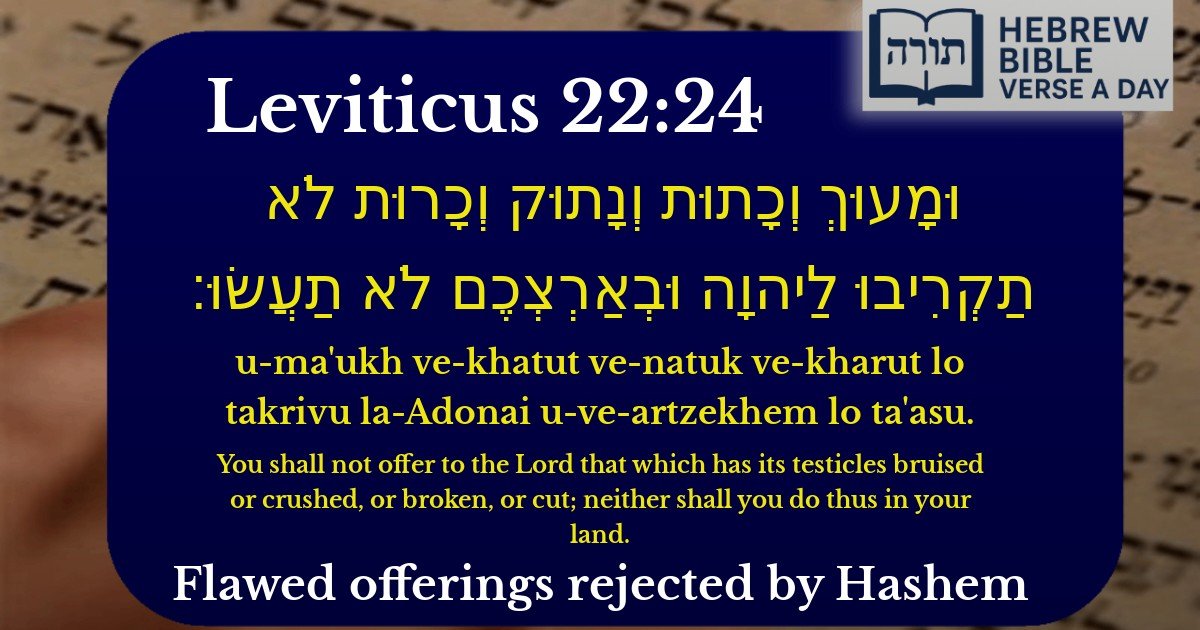
A: Leviticus 22:24 prohibits bringing an animal with damaged or removed testicles as a sacrifice to Hashem. This includes animals that are bruised, crushed, broken, or cut in that area. The verse also extends this prohibition to not doing this to animals in general within the land of Israel. Rashi explains that this teaches us that sacrifices must be physically perfect (tamim) to be acceptable.
Q: Why is this verse important in Judaism?
A: This verse is important because it emphasizes the concept of bringing only the best and most complete offerings to Hashem. The Rambam (Hilchot Issurei Mizbeach 1:1) explains that just as we must serve G-d with our complete hearts, our sacrifices must also be physically whole. This teaches us the value of giving our best in divine service and in all aspects of life.
Q: Does this law apply to animals we eat today?
A: While the specific context is about sacrifices, the verse concludes 'nor shall you do this in your land,' which the Talmud (Chullin 77a) understands as prohibiting castration of any animal (with certain exceptions for health reasons). This applies even to animals not being used for sacrifices. The Shulchan Aruch (Yoreh De'ah 292) codifies this as halacha for all times.
Q: What lesson can we learn from this verse today?
A: The Midrash (Vayikra Rabbah 27:5) teaches that just as we shouldn't bring damaged offerings, we shouldn't approach prayer or mitzvot with a 'damaged' or incomplete heart. The verse teaches us the importance of wholeness and integrity in our relationship with Hashem - we should strive to serve with our complete selves, not holding anything back.
Q: Why does the Torah specify different types of damage (bruised, crushed, etc.)?
A: Rashi explains that the Torah lists four types of damage to cover all possible ways the reproductive organs could be impaired. The Talmud (Chullin 76b) discusses how each term refers to different types of injuries - 'ma'uch' (bruised) refers to internal damage, 'katut' (crushed) is external damage, 'natuk' (torn) means partially removed, and 'karut' (cut) means completely removed. This shows the Torah's precision in halacha.


Prohibition of Blemished Offerings
The verse (Vayikra 22:24) prohibits bringing offerings to Hashem that have physical defects, specifically mentioning animals with damaged or removed testicles. This is part of the broader Torah law requiring sacrificial animals to be tamim (unblemished). Rashi explains that this verse teaches us that not only are such animals invalid for sacrifices, but it is also forbidden to intentionally inflict these blemishes upon animals in one's land, even for non-sacrificial purposes.
Halachic Implications
Rambam (Hilchos Issurei Mizbeach 1:14) rules that this prohibition applies both to animals designated for sacrifice and to ordinary livestock. The Sefer HaChinuch (Mitzvah 291) elaborates that this teaches us to respect all of Hashem's creations and avoid unnecessary cruelty to animals.
Philosophical Significance
The Kli Yakar notes that the reproductive organs symbolize continuity and wholeness. Offering damaged animals would represent an inappropriate symbol before Hashem. The prohibition against doing this "in your land" teaches that our treatment of animals reflects our spiritual values in all aspects of life.
Contemporary Application
While the Temple service is currently suspended, the principle of avoiding unnecessary harm to animals remains relevant. The Chafetz Chaim (in Ahavat Chesed) derives from this verse the importance of treating all creatures with compassion, as cruelty to animals reflects poorly on one's character.