

Join Our Newsletter To Be Informed When New Videos Are Posted
Hebrew Text
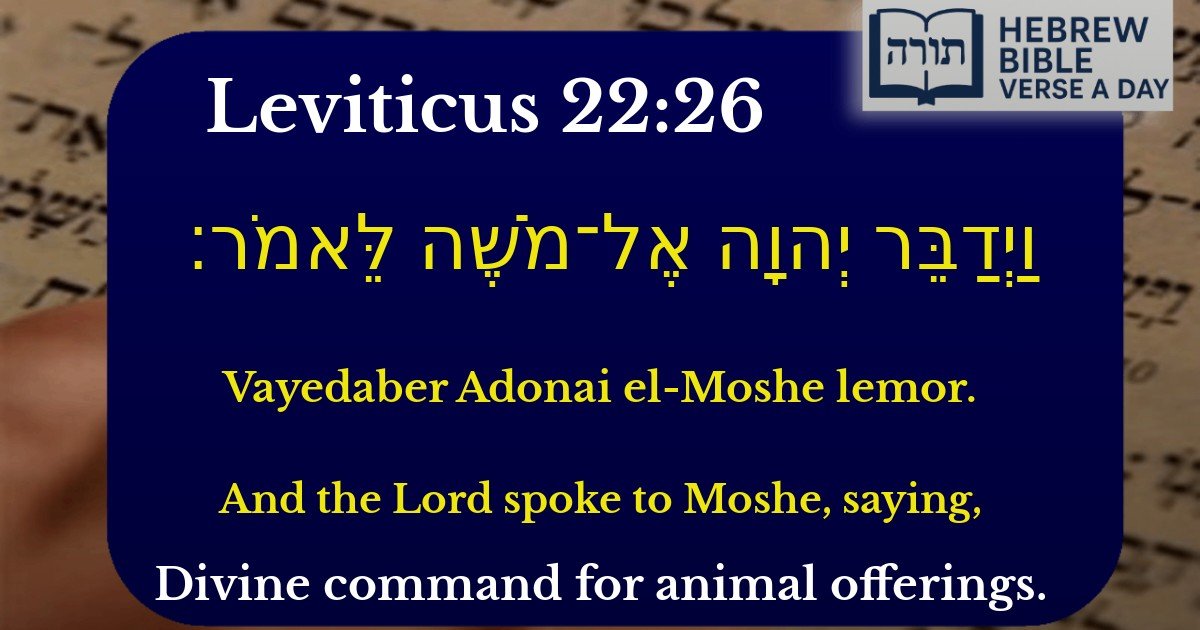
וַיְדַבֵּר יְהוָה אֶל־מֹשֶׁה לֵּאמֹר׃
English Translation
And the Lord spoke to Moshe, saying,
Transliteration
Vayedaber Adonai el-Moshe lemor.
Hebrew Leining Text
וַיְדַבֵּ֥ר יְהֹוָ֖ה אֶל־מֹשֶׁ֥ה לֵּאמֹֽר׃
🎵 Listen to leining
Parasha Commentary
📚 Talmud Citations
This verse is not quoted in the Talmud.
The Divine Communication to Moshe
The verse "וַיְדַבֵּר יְהוָה אֶל־מֹשֶׁה לֵּאמֹר" ("And the Lord spoke to Moshe, saying") appears frequently in the Torah, introducing direct communication from Hashem to Moshe Rabbeinu. Rashi (Shemot 6:2) notes that this phrasing emphasizes the clarity and directness of Hashem's words, distinguishing it from other forms of prophecy, which may come through dreams or visions (see Bamidbar 12:6-8).
The Significance of "לֵּאמֹר"
The word "לֵּאמֹר" ("saying") is interpreted by the Midrash (Shemot Rabbah 28:6) as an instruction for Moshe to transmit the message to Bnei Yisrael. Rambam (Hilchos Yesodei HaTorah 7:6) explains that Moshe's role as the intermediary was unique—his prophecy was perfectly clear, without any distortion, making him the definitive conduit for Hashem's commandments.
The Unique Relationship Between Hashem and Moshe
The Talmud (Yevamot 49b) teaches that Moshe was the only prophet to experience prophecy "פֶּה אֶל פֶּה" ("mouth to mouth"), a direct and unfiltered dialogue with Hashem. This verse exemplifies that intimacy, as it introduces countless commandments and teachings given to Moshe for Klal Yisrael.
The Ramban (Shemot 6:2) adds that this phrasing reinforces Moshe's unparalleled status as the greatest of all prophets, through whom the Torah was given to Am Yisrael for all generations.