

Join Our Newsletter To Be Informed When New Videos Are Posted
Hebrew Text
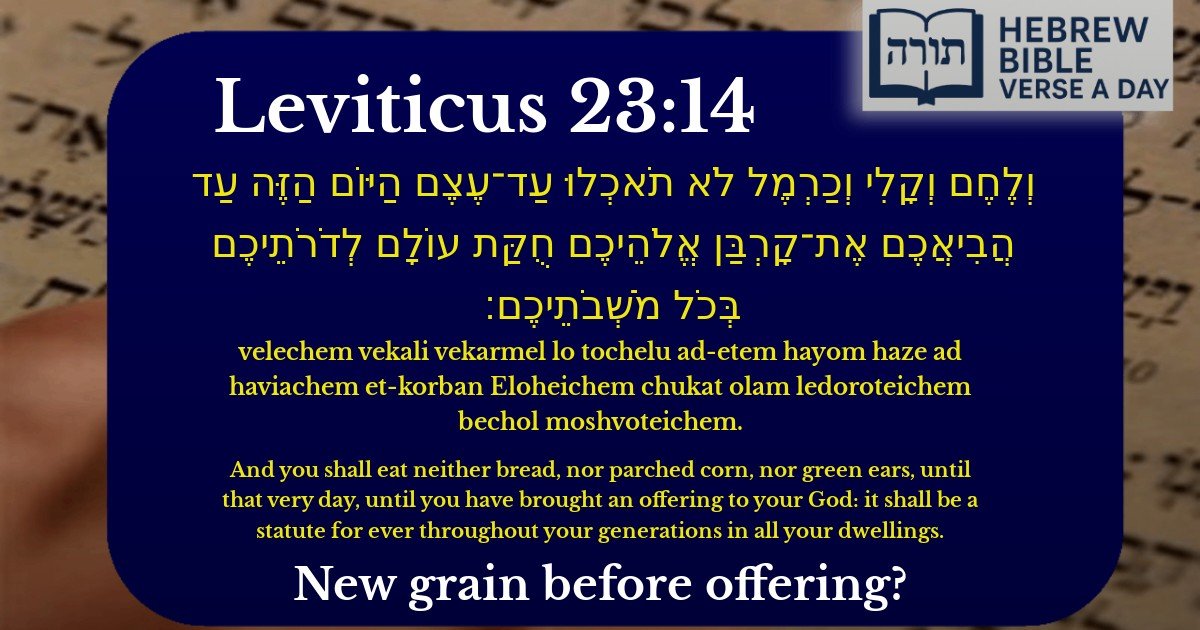
וְלֶחֶם וְקָלִי וְכַרְמֶל לֹא תֹאכְלוּ עַד־עֶצֶם הַיּוֹם הַזֶּה עַד הֲבִיאֲכֶם אֶת־קָרְבַּן אֱלֹהֵיכֶם חֻקַּת עוֹלָם לְדֹרֹתֵיכֶם בְּכֹל מֹשְׁבֹתֵיכֶם׃
English Translation
And you shall eat neither bread, nor parched corn, nor green ears, until that very day, until you have brought an offering to your God: it shall be a statute for ever throughout your generations in all your dwellings.
Transliteration
Velechem vekali vekarmel lo tochelu ad-etem hayom haze ad haviachem et-korban Eloheichem chukat olam ledoroteichem bechol moshvoteichem.
Hebrew Leining Text
וְלֶ֩חֶם֩ וְקָלִ֨י וְכַרְמֶ֜ל לֹ֣א תֹֽאכְל֗וּ עַד־עֶ֙צֶם֙ הַיּ֣וֹם הַזֶּ֔ה עַ֚ד הֲבִ֣יאֲכֶ֔ם אֶת־קׇרְבַּ֖ן אֱלֹהֵיכֶ֑ם חֻקַּ֤ת עוֹלָם֙ לְדֹרֹ֣תֵיכֶ֔ם בְּכֹ֖ל מֹשְׁבֹֽתֵיכֶֽם׃ {ס}
🎵 Listen to leining
Parasha Commentary
📚 Talmud Citations
This verse is quoted in the Talmud.
📖 Menachot 68a
The verse is discussed in the context of the laws regarding the Omer offering and the prohibition of eating new grain before the offering is brought.
📖 Kiddushin 37b
The verse is referenced in a discussion about the applicability of certain commandments inside and outside the Land of Israel.
Context and Source
The verse (Vayikra 23:14) appears in the Torah portion discussing the laws of the Omer offering, which is brought on the second day of Pesach. This offering marks the beginning of the counting of the Omer, leading up to Shavuot. The prohibition against eating new grain (chadash) before the Omer offering is a central halachic principle.
Prohibited Foods
Timing of the Prohibition
The Sifra emphasizes that the prohibition lasts "until that very day" - meaning until the Omer offering is brought on the 16th of Nissan. The Mishnah in Menachot (10:5) details how the offering permits the new grain for consumption.
Halachic Ramifications
Rambam (Hilchos Ma'achalos Asuros 10:2) rules that this prohibition applies:
Philosophical Significance
The Kli Yakar offers a deeper understanding: By requiring us to first bring an offering to Hashem before partaking of the new grain, the Torah teaches us that our material sustenance is secondary to our spiritual service. The Omer offering represents our acknowledgment that all bounty comes from Hashem.
Eternal Statute
The phrase "חֻקַּת עוֹלָם" (statute forever) indicates this mitzvah applies in all times. The Talmud (Kiddushin 37a) derives from "in all your dwellings" that these laws apply both in and outside of Eretz Yisrael after the Omer offering was brought in the Beit Hamikdash.