

Join Our Newsletter To Be Informed When New Videos Are Posted
Hebrew Text
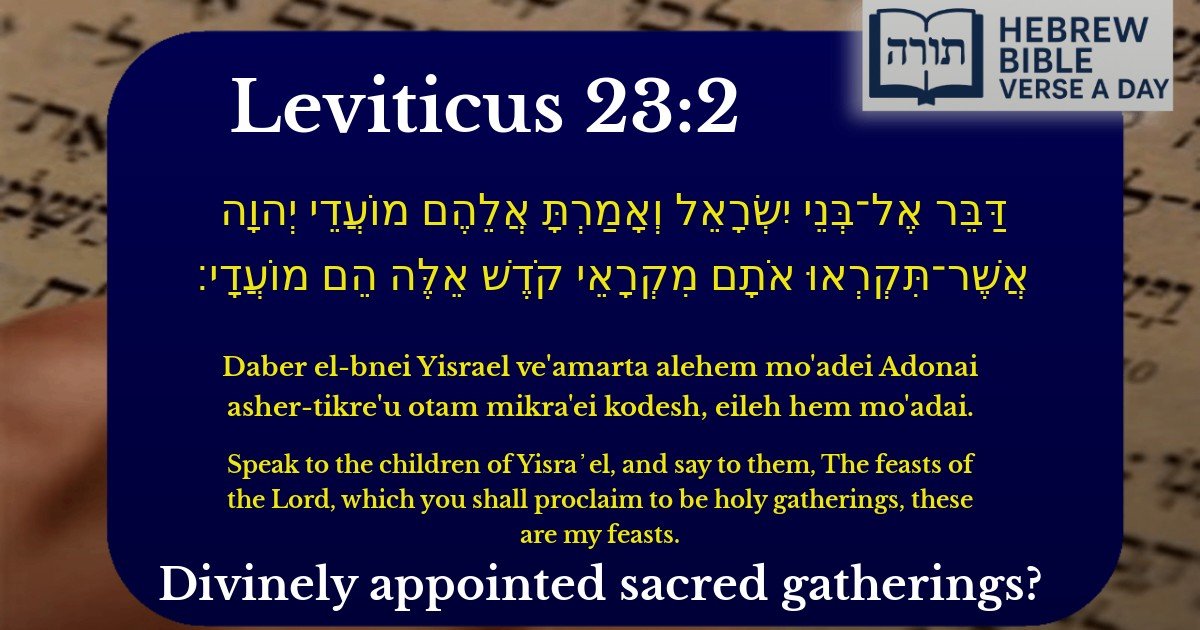
דַּבֵּר אֶל־בְּנֵי יִשְׂרָאֵל וְאָמַרְתָּ אֲלֵהֶם מוֹעֲדֵי יְהוָה אֲשֶׁר־תִּקְרְאוּ אֹתָם מִקְרָאֵי קֹדֶשׁ אֵלֶּה הֵם מוֹעֲדָי׃
English Translation
Speak to the children of Yisra᾽el, and say to them, The feasts of the Lord, which you shall proclaim to be holy gatherings, these are my feasts.
Transliteration
Daber el-bnei Yisrael ve'amarta alehem mo'adei Adonai asher-tikre'u otam mikra'ei kodesh, eileh hem mo'adai.
Hebrew Leining Text
דַּבֵּ֞ר אֶל־בְּנֵ֤י יִשְׂרָאֵל֙ וְאָמַרְתָּ֣ אֲלֵהֶ֔ם מוֹעֲדֵ֣י יְהֹוָ֔ה אֲשֶׁר־תִּקְרְא֥וּ אֹתָ֖ם מִקְרָאֵ֣י קֹ֑דֶשׁ אֵ֥לֶּה הֵ֖ם מוֹעֲדָֽי׃
🎵 Listen to leining
Parasha Commentary
📚 Talmud Citations
This verse is quoted in the Talmud.
📖 Megillah 32b
The verse is referenced in the discussion about the sanctity of the appointed times (mo'adim) and the importance of proclaiming them.
📖 Menachot 65b
The verse is cited in the context of discussing the proper times for offering sacrifices and the proclamation of holy gatherings.
Introduction to the Mo'adim
The verse (Vayikra 23:2) introduces the concept of Mo'adim—the appointed times of Hashem that Bnei Yisrael are commanded to sanctify. Rashi explains that the term Mo'adim refers to the festivals (Pesach, Shavuot, Sukkot, etc.), which are designated as sacred gatherings. The phrase "asher tikre'u otam" ("which you shall proclaim") emphasizes the role of human agency in sanctifying these times, as the Jewish court (Beit Din) declares the new month, thereby setting the dates for the festivals.
The Role of Beit Din in Sanctification
Rambam (Hilchot Kiddush HaChodesh 1:1-2) elaborates that the sanctification of the months and festivals depends on the declaration of the Sanhedrin or a qualified Jewish court. This underscores the partnership between divine commandment and human action in establishing sacred time. The Sforno adds that the phrase "mikra'ei kodesh" ("holy gatherings") implies that these days are set aside for spiritual elevation through prayer, Torah study, and communal worship.
The Significance of "These Are My Feasts"
The concluding phrase "eileh hem mo'adai" ("these are My feasts") teaches, as the Midrash (Vayikra Rabbah 28:1) explains, that these festivals belong to Hashem, yet He grants them to Bnei Yisrael as a gift. The Kli Yakar notes that the festivals are not merely commemorations of historical events but are imbued with ongoing divine presence, offering opportunities for renewed closeness to Hashem each year.
Key Themes in the Verse