Frequently Asked Questions
Q: What is the Festival of Sukkot?
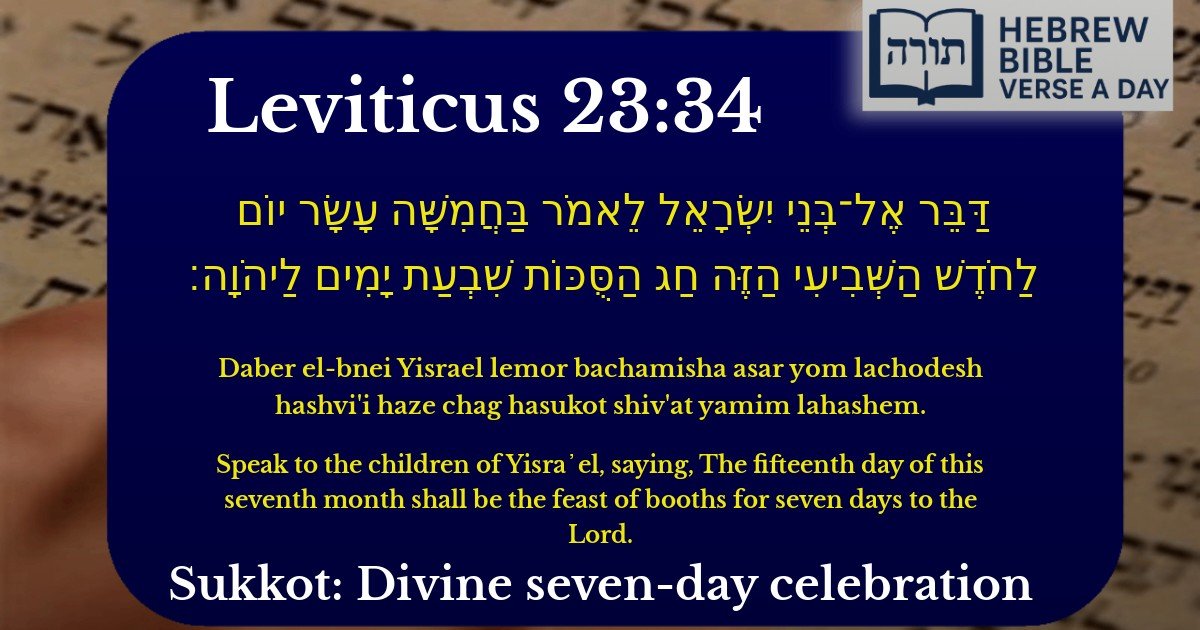
A: Sukkot, also called the Festival of Booths, is a seven-day holiday that begins on the 15th day of the Hebrew month of Tishrei. It commemorates the protection Hashem provided for the Israelites during their 40 years in the wilderness after leaving Egypt, when they lived in temporary shelters (sukkot). The verse in Leviticus 23:34 commands us to observe this holiday.
Q: Why do we celebrate Sukkot in the seventh month?
A: The seventh month (Tishrei) is significant because it follows the High Holy Days of Rosh Hashanah and Yom Kippur. Sukkot is called 'the time of our joy' (Z'man Simchateinu) as it represents our renewed connection with Hashem after the introspection of the Days of Awe. The timing also coincides with the harvest season in Israel, adding agricultural significance (Rashi on Leviticus 23:34).
Q: How long does Sukkot last according to the Torah?
A: The Torah explicitly states in Leviticus 23:34 that Sukkot lasts for seven days. In Israel, the holiday is observed for seven days, while in the Diaspora, an additional day (Shemini Atzeret) is added due to historical uncertainties about the calendar (Talmud, Beitzah 4b). The first day (and second day in the Diaspora) are full Yom Tov days with work restrictions.
Q: What is the significance of the number seven in Sukkot?
A: The seven days of Sukkot correspond to several important concepts in Judaism: the seven days of Creation, the seven 'clouds of glory' that protected Israel in the wilderness (Midrash Tanchuma), and the seven Ushpizin (heavenly guests) we invite into the sukkah. Seven represents completeness in the physical world, and Sukkot helps us connect physical harvest joy with spiritual growth.
Q: Why is Sukkot called 'the time of our joy'?
A: Sukkot is called 'Z'man Simchateinu' (the time of our joy) in our prayers because it follows the solemn days of repentance. After achieving atonement on Yom Kippur, we can serve Hashem with pure joy. The mitzvah to 'rejoice before Hashem' is especially emphasized during Sukkot (Deuteronomy 16:14-15). The Talmud (Sukkah 48a) teaches that true joy comes through fulfilling mitzvot with the proper intention.


The Timing of Sukkot
The verse commands the observance of Sukkot on the 15th day of the seventh month (Tishrei). Rashi (Vayikra 23:34) explains that this timing is deliberate—Sukkot follows Yom Kippur by just a few days, teaching that after achieving atonement, we immediately engage in the mitzvah of Sukkah, demonstrating our renewed commitment to Hashem. The Midrash (Vayikra Rabbah 30:2) further connects this to the Exodus, noting that Sukkot commemorates the protective "clouds of glory" that surrounded Bnei Yisrael in the wilderness.
The Significance of Seven Days
The seven-day duration of Sukkot is laden with meaning. Rambam (Hilchot Sukkah 6:6) emphasizes that this period represents a complete cycle, symbolizing Divine providence throughout time. The Talmud (Sukkah 11b) debates whether the Sukkah commemorates physical booths or the Ananei HaKavod (clouds of glory), with Rabbi Eliezer favoring the latter as a reminder of Hashem's constant protection.
The Seventh Month
Tishrei is called the "seventh month" because it is counted from Nissan, the month of redemption (Rashi, Shemot 12:2). The Kli Yakar (Vayikra 23:34) notes that the number seven signifies completion in the natural world, and Sukkot—occurring at harvest time—invites us to recognize Hashem's role in both physical and spiritual sustenance.
Key Themes of Sukkot