

Join Our Newsletter To Be Informed When New Videos Are Posted
Hebrew Text
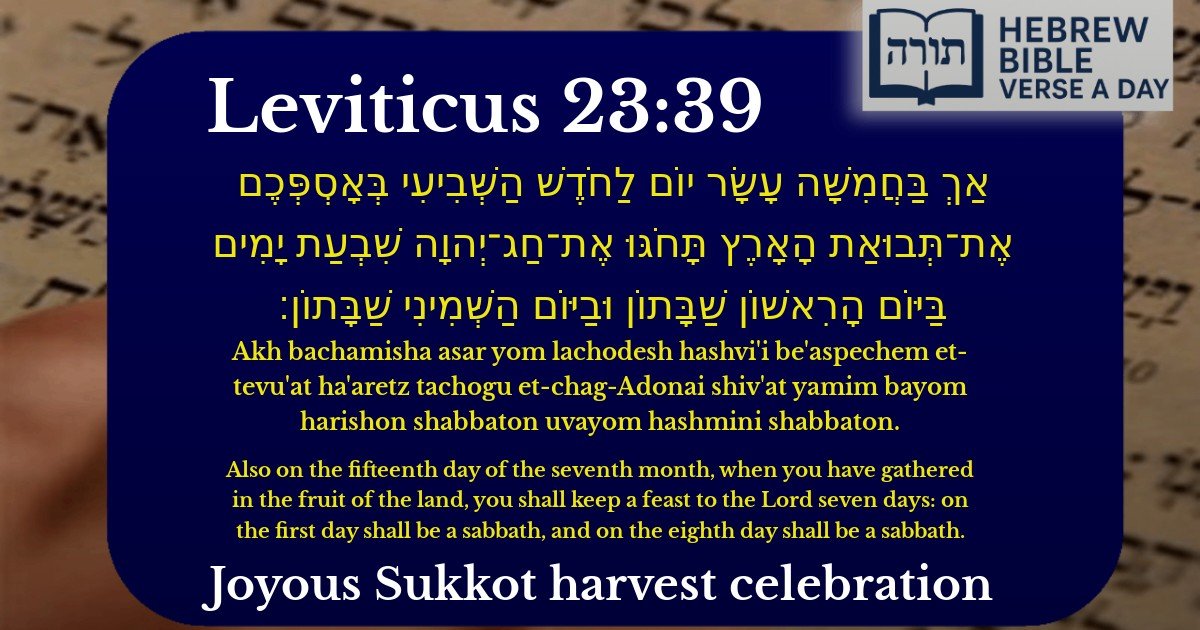
אַךְ בַּחֲמִשָּׁה עָשָׂר יוֹם לַחֹדֶשׁ הַשְּׁבִיעִי בְּאָסְפְּכֶם אֶת־תְּבוּאַת הָאָרֶץ תָּחֹגּוּ אֶת־חַג־יְהוָה שִׁבְעַת יָמִים בַּיּוֹם הָרִאשׁוֹן שַׁבָּתוֹן וּבַיּוֹם הַשְּׁמִינִי שַׁבָּתוֹן׃
English Translation
Also on the fifteenth day of the seventh month, when you have gathered in the fruit of the land, you shall keep a feast to the Lord seven days: on the first day shall be a sabbath, and on the eighth day shall be a sabbath.
Transliteration
Akh bachamisha asar yom lachodesh hashvi'i be'aspechem et-tevu'at ha'aretz tachogu et-chag-Adonai shiv'at yamim bayom harishon shabbaton uvayom hashmini shabbaton.
Hebrew Leining Text
אַ֡ךְ בַּחֲמִשָּׁה֩ עָשָׂ֨ר י֜וֹם לַחֹ֣דֶשׁ הַשְּׁבִיעִ֗י בְּאׇסְפְּכֶם֙ אֶת־תְּבוּאַ֣ת הָאָ֔רֶץ תָּחֹ֥גּוּ אֶת־חַג־יְהֹוָ֖ה שִׁבְעַ֣ת יָמִ֑ים בַּיּ֤וֹם הָֽרִאשׁוֹן֙ שַׁבָּת֔וֹן וּבַיּ֥וֹם הַשְּׁמִינִ֖י שַׁבָּתֽוֹן׃
🎵 Listen to leining
Parasha Commentary
📚 Talmud Citations
This verse is quoted in the Talmud.
📖 Sukkah 48a
The verse is referenced in the discussion about the observance of Sukkot and the nature of the festival days, particularly the first and eighth days as days of rest.
📖 Menachot 65b
The verse is cited in the context of discussing the timing of festivals and the specific requirements for the Feast of Tabernacles (Sukkot).
The Timing of Sukkot
The verse (Vayikra 23:39) establishes the mitzvah of observing Chag HaSukkot on the 15th day of the seventh month (Tishrei), following the harvest season. Rashi explains that this timing ensures the festival occurs when the grain and fruit have been gathered into the homes, allowing for joyous celebration without agricultural distractions. The Midrash (Sifra) connects this to the theme of gratitude, as one gives thanks to Hashem after the harvest is secured.
The Seven-Day Festival
The Torah mandates a seven-day celebration, with the first day being a Yom Tov (a Sabbath-like day of rest). Rambam (Hilchot Shofar, Sukkah v'Lulav 6:1) emphasizes that this period is designated for rejoicing before Hashem, as reflected in the mitzvot of dwelling in the sukkah and taking the four species (lulav, etrog, hadasim, and aravot). The Talmud (Sukkah 11b) discusses whether the sukkah commemorates the physical booths of the wilderness or the divine clouds of glory (Ananei HaKavod), with the latter being the accepted view in Halacha.
The Eighth Day: Shemini Atzeret
The verse concludes by mentioning an additional day of rest (Shemini Atzeret). Rashi explains that this day is a separate festival, where Hashem "detains" (atzeret) the Jewish people for an intimate celebration after Sukkot, akin to a king who asks his beloved guests to stay a little longer. The Talmud (Sukkah 55b) teaches that while Sukkot includes offerings for the nations, Shemini Atzeret is exclusively for the Jewish people, symbolizing our unique relationship with Hashem.
Halachic Observances