

Join Our Newsletter To Be Informed When New Videos Are Posted
Hebrew Text
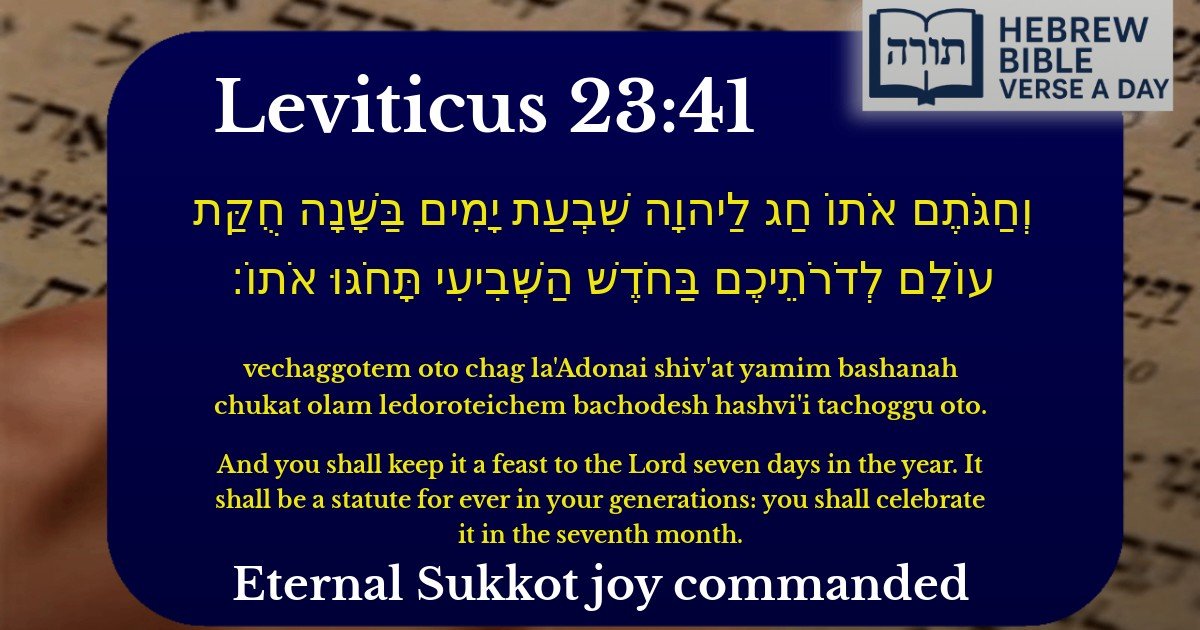
וְחַגֹּתֶם אֹתוֹ חַג לַיהוָה שִׁבְעַת יָמִים בַּשָּׁנָה חֻקַּת עוֹלָם לְדֹרֹתֵיכֶם בַּחֹדֶשׁ הַשְּׁבִיעִי תָּחֹגּוּ אֹתוֹ׃
English Translation
And you shall keep it a feast to the Lord seven days in the year. It shall be a statute for ever in your generations: you shall celebrate it in the seventh month.
Transliteration
Vechaggotem oto chag la'Adonai shiv'at yamim bashanah chukat olam ledoroteichem bachodesh hashvi'i tachoggu oto.
Hebrew Leining Text
וְחַגֹּתֶ֤ם אֹתוֹ֙ חַ֣ג לַֽיהֹוָ֔ה שִׁבְעַ֥ת יָמִ֖ים בַּשָּׁנָ֑ה חֻקַּ֤ת עוֹלָם֙ לְדֹרֹ֣תֵיכֶ֔ם בַּחֹ֥דֶשׁ הַשְּׁבִיעִ֖י תָּחֹ֥גּוּ אֹתֽוֹ׃
🎵 Listen to leining
Parasha Commentary
📚 Talmud Citations
This verse is quoted in the Talmud.
📖 Sukkah 27a
The verse is referenced in the discussion about the duration and observance of the Feast of Tabernacles (Sukkot).
📖 Rosh Hashanah 4b
The verse is cited in the context of determining the proper time for observing the festivals in the seventh month.
📖 Menachot 65a
The verse is mentioned in relation to the laws of the festivals and their perpetual observance.
Context of the Verse
The verse (Vayikra 23:41) is part of the Torah's discussion of the festival of Sukkot, which is observed for seven days in the seventh month (Tishrei). This commandment is given alongside other details about the observance of Sukkot, including dwelling in the sukkah and taking the four species (lulav, etrog, hadassim, and aravot). The phrase "חֻקַּת עוֹלָם" ("a statute forever") emphasizes the eternal nature of this mitzvah, binding for all generations.
Rashi's Commentary
Rashi (Vayikra 23:41) explains that the phrase "וְחַגֹּתֶם אֹתוֹ" ("And you shall keep it a feast") refers specifically to the mitzvah of rejoicing during Sukkot. He notes that the term "חַג" (festival) is associated with simcha (joy), as derived from the root ח-ג-ג, which connotes celebration. Rashi further clarifies that the seven-day duration is fixed and immutable, as indicated by "חֻקַּת עוֹלָם" (a statute forever).
Rambam's Perspective
In Hilchot Shofar, Sukkah, v'Lulav (8:12), the Rambam elaborates on the obligation to rejoice during Sukkot, emphasizing that this joy includes offerings in the Beit HaMikdash and communal feasting. He connects this mitzvah to the broader theme of gratitude for Hashem's providence, as Sukkot commemorates the protection Bnei Yisrael experienced in the wilderness.
Talmudic and Midrashic Insights
Symbolism of the Seventh Month
The choice of the seventh month (Tishrei) for Sukkot carries deep symbolism. The number seven in Torah represents completion and sanctity (e.g., Shabbat, Shemittah). The Sforno (Vayikra 23:41) explains that observing Sukkot in Tishrei—after the harvest—reinforces the idea that our material success is ultimately dependent on Hashem's blessing, not human effort alone.
Practical Halachic Implications
Shulchan Aruch (Orach Chaim 625:1) rules that the mitzvah of dwelling in the sukkah applies for all seven days, with the first day (and second day in the diaspora) carrying a biblical obligation. The Sefer HaChinuch (Mitzvah 324) adds that the mitzvah instills emunah (faith) by having us leave our permanent homes for temporary dwellings, trusting in Hashem's protection.