

Join Our Newsletter To Be Informed When New Videos Are Posted
Hebrew Text
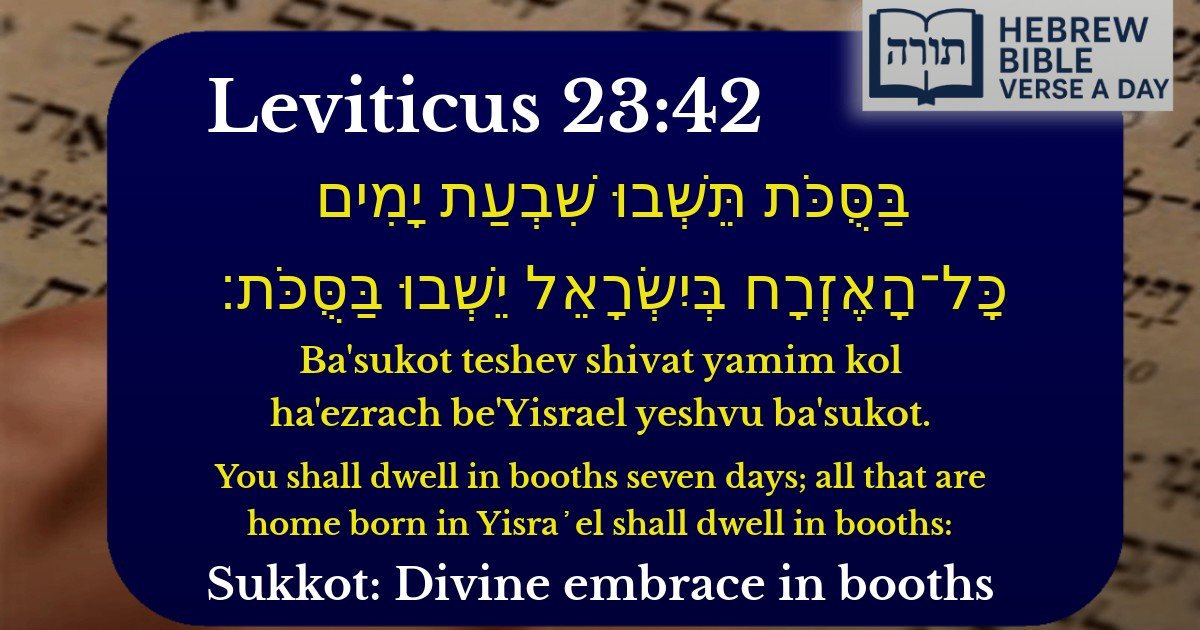
בַּסֻּכֹּת תֵּשְׁבוּ שִׁבְעַת יָמִים כָּל־הָאֶזְרָח בְּיִשְׂרָאֵל יֵשְׁבוּ בַּסֻּכֹּת׃
English Translation
You shall dwell in booths seven days; all that are home born in Yisra᾽el shall dwell in booths:
Transliteration
Ba'sukot teshev shivat yamim kol ha'ezrach be'Yisrael yeshvu ba'sukot.
Hebrew Leining Text
בַּסֻּכֹּ֥ת תֵּשְׁב֖וּ שִׁבְעַ֣ת יָמִ֑ים כׇּל־הָֽאֶזְרָח֙ בְּיִשְׂרָאֵ֔ל יֵשְׁב֖וּ בַּסֻּכֹּֽת׃
🎵 Listen to leining
Parasha Commentary
📚 Talmud Citations
This verse is quoted in the Talmud.
📖 Sukkah 27a
The verse is discussed in the context of the obligation to dwell in the sukkah during the festival of Sukkot, emphasizing that all native-born Israelites must fulfill this commandment.
📖 Sukkah 28b
The verse is referenced in a discussion about the conditions under which one is exempt from dwelling in the sukkah, such as illness or rain.
The Mitzvah of Dwelling in Sukkot
The verse (Vayikra 23:42) commands Bnei Yisrael to dwell in sukkot for seven days during the festival of Sukkot. This mitzvah applies to all native-born Israelites ("ha-ezrach b'Yisrael"), emphasizing its universal obligation for the Jewish people.
Rashi's Explanation
Rashi (Vayikra 23:43) explains that the sukkah commemorates the Ananei HaKavod (Clouds of Glory) that surrounded and protected Bnei Yisrael during their 40 years in the wilderness. The sukkah thus serves as a tangible reminder of Hashem's divine protection and providence.
Who is Obligated?
The Nature of "Dwelling"
The Mishnah (Sukkah 2:9) states that one should "teishvu k'ein taduru"—dwell in the sukkah as one would dwell in a home. This includes eating, sleeping, and engaging in leisure activities there. However, the Rambam (Hilchot Sukkah 6:5) clarifies that temporary discomfort (such as rain or extreme cold) exempts one from this obligation.
Symbolism of the Sukkah
The Midrash (Vayikra Rabbah 30:2) teaches that the sukkah represents both physical and spiritual protection. Just as the Clouds of Glory shielded Bnei Yisrael in the desert, the sukkah symbolizes our reliance on Hashem's protection in all generations.