

Join Our Newsletter To Be Informed When New Videos Are Posted
Hebrew Text
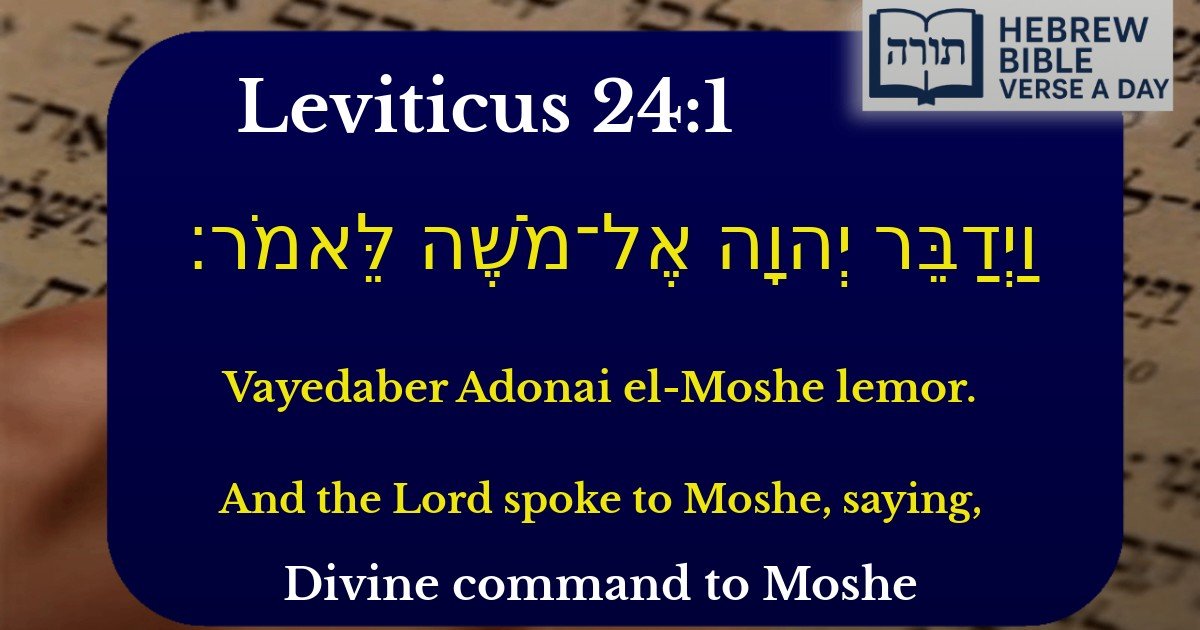
וַיְדַבֵּר יְהוָה אֶל־מֹשֶׁה לֵּאמֹר׃
English Translation
And the Lord spoke to Moshe, saying,
Transliteration
Vayedaber Adonai el-Moshe lemor.
Hebrew Leining Text
וַיְדַבֵּ֥ר יְהֹוָ֖ה אֶל־מֹשֶׁ֥ה לֵּאמֹֽר׃
🎵 Listen to leining
Parasha Commentary
📚 Talmud Citations
This verse is not quoted in the Talmud.
The Divine Communication to Moshe
The phrase "וַיְדַבֵּר יְהוָה אֶל־מֹשֶׁה לֵּאמֹר" ("And the Lord spoke to Moshe, saying") appears frequently in the Torah, marking the transmission of divine commandments and teachings. Rashi (Shemot 6:2) explains that this phrasing emphasizes the direct and clear communication between Hashem and Moshe, distinguishing it from other forms of prophecy, which may come through dreams or visions (Bamidbar 12:6-8). Moshe's prophecy was unique—"פה אל פה אדבר בו" ("mouth to mouth I speak with him")—indicating unparalleled clarity.
The Significance of "לֵּאמֹר"
The term "לֵּאמֹר" ("saying") is interpreted by the Midrash (Sifrei Bamidbar 7:48) as instructing Moshe to relay the message to Bnei Yisrael. Rambam (Hilchos Yesodei HaTorah 7:6) elaborates that Moshe served as the intermediary to convey Hashem's words precisely, ensuring the nation received the Torah without distortion. This underscores the principle of משה רבינו אמת ותורתו אמת ("Moshe our teacher is true, and his Torah is true").
Structural Context in the Torah
This introductory phrase often precedes major commandments or pivotal events. The Talmud (Megillah 31b) notes that such verses establish the divine origin of mitzvos, reinforcing that they are not of human origin but from Hashem. The Ramban (Bereishis 1:1) adds that these words highlight Moshe's role as the faithful transmitter of Torah, ensuring its eternal authenticity.