

Join Our Newsletter To Be Informed When New Videos Are Posted
Hebrew Text
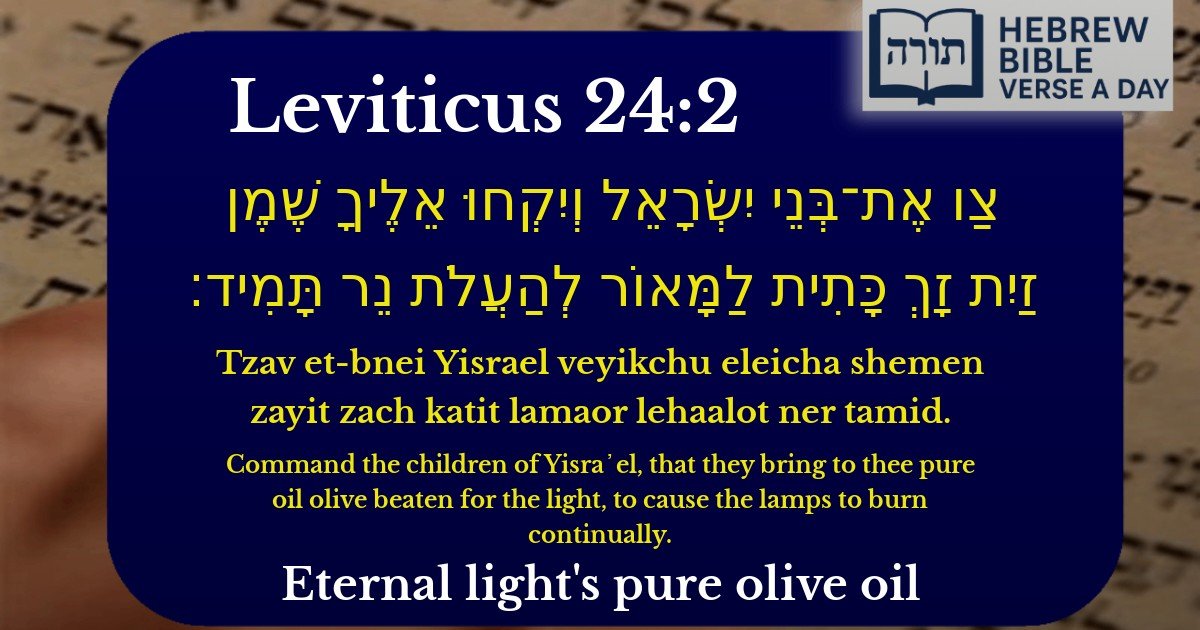
צַו אֶת־בְּנֵי יִשְׂרָאֵל וְיִקְחוּ אֵלֶיךָ שֶׁמֶן זַיִת זָךְ כָּתִית לַמָּאוֹר לְהַעֲלֹת נֵר תָּמִיד׃
English Translation
Command the children of Yisra᾽el, that they bring to thee pure oil olive beaten for the light, to cause the lamps to burn continually.
Transliteration
Tzav et-bnei Yisrael veyikchu eleicha shemen zayit zach katit lamaor lehaalot ner tamid.
Hebrew Leining Text
צַ֞ו אֶת־בְּנֵ֣י יִשְׂרָאֵ֗ל וְיִקְח֨וּ אֵלֶ֜יךָ שֶׁ֣מֶן זַ֥יִת זָ֛ךְ כָּתִ֖ית לַמָּא֑וֹר לְהַעֲלֹ֥ת נֵ֖ר תָּמִֽיד׃
🎵 Listen to leining
Parasha Commentary
📚 Talmud Citations
This verse is quoted in the Talmud.
📖 Menachot 86a
The verse is discussed in relation to the quality of the olive oil used for the menorah in the Temple, emphasizing the requirement for it to be pure and beaten.
📖 Shabbat 21b
The verse is referenced in the context of the laws of Hanukkah, drawing a parallel between the eternal light in the Temple and the Hanukkah lights.
The Command for Pure Olive Oil
The verse (Shemot 27:20) commands Bnei Yisrael to bring pure olive oil for the Menorah in the Mishkan. Rashi explains that the term "זָךְ" (pure) means the oil must be free of sediment, and "כָּתִית" (beaten) refers to olives that are hand-crushed rather than milled, producing only the first drop of oil, which is of the highest quality. This emphasizes the importance of using the finest materials for divine service.
The Purpose: "לְהַעֲלֹת נֵר תָּמִיד"
The phrase "to cause the lamps to burn continually" is interpreted in the Talmud (Menachot 86b) to mean that the westernmost lamp of the Menorah, the "Ner Ma'aravi," was to burn continuously from evening until morning, symbolizing Hashem's eternal presence among Israel. Rambam (Hilchot Temidin uMusafin 3:10) elaborates that this mitzvah applies even outside the Mishkan or Beit HaMikdash, teaching that the light of Torah must always be kindled.
Symbolism of the Menorah's Light
The Midrash (Shemot Rabbah 36:3) connects this mitzvah to the idea that the Jewish people are a "light unto the nations" (Yeshayahu 42:6). Just as the Menorah's light was pure and constant, so too must the Jewish people uphold Torah and mitzvot with unwavering dedication. The oil’s purity also alludes to the sincerity required in divine service—free from ulterior motives.
Practical Halachic Insights