Frequently Asked Questions
Q: What does Leviticus 2:5 mean?
A: Leviticus 2:5 describes one of the types of meal offerings (mincha) brought in the Temple. This particular offering is baked in a pan and must be made from fine flour (solet), mixed with oil, and remain unleavened (matzah). Rashi explains that this offering symbolizes humility and devotion, as flour represents basic sustenance, and oil represents richness—showing that our service to Hashem should be sincere and unpretentious.
Q: Why is unleavened bread (matzah) used in this offering?
A: The Torah specifies that this meal offering must be unleavened (matzah) to teach us about purity and simplicity in serving Hashem. Leaven (chametz) often symbolizes arrogance or corruption (as it puffs up), while matzah represents humility and sincerity. The Rambam (Hilchot Ma'aseh HaKorbanot) explains that the absence of leaven reflects the idea of removing ego from our worship.
Q: What is the significance of mixing the flour with oil in this offering?
A: The oil mixed with the fine flour represents richness and dedication. According to the Talmud (Menachot 75a), the oil enhances the flour, showing that our service to Hashem should be done with joy and generosity. The Midrash (Vayikra Rabbah) also teaches that oil symbolizes wisdom, indicating that our offerings—and by extension, our mitzvot—should be performed with understanding and intention.
Q: How does this verse apply to us today without the Temple?
A: While we no longer bring physical meal offerings, the lessons of Leviticus 2:5 still apply. The Sages teach (Berachot 55a) that prayer and Torah study are the 'offerings of the heart' in place of sacrifices. Just as the meal offering required fine flour and oil, our prayers and mitzvot should be performed with sincerity (fine flour) and joy (oil). The emphasis on matzah reminds us to serve Hashem with humility.
Q: Why is this offering baked in a pan specifically?
A: The pan (machavat) was one of several ways to prepare meal offerings, each with its own halachic details. Rashi (on Leviticus 2:5) explains that the pan was a flat utensil, resulting in a different texture than other preparation methods. This teaches that there are multiple valid ways to serve Hashem, as long as they follow the Torah’s guidelines. The variety in offerings reflects the diversity in how people express devotion.

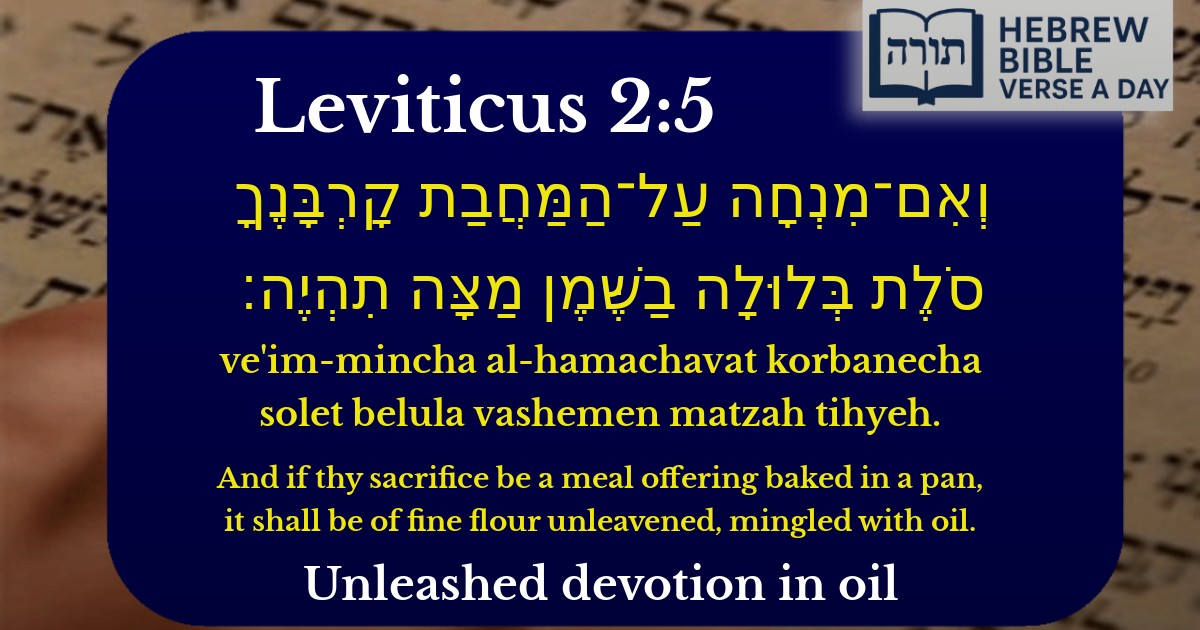

Explanation of the Verse
The verse (Vayikra 2:5) discusses the minchat maḥavat, a type of meal offering baked in a pan. This offering is part of the broader category of korban minchah (meal offerings) detailed in Parshat Vayikra. The Torah specifies that this offering must be made of fine flour (solet), mixed with oil (shemen), and must remain unleavened (matzah).
Key Components of the Offering
Significance of the Pan-Baked Offering
The minchat maḥavat differs from other meal offerings in its preparation method. The maḥavat (pan) implies a specific cooking process, as discussed in Menachot 63a. Unlike the minchat marcheshet (deep-pan offering), the maḥavat is baked in a shallow pan, resulting in a crisp texture. This distinction highlights the diversity of ways to serve Hashem, each with its own halachic details and spiritual meaning.
Spiritual Lessons
The Midrash (Vayikra Rabbah 3:1) connects meal offerings to the concept of hakarat hatov (gratitude), as they are often brought by those of modest means who cannot afford animal sacrifices. The absence of chametz teaches that sincere devotion must be free from ego, while the oil represents the joy of serving Hashem. The pan-baked minchah, in particular, reminds us that even simple acts—when performed with purity and intention—are cherished in the eyes of Heaven.