

Join Our Newsletter To Be Informed When New Videos Are Posted
Hebrew Text
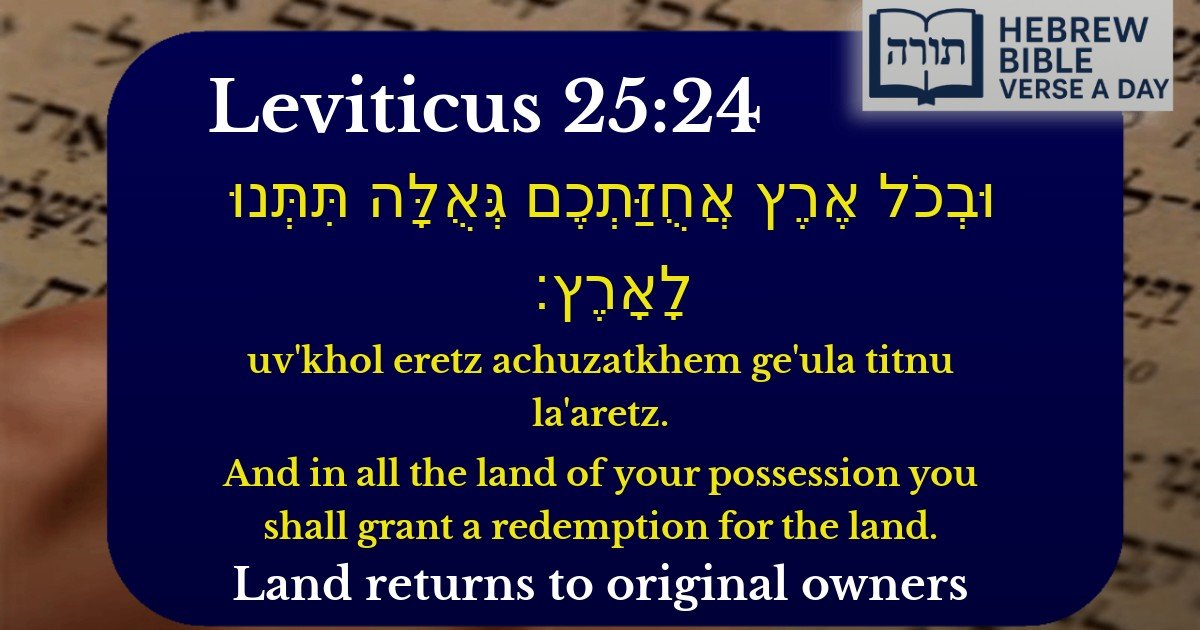
וּבְכֹל אֶרֶץ אֲחֻזַּתְכֶם גְּאֻלָּה תִּתְּנוּ לָאָרֶץ׃
English Translation
And in all the land of your possession you shall grant a redemption for the land.
Transliteration
Uv'khol eretz achuzatkhem ge'ula titnu la'aretz.
Hebrew Leining Text
וּבְכֹ֖ל אֶ֣רֶץ אֲחֻזַּתְכֶ֑ם גְּאֻלָּ֖ה תִּתְּנ֥וּ לָאָֽרֶץ׃ {ס}
🎵 Listen to leining
Parasha Commentary
📚 Talmud Citations
This verse is quoted in the Talmud.
📖 Arakhin 29b
The verse is discussed in the context of the laws of redemption of land, particularly concerning the Jubilee year and the return of property to its original owners.
📖 Bava Batra 100b
The verse is referenced in a discussion about the proper procedures for redeeming land and ensuring justice in property transactions.
Context in the Torah
The verse (Vayikra 25:24) appears in the context of the laws of Yovel (Jubilee), which mandates the return of ancestral lands to their original owners every 50 years. The Torah emphasizes the importance of maintaining the integrity of family inheritances in Eretz Yisrael.
Rashi's Explanation
Rashi explains that the phrase "ge'ulah titnu la'aretz" ("you shall grant a redemption for the land") refers to the obligation to allow a relative to redeem land that was sold due to financial hardship. If the original owner or a close relative has the means, they must facilitate the repurchase of the land before the Yovel year arrives. This ensures the land remains within the family as an everlasting inheritance.
Rambam's Halachic Perspective
In Hilchot Shemitah V'Yovel (11:1), Rambam codifies this law, stating that the mitzvah of ge'ulat karka (land redemption) applies to all ancestral lands in Eretz Yisrael. He emphasizes that this is not merely a financial transaction but a spiritual obligation tied to the sanctity of the Land and G-d's ownership of it (as stated in Vayikra 25:23: "For the land is Mine").
Midrashic Insight
The Midrash (Torat Kohanim 25:24) connects this verse to the broader concept of tikkun olam (rectifying the world). By ensuring land returns to its original owners, society avoids permanent inequality and maintains economic justice. The Sages teach that this system reflects divine compassion, preventing families from being permanently dispossessed of their heritage.
Practical Implications
Spiritual Message
The Kli Yakar teaches that this mitzvah reminds us that our "possession" of land is temporary stewardship. Just as the land can be redeemed, so too must we "redeem" our spiritual potential by returning to our divine mission. The physical ge'ulah of land parallels the ultimate ge'ulah of the Jewish people.