Frequently Asked Questions
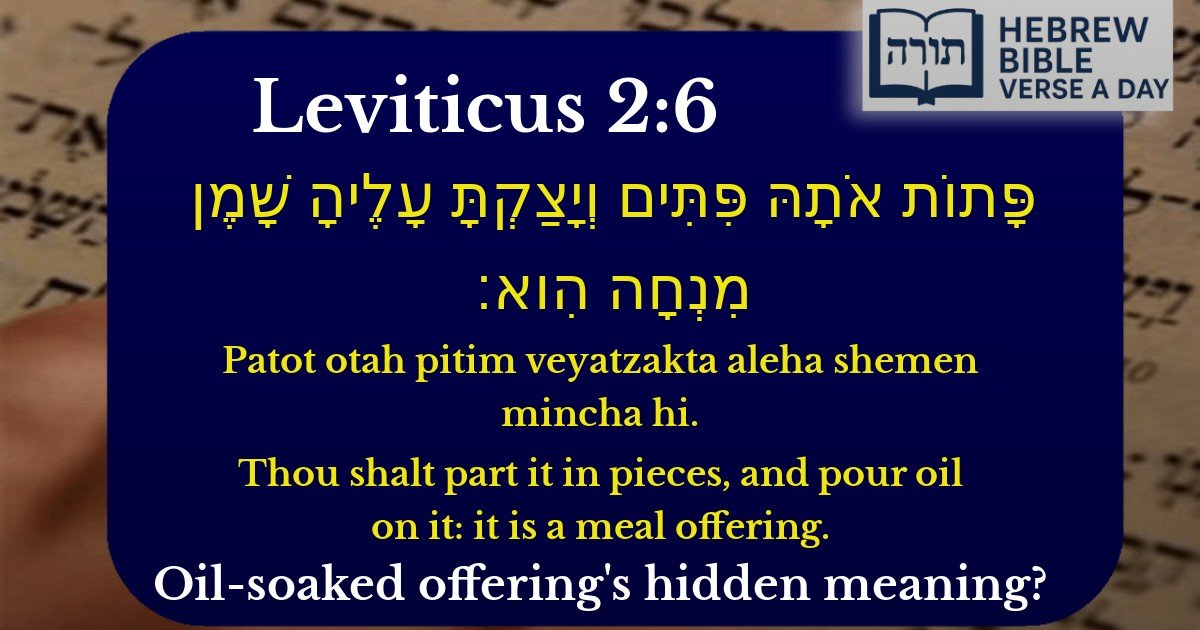
Q: What does Leviticus 2:6 mean when it says to 'part it in pieces and pour oil on it'?
A: This verse describes the preparation of the 'mincha' (meal offering) brought in the Temple. According to Rashi, the offering is broken into pieces before the oil is poured, symbolizing humility before Hashem. The oil represents richness and dedication in serving G-d.
Q: Why is oil used in the meal offering (mincha) mentioned in Leviticus 2:6?
A: Oil is used because it enhances the flavor of the offering, making it more desirable. The Rambam explains that just as oil rises above other liquids, our service to Hashem should rise above our mundane activities. The Talmud (Menachot 86a) also discusses the importance of oil in offerings.
Q: What lesson can we learn today from Leviticus 2:6 about offerings?
A: Even though we no longer bring physical offerings, the mincha teaches us about the importance of sincerity in serving Hashem. Breaking the offering into pieces reminds us to break our ego, and the oil teaches us to add richness (enthusiasm and dedication) to our prayers and mitzvot.
Q: Is the meal offering (mincha) in Leviticus 2:6 still relevant today?
A: While we do not bring physical offerings without the Temple, the mincha's lessons remain relevant. The Midrash teaches that acts of kindness and Torah study today replace the offerings. The mincha reminds us to serve Hashem with humility and sincerity in all generations.
Q: What does 'mincha' mean in Leviticus 2:6?
A: The word 'mincha' refers to a grain offering, one of the types of sacrifices brought in the Temple. Unlike animal offerings, it consists of fine flour, oil, and frankincense. Rashi explains that it is called 'mincha' (from the root 'to give') because it is a gift to Hashem, showing devotion.


Explanation of the Verse
The verse (Vayikra 2:6) describes the preparation of the mincha (meal offering), specifically the requirement to break it into pieces and pour oil upon it. This offering, unlike animal sacrifices, consists of fine flour and oil, symbolizing humility and devotion.
Rashi's Commentary
Rashi (Vayikra 2:6) explains that the term "פָּתוֹת" (break into pieces) refers to tearing the offering into small portions, not cutting it with a knife. This is derived from the word "פִּתִּים", which implies breaking by hand. Rashi further notes that the pouring of oil must be done after the breaking, emphasizing the proper order of the mitzvah.
Rambam's Perspective
In Hilchos Maaseh HaKorbanos (13:6), the Rambam codifies the halachic procedure for the mincha offering, stating that the kohen must break it into pieces before adding oil. He emphasizes that this process is essential for the validity of the offering, as the Torah specifies the precise method of preparation.
Symbolism in the Mincha Offering
Midrashic Insight
The Midrash (Vayikra Rabbah 3:1) connects the mincha offering to the story of Kayin and Hevel, teaching that Hashem values sincere, modest offerings (like flour and oil) just as much as grand sacrifices, provided they are given with pure intent.