
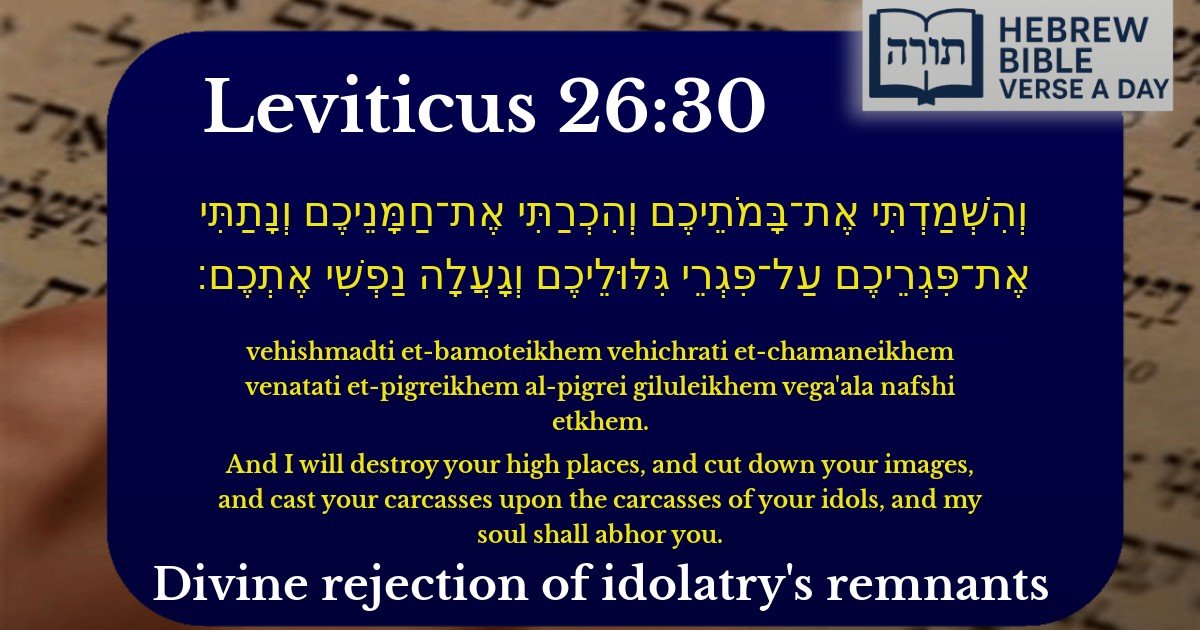

Leviticus 26:30 - Divine rejection of idolatry's remnants

Leviticus 26:30 - ויקרא 26:30

Hebrew Text

וְהִשְׁמַדְתִּי אֶת־בָּמֹתֵיכֶם וְהִכְרַתִּי אֶת־חַמָּנֵיכֶם וְנָתַתִּי אֶת־פִּגְרֵיכֶם עַל־פִּגְרֵי גִּלּוּלֵיכֶם וְגָעֲלָה נַפְשִׁי אֶתְכֶם׃

English Translation

And I will destroy your high places, and cut down your images, and cast your carcasses upon the carcasses of your idols, and my soul shall abhor you.

Transliteration

Vehishmadti et-bamoteikhem vehichrati et-chamaneikhem venatati et-pigreikhem al-pigrei giluleikhem vega'ala nafshi etkhem.

Hebrew Leining Text

וְהִשְׁמַדְתִּ֞י אֶת־בָּמֹֽתֵיכֶ֗ם וְהִכְרַתִּי֙ אֶת־חַמָּ֣נֵיכֶ֔ם וְנָֽתַתִּי֙ אֶת־פִּגְרֵיכֶ֔ם עַל־פִּגְרֵ֖י גִּלּוּלֵיכֶ֑ם וְגָעֲלָ֥ה נַפְשִׁ֖י אֶתְכֶֽם׃

🎵 Listen to leining

Parasha Commentary

Context of the Verse

This verse appears in Vayikra (Leviticus) 26:30, within the Tochacha (the Admonition), a section detailing the severe consequences that will befall the Jewish people if they abandon the Torah and engage in idolatry. The verse describes Hashem's response to persistent idol worship, emphasizing the destruction of illicit worship sites and the ultimate rejection of those who betray the covenant.

Explanation of Key Phrases

  • "וְהִשְׁמַדְתִּי אֶת־בָּמֹתֵיכֶם" (And I will destroy your high places): Rashi explains that bamot (high places) were unauthorized altars used for idolatrous worship. The destruction of these sites signifies the eradication of idolatrous practices from the land (Rashi on Vayikra 26:30).
  • "וְהִכְרַתִּי אֶת־חַמָּנֵיכֶם" (And cut down your images): The chammanim refer to sun-pillars or other idolatrous symbols. The Ramban (Nachmanides) notes that this phrase underscores the complete removal of all physical representations of foreign deities (Ramban on Vayikra 26:30).
  • "וְנָתַתִּי אֶת־פִּגְרֵיכֶם עַל־פִּגְרֵי גִּלּוּלֵיכֶם" (And cast your carcasses upon the carcasses of your idols): The Midrash Sifra interprets this as a poetic justice—those who worshipped lifeless idols will share their fate, lying dead alongside them (Sifra, Bechukotai 8:10).
  • "וְגָעֲלָה נַפְשִׁי אֶתְכֶם" (And My soul shall abhor you): The Malbim explains that this phrase reflects the ultimate spiritual rupture—Hashem's withdrawal of divine favor due to the people's betrayal of their covenant (Malbim on Vayikra 26:30).

Theological Implications

The verse highlights the severity of idolatry in Jewish thought. The Talmud (Sanhedrin 64a) teaches that idol worship is among the gravest sins, as it severs the relationship between the Jewish people and Hashem. The imagery of carcasses piled upon idols serves as a stark warning against spiritual corruption, emphasizing that those who attach themselves to falsehood will meet a humiliating end.

Lessons for Today

While physical idol worship is rare today, the principle extends to any form of avodah zarah (foreign worship), including misplaced priorities or devotion to materialism. The Kli Yakar (R' Shlomo Ephraim Luntschitz) teaches that this verse reminds us to cleave to Torah values, lest we distance ourselves from Hashem's presence (Kli Yakar on Vayikra 26:30).

📚 Talmud Citations

This verse is not quoted in the Talmud.

Frequently Asked Questions

Q: What does Leviticus 26:30 mean?
A: Leviticus 26:30 is a warning from Hashem about the severe consequences of idol worship. It states that if the Jewish people abandon Torah and serve idols, Hashem will destroy their places of idolatry ('high places' and 'images'), and their bodies will be left among their false gods. Rashi explains that this shows the ultimate disgrace of idol worship—those who serve idols will perish alongside them, demonstrating their worthlessness.
Q: Why is this verse important in Judaism?
A: This verse is important because it emphasizes the severity of idol worship (avodah zarah), one of the gravest sins in Judaism. The Rambam (Maimonides) teaches that rejecting idolatry is a fundamental principle of Jewish faith. The harsh consequences described here serve as a warning to stay loyal to Hashem and avoid any form of foreign worship.
Q: What can we learn from Leviticus 26:30 today?
A: We learn that Hashem demands exclusive devotion and rejects any form of idolatry. While literal idol worship is rare today, the Talmud (Sanhedrin 63b) teaches that anything a person prioritizes over serving Hashem can become a form of modern 'idolatry.' This verse reminds us to examine our priorities and ensure that nothing takes the place of Torah and mitzvot in our lives.
Q: What are the 'high places' and 'images' mentioned in this verse?
A: The 'high places' (bamot) were unauthorized altars used for idol worship, often built on elevated areas. The 'images' (chammanim) refer to sun-pillars or statues used in pagan rituals. Rashi explains that these were common forms of idolatry in ancient times, and Hashem promises to destroy them as part of His judgment against those who abandon Torah.
Q: How does this verse relate to the concept of reward and punishment in Judaism?
A: This verse is part of the 'Tochacha' (rebuke) in Leviticus 26, which outlines the consequences of disobeying Hashem’s commandments. The Talmud (Sotah 9a) teaches that these punishments are ultimately meant to bring repentance. The severity of the consequences shows how seriously Hashem takes idolatry, but the Rambam (Hilchos Teshuvah) emphasizes that sincere repentance can always bring forgiveness.