

Join Our Newsletter To Be Informed When New Videos Are Posted
Hebrew Text
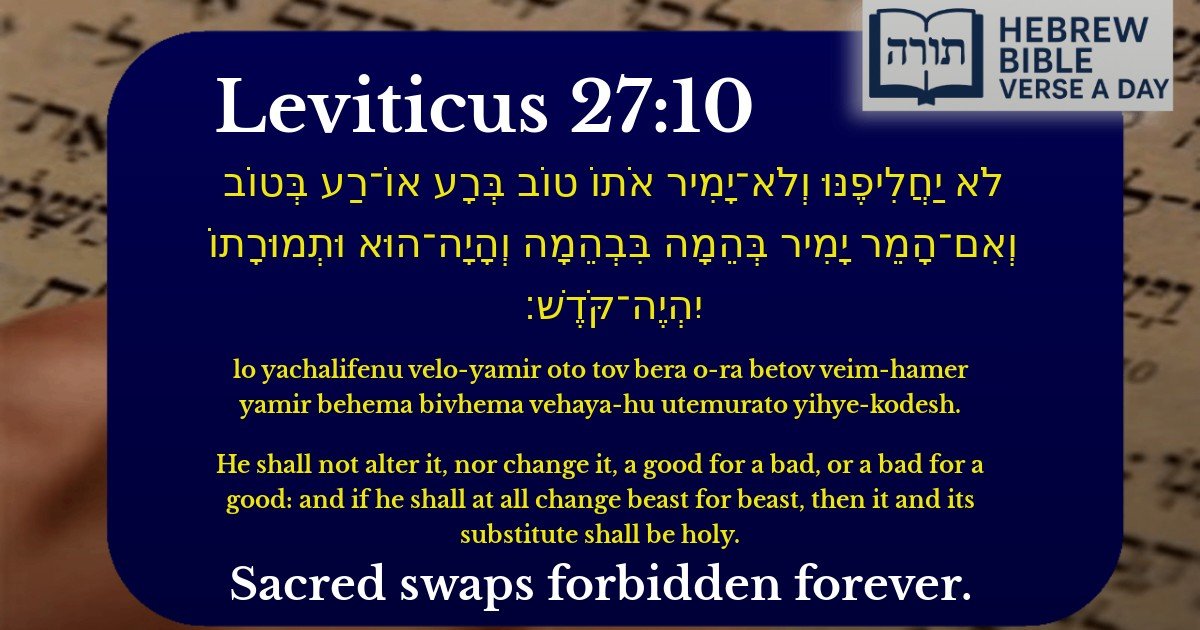
לֹא יַחֲלִיפֶנּוּ וְלֹא־יָמִיר אֹתוֹ טוֹב בְּרָע אוֹ־רַע בְּטוֹב וְאִם־הָמֵר יָמִיר בְּהֵמָה בִּבְהֵמָה וְהָיָה־הוּא וּתְמוּרָתוֹ יִהְיֶה־קֹּדֶשׁ׃
English Translation
He shall not alter it, nor change it, a good for a bad, or a bad for a good: and if he shall at all change beast for beast, then it and its substitute shall be holy.
Transliteration
Lo yachalifenu velo-yamir oto tov bera o-ra betov veim-hamer yamir behema bivhema vehaya-hu utemurato yihye-kodesh.
Hebrew Leining Text
לֹ֣א יַחֲלִיפֶ֗נּוּ וְלֹֽא־יָמִ֥יר אֹת֛וֹ ט֥וֹב בְּרָ֖ע אוֹ־רַ֣ע בְּט֑וֹב וְאִם־הָמֵ֨ר יָמִ֤יר בְּהֵמָה֙ בִּבְהֵמָ֔ה וְהָֽיָה־ה֥וּא וּתְמוּרָת֖וֹ יִֽהְיֶה־קֹּֽדֶשׁ׃
🎵 Listen to leining
Parasha Commentary
📚 Talmud Citations
This verse is quoted in the Talmud.
📖 Temurah 2a
The verse is discussed in the context of the laws of substitution (temurah) for sacrificial animals, where the principle that both the original animal and its substitute become holy is derived from this verse.
📖 Temurah 3b
Further discussion on the prohibition of exchanging a good animal for a bad one or vice versa, emphasizing the sanctity of both the original and the substitute.
📖 Temurah 4a
The verse is referenced to explain the consequences of attempting to substitute one sacrificial animal for another, reinforcing the holiness of both animals involved.
Context in Vayikra (Leviticus 27:10)
The verse discusses the laws of temurah (substitution), which apply when one attempts to exchange an animal consecrated as a sacrifice for another animal. The Torah strictly prohibits such exchanges and declares that both the original consecrated animal and its substitute become sanctified.
Rashi's Explanation
Rashi (Vayikra 27:10) clarifies that the prohibition applies whether one attempts to substitute a better animal for a worse one (tov b'ra) or a worse animal for a better one (ra b'tov). Even if the exchange is made, the original sanctity remains, and the substitute also becomes holy. Rashi emphasizes that this law teaches the irrevocable nature of sanctification—once an object is dedicated to Hashem, human intervention cannot nullify its holiness.
Rambam's Legal Perspective
In Hilchos Temurah (1:1), the Rambam codifies this law, stating that one who attempts to substitute a consecrated animal violates a negative commandment. The Rambam further explains (1:3) that the sanctity transfers automatically, even if the substitution was unintentional or done in error, reinforcing the principle that kedushah (holiness) is not subject to human manipulation.
Talmudic Discussion (Temurah 17a)
The Gemara derives from this verse that the prohibition of temurah applies only to animals designated for sacrifices, not to other forms of consecrated property. The Sages learn from the phrase "v'hayah hu u'temurato" ("it and its substitute") that both animals assume sanctity, illustrating that the original dedication cannot be undone.
Midrashic Insight (Vayikra Rabbah 27:10)
The Midrash connects this law to the broader theme of commitment to mitzvos. Just as one cannot retract a vow to Hashem, one cannot nullify the sanctity of a dedicated offering. This teaches the importance of sincerity in avodas Hashem (divine service) and the gravity of pledges made to the Beit HaMikdash.
Practical Implications