

Join Our Newsletter To Be Informed When New Videos Are Posted
Hebrew Text
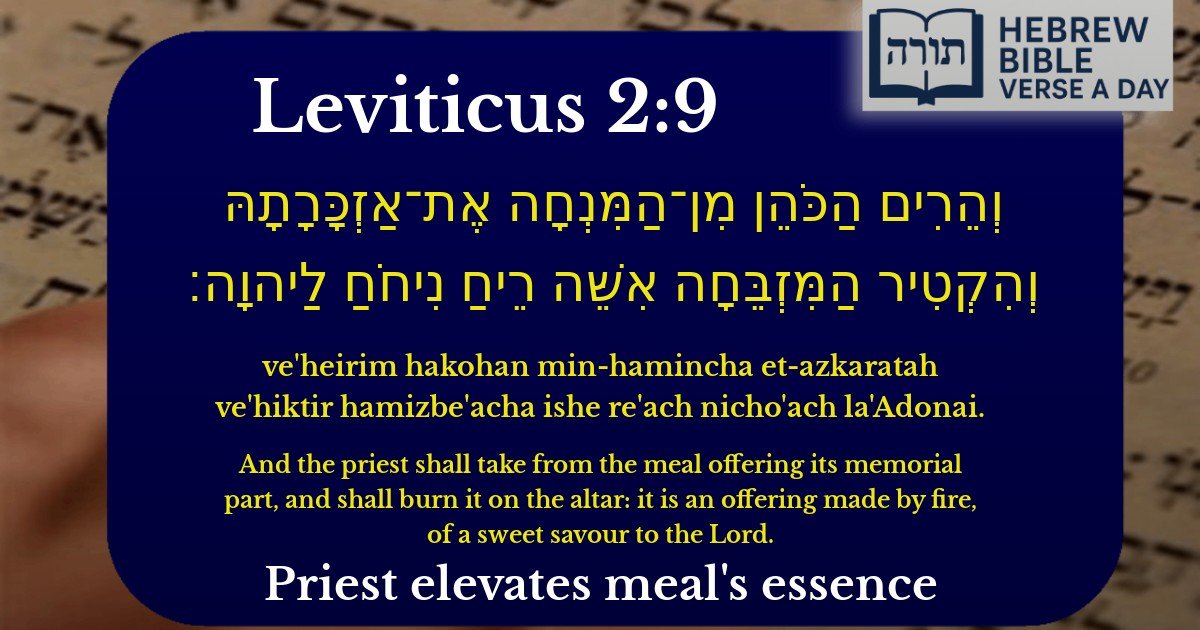
וְהֵרִים הַכֹּהֵן מִן־הַמִּנְחָה אֶת־אַזְכָּרָתָהּ וְהִקְטִיר הַמִּזְבֵּחָה אִשֵּׁה רֵיחַ נִיחֹחַ לַיהוָה׃
English Translation
And the priest shall take from the meal offering its memorial part, and shall burn it on the altar: it is an offering made by fire, of a sweet savour to the Lord.
Transliteration
Ve'heirim hakohan min-hamincha et-azkaratah ve'hiktir hamizbe'acha ishe re'ach nicho'ach la'Adonai.
Hebrew Leining Text
וְהֵרִ֨ים הַכֹּהֵ֤ן מִן־הַמִּנְחָה֙ אֶת־אַזְכָּ֣רָתָ֔הּ וְהִקְטִ֖יר הַמִּזְבֵּ֑חָה אִשֵּׁ֛ה רֵ֥יחַ נִיחֹ֖חַ לַיהֹוָֽה׃
🎵 Listen to leining
Parasha Commentary
📚 Talmud Citations
This verse is quoted in the Talmud.
📖 Menachot 49b
The verse is discussed in the context of the laws concerning the meal offering (mincha) and the priest's role in offering it on the altar.
📖 Zevachim 44a
The verse is referenced in a discussion about the proper procedures for sacrifices and the significance of the memorial portion (azkarah) being burned on the altar.
Explanation of the Verse
The verse (Vayikra 2:2) describes the process of offering the mincha (meal offering) in the Beit HaMikdash. The priest takes a portion called the azkaratah (its memorial part) and burns it on the altar as a fire offering, creating a "sweet savor to Hashem." This teaches the importance of sincere devotion in bringing offerings, even those that are modest in nature.
Key Concepts in the Verse
Halachic and Philosophical Insights
The mincha teaches that material offerings must be accompanied by spiritual intent. The Talmud (Menachot 110a) states that whether one brings a large or small offering, what matters is that the heart is directed toward Heaven. The burning of the azkaratah also alludes to the idea that Torah study and mitzvot elevate physical matter to a higher spiritual plane (Kli Yakar, Vayikra 2:2).
Midrashic Interpretation
The Midrash (Vayikra Rabbah 3:1) connects the mincha to the story of Kayin and Hevel, teaching that Hashem values offerings given with humility and sincerity. Unlike Kayin’s flawed offering, the mincha represents proper devotion, where the giver acknowledges their dependence on Hashem.