

Join Our Newsletter To Be Informed When New Videos Are Posted
Hebrew Text
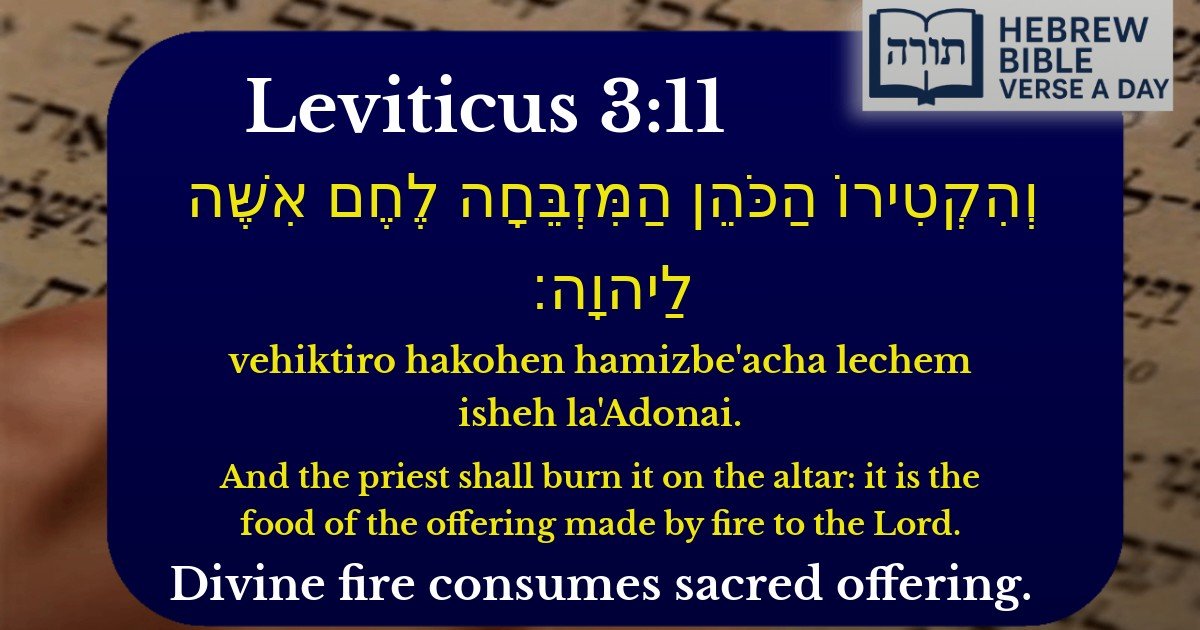
וְהִקְטִירוֹ הַכֹּהֵן הַמִּזְבֵּחָה לֶחֶם אִשֶּׁה לַיהוָה׃
English Translation
And the priest shall burn it on the altar: it is the food of the offering made by fire to the Lord.
Transliteration
Vehiktiro hakohen hamizbe'acha lechem isheh la'Adonai.
Hebrew Leining Text
וְהִקְטִיר֥וֹ הַכֹּהֵ֖ן הַמִּזְבֵּ֑חָה לֶ֥חֶם אִשֶּׁ֖ה לַיהֹוָֽה׃ {פ}
🎵 Listen to leining
Parasha Commentary
📚 Talmud Citations
This verse is not quoted in the Talmud.
Explanation of the Verse
The verse (Vayikra 3:11) discusses the burning of a sacrifice on the altar, referring to it as "lechem isheh laHashem" ("the food of the offering made by fire to the Lord"). This phrase highlights the sacrificial service as an act of devotion to Hashem.
Rashi's Commentary
Rashi explains that the term "lechem isheh" (food of the offering) does not mean that Hashem literally consumes the sacrifice, but rather that it is pleasing to Him like food when His will is fulfilled. He cites the Talmud (Menachot 110a), which states that the sacrifices are a metaphor for human obedience, just as food sustains a person, so too do mitzvot sustain the world.
Rambam's Perspective
In Moreh Nevuchim (Guide for the Perplexed 3:46), Rambam explains that sacrifices were commanded as a means to wean Bnei Yisrael off idolatrous practices. The concept of "lechem isheh" elevates the act into a divine service, transforming a physical offering into a spiritual experience.
Midrashic Interpretation
The Midrash (Vayikra Rabbah 3:4) compares the sacrifices to a king’s table—just as a king derives satisfaction from seeing his subjects honor him, so too does Hashem derive "pleasure" from the service of His people. The term "isheh" (fire-offering) also alludes to the burning passion one should have in serving Hashem.
Halachic Significance