Frequently Asked Questions
Q: What does Leviticus 3:15 mean in the context of sacrifices?
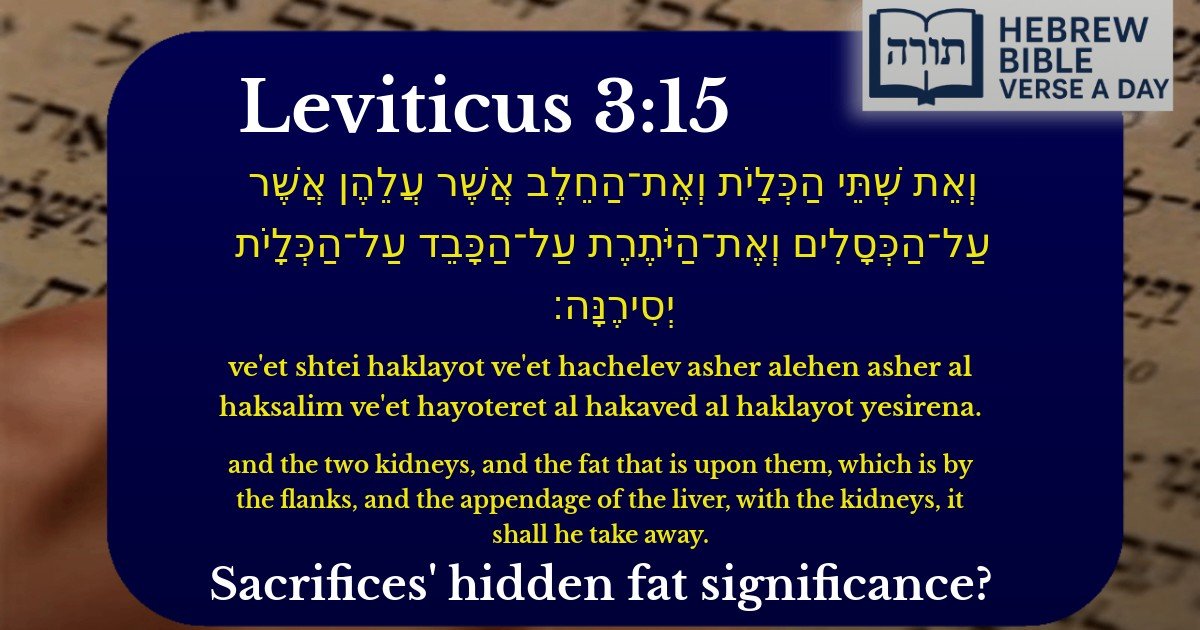
A: Leviticus 3:15 describes the parts of an animal that are to be removed and offered on the altar during a peace offering (שלמים). According to Rashi, these specific parts—the kidneys, the fat around them, and the lobe of the liver—were considered the choicest parts and were designated for Hashem as a symbolic gesture of giving the best to Him.
Q: Why are the kidneys and liver fat specifically mentioned in this verse?
A: The kidneys and the fat surrounding them, along with the lobe of the liver, are mentioned because they were considered the finest parts of the animal. The Talmud (Chullin 49b) explains that these parts were associated with vitality and were therefore set aside for sanctification. Rambam (Hilchos Maaseh HaKorbanos 5:13) also notes that these portions were universally removed in many types of sacrifices.
Q: What lesson can we learn from Leviticus 3:15 today?
A: This verse teaches the importance of giving our best to Hashem, even when not in the Temple era. Just as the choicest parts of the animal were dedicated to Him, we should strive to offer our finest efforts in mitzvos, prayer, and acts of kindness. The Midrash (Vayikra Rabbah 3:5) emphasizes that true service requires sincerity and the willingness to give what is most valuable.
Q: Does this verse still have relevance if we don’t bring sacrifices today?
A: Yes, while we no longer bring physical sacrifices, the principle behind this verse remains relevant. The Rambam (Moreh Nevuchim 3:46) explains that sacrifices were a means to refine character, and today, we fulfill this through prayer (תפילה) and Torah study, which are called 'the offerings of our lips' (Hosea 14:3). The idea of dedicating our best to Hashem applies in all generations.
Q: Why were these parts burned on the altar instead of eaten?
A: These parts were burned on the altar as a symbolic act of elevating them entirely to Hashem. Rashi (on Leviticus 3:16) explains that the fat and organs represent the innermost vitality of the animal, and by offering them, we acknowledge that all life and sustenance come from Hashem. The Talmud (Zevachim 35b) also discusses the spiritual significance of these offerings as a means of atonement and connection.


Context in Sacrificial Law
This verse (Leviticus 3:4) details the parts of an animal sacrifice that are to be removed and offered on the altar during a zevach shelamim (peace offering). The kidneys, their fat, the fat around the flanks, and the lobe of the liver are specifically designated for burning, as they are considered the choicest parts.
Rashi's Explanation
Rashi (Vayikra 3:4) clarifies that the kidneys and their fat symbolize the seat of human desires and thoughts, as the kidneys are metaphorically referred to in Tanach (e.g., Tehillim 7:10) as the source of counsel. By offering these parts, one symbolically dedicates their innermost thoughts and inclinations to Hashem.
Symbolism of the Liver's Appendage
The yoteret (appendage of the liver) is singled out because, as the Ramban (Vayikra 3:4) explains, the liver represents anger and base instincts (based on its role in producing bile). Removing its lobe signifies subduing one's temper and refining raw emotions in divine service.
Talmudic Insights
Halachic Precision
The Mishneh Torah (Hilchot Ma'aseh HaKorbanot 5:17) specifies that these portions must be removed with care to avoid disqualification. The meticulous handling reflects how physical actions in avodah parallel spiritual refinement—each detail matters in serving Hashem completely.
Midrashic Perspective
Vayikra Rabbah (3:4) connects these organs to human traits: the kidneys (advice), liver (emotion), and fat (material indulgence). Their offering represents surrendering one's entire being—intellect, passion, and physicality—to divine will.