

Join Our Newsletter To Be Informed When New Videos Are Posted
Hebrew Text
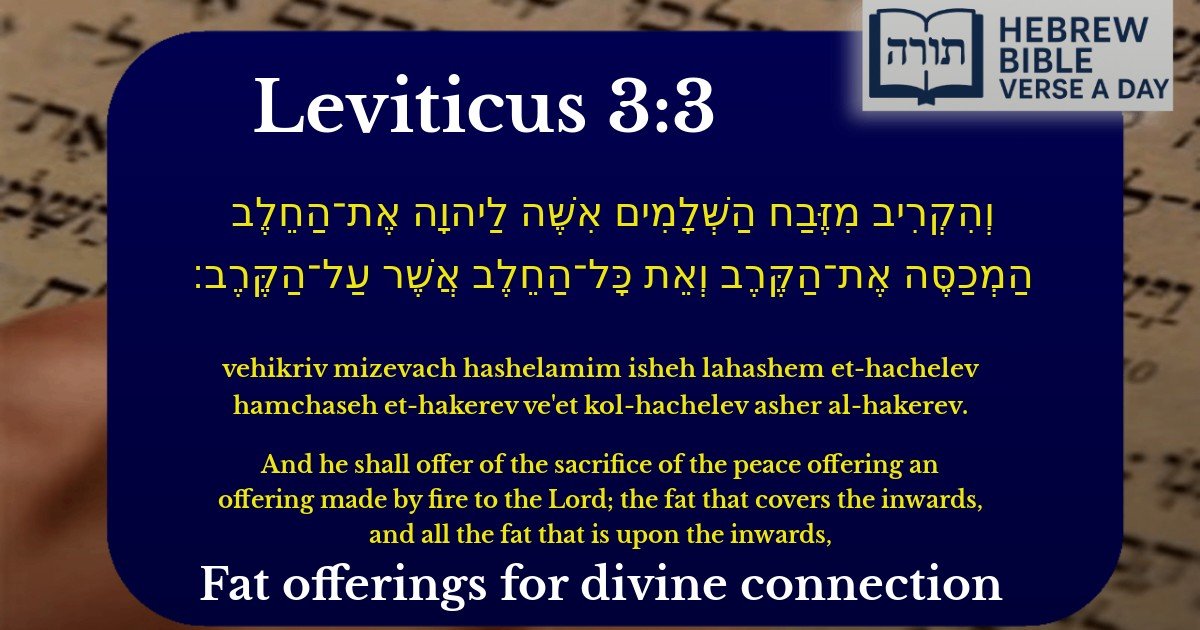
וְהִקְרִיב מִזֶּבַח הַשְּׁלָמִים אִשֶּׁה לַיהוָה אֶת־הַחֵלֶב הַמְכַסֶּה אֶת־הַקֶּרֶב וְאֵת כָּל־הַחֵלֶב אֲשֶׁר עַל־הַקֶּרֶב׃
English Translation
And he shall offer of the sacrifice of the peace offering an offering made by fire to the Lord; the fat that covers the inwards, and all the fat that is upon the inwards,
Transliteration
Vehikriv mizevach hashelamim isheh lahashem et-hachelev hamchaseh et-hakerev ve'et kol-hachelev asher al-hakerev.
Hebrew Leining Text
וְהִקְרִיב֙ מִזֶּ֣בַח הַשְּׁלָמִ֔ים אִשֶּׁ֖ה לַיהֹוָ֑ה אֶת־הַחֵ֙לֶב֙ הַֽמְכַסֶּ֣ה אֶת־הַקֶּ֔רֶב וְאֵת֙ כׇּל־הַחֵ֔לֶב אֲשֶׁ֖ר עַל־הַקֶּֽרֶב׃
🎵 Listen to leining
Parasha Commentary
📚 Talmud Citations
This verse is quoted in the Talmud.
📖 Menachot 49b
The verse is discussed in the context of the laws regarding the offering of sacrifices, specifically the peace offering, and the proper handling of the fat that is to be offered.
📖 Chullin 120a
This verse is referenced in a discussion about the types of fats that are prohibited or permitted in sacrifices, emphasizing the distinction between the fats that are to be offered and those that are not.
Explanation of the Verse
The verse (Vayikra 3:3) discusses the offering of the zevach shelamim (peace offering) and specifies which fats must be burned on the altar as a fire-offering to Hashem. The fats mentioned are:
Rashi's Commentary
Rashi (Vayikra 3:3) explains that the fat covering the innards refers specifically to the layer of fat on the stomach (kerev), while "all the fat upon the inwards" includes additional fatty deposits attached to the intestines and other organs. Rashi emphasizes that these fats are designated exclusively for Hashem and may not be consumed by humans (as derived from Vayikra 7:23).
Rambam's Perspective
In Hilchos Ma'aseh HaKorbanos (9:5), the Rambam elaborates on the practical halachic process of removing these fats during the sacrificial procedure. He notes that the Kohen must carefully separate and burn these fats, as they are considered the choicest parts of the animal, symbolizing devotion to Hashem.
Midrashic Insight
The Midrash (Vayikra Rabbah 3:4) connects this verse to the concept of mesiras nefesh (self-sacrifice). Just as the fats—the richest and most desirable parts of the animal—are offered entirely to Hashem, so too should a person dedicate their finest energies and possessions to divine service.
Halachic Implications
The Talmud (Chullin 49a) discusses the precise definitions of the forbidden fats (cheilev), differentiating them from permitted fats (shuman). The Gemara clarifies that only the specific fats listed in this verse are prohibited for consumption, while other fats may be eaten.