

Join Our Newsletter To Be Informed When New Videos Are Posted
Hebrew Text
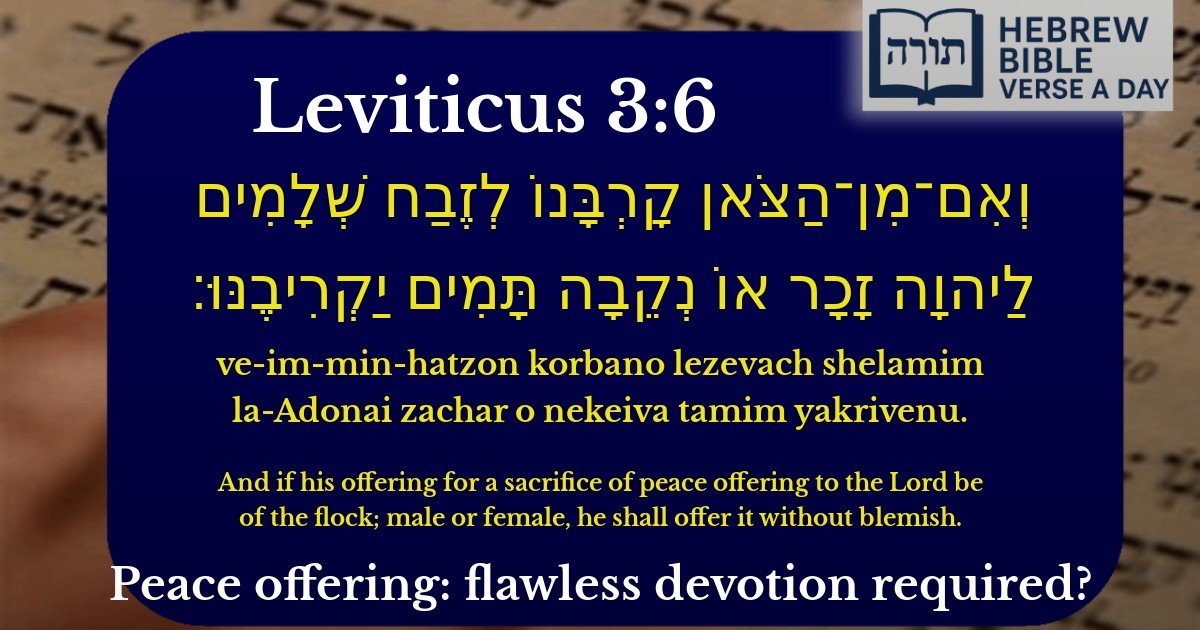
וְאִם־מִן־הַצֹּאן קָרְבָּנוֹ לְזֶבַח שְׁלָמִים לַיהוָה זָכָר אוֹ נְקֵבָה תָּמִים יַקְרִיבֶנּוּ׃
English Translation
And if his offering for a sacrifice of peace offering to the Lord be of the flock; male or female, he shall offer it without blemish.
Transliteration
Ve-im-min-hatzon korbano lezevach shelamim la-Adonai zachar o nekeiva tamim yakrivenu.
Hebrew Leining Text
וְאִם־מִן־הַצֹּ֧אן קׇרְבָּנ֛וֹ לְזֶ֥בַח שְׁלָמִ֖ים לַיהֹוָ֑ה זָכָר֙ א֣וֹ נְקֵבָ֔ה תָּמִ֖ים יַקְרִיבֶֽנּוּ׃
🎵 Listen to leining
Parasha Commentary
📚 Talmud Citations
This verse is quoted in the Talmud.
📖 Menachot 110a
The verse is referenced in the discussion about the requirements for sacrificial offerings, specifically regarding peace offerings from the flock, emphasizing the need for the animal to be without blemish.
📖 Zevachim 35b
The verse is cited in the context of discussing the laws pertaining to sacrifices, particularly the distinction between male and female animals for peace offerings and the requirement of them being unblemished.
General Context of the Verse
The verse (Vayikra 3:6) discusses the laws of the zevach shelamim (peace offering), specifically when the offering is brought from the flock (sheep or goats). Unlike other sacrifices, the shelamim could be either male or female, provided the animal is tamim (unblemished). This reflects the unique nature of the shelamim, which was partially consumed by the altar, partially by the kohanim, and partially by the owner and his household.
Interpretation of "זָכָר אוֹ נְקֵבָה" (Male or Female)
Rashi (ad loc.) notes that while most sacrifices require a male animal (e.g., olah, chatat), the shelamim is an exception, permitting either gender. The Rambam (Hilchot Ma'aseh HaKorbanot 1:14) explains that this leniency reflects the voluntary and joyous nature of the shelamim, allowing greater accessibility for those bringing the offering.
Significance of "תָּמִים" (Without Blemish)
The requirement for the animal to be tamim is emphasized across all sacrifices. The Talmud (Chullin 11b) elaborates on the physical disqualifications that render an animal pasul (invalid). The Sforno comments that physical perfection symbolizes spiritual wholeness, teaching that one must approach divine service with sincerity and completeness.
The Purpose of the Shelamim Offering
The Midrash Torat Kohanim connects the term shelamim (from shalom, peace) to its role in fostering harmony: between the individual and Hashem, between the kohanim and the people, and among the participants who share the meal. The ability to bring either gender underscores its inclusive nature, as it was often brought in times of gratitude or personal celebration.
Halachic Implications