

Join Our Newsletter To Be Informed When New Videos Are Posted
Hebrew Text
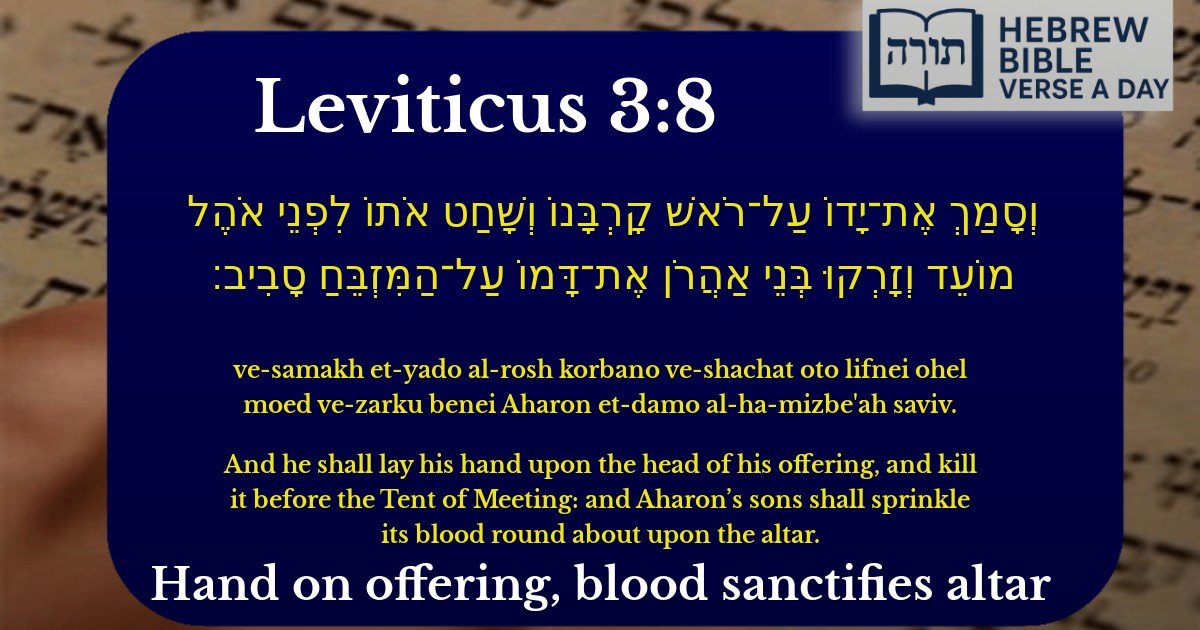
וְסָמַךְ אֶת־יָדוֹ עַל־רֹאשׁ קָרְבָּנוֹ וְשָׁחַט אֹתוֹ לִפְנֵי אֹהֶל מוֹעֵד וְזָרְקוּ בְּנֵי אַהֲרֹן אֶת־דָּמוֹ עַל־הַמִּזְבֵּחַ סָבִיב׃
English Translation
And he shall lay his hand upon the head of his offering, and kill it before the Tent of Meeting: and Aharon’s sons shall sprinkle its blood round about upon the altar.
Transliteration
Ve-samakh et-yado al-rosh korbano ve-shachat oto lifnei ohel moed ve-zarku benei Aharon et-damo al-ha-mizbe'ah saviv.
Hebrew Leining Text
וְסָמַ֤ךְ אֶת־יָדוֹ֙ עַל־רֹ֣אשׁ קׇרְבָּנ֔וֹ וְשָׁחַ֣ט אֹת֔וֹ לִפְנֵ֖י אֹ֣הֶל מוֹעֵ֑ד וְ֠זָרְק֠וּ בְּנֵ֨י אַהֲרֹ֧ן אֶת־דָּמ֛וֹ עַל־הַמִּזְבֵּ֖חַ סָבִֽיב׃
🎵 Listen to leining
Parasha Commentary
📚 Talmud Citations
This verse is quoted in the Talmud.
📖 Zevachim 32a
The verse is discussed in the context of the laws regarding the proper method of slaughtering sacrifices and the sprinkling of blood on the altar.
📖 Menachot 93b
Referenced in a discussion about the placement of hands on the sacrificial animal and the procedures performed by the priests.
The Act of Semichah (Laying Hands)
The verse describes the mitzvah of semichah (laying hands on the head of the offering) before slaughtering it. According to Rashi (Vayikra 1:4), this act symbolizes the owner transferring his identity onto the animal, as if declaring, "This animal stands in my place to atone for my sins." The Rambam (Hilchos Ma'aseh HaKorbanos 3:15) explains that semichah is performed with both hands and accompanied by a verbal confession (viduy) when the offering is brought for a sin.
The Location of the Slaughter
The phrase "before the Tent of Meeting" teaches that the slaughter must take place in the northern part of the courtyard, as derived from the Talmud (Zevachim 5:3). This area was designated specifically for slaughtering most korbanos, emphasizing the sanctity and order of the sacrificial service.
The Role of Aharon's Sons
The sprinkling of blood by Aharon's sons highlights the exclusive role of the kohanim in this part of the service. The Midrash (Toras Kohanim 1:12) notes that this privilege was given to them as part of their consecration for divine service. The Rambam (Hilchos Ma'aseh HaKorbanos 5:1) elaborates that the blood must be sprinkled in a specific manner—"around" the altar—referring to the two opposite corners to create a "circular" effect symbolizing completeness in atonement.
Symbolism of the Blood
The sprinkling of blood represents the essence of the korban's atonement, as the verse states (Vayikra 17:11): "For the soul of the flesh is in the blood." The Talmud (Yoma 5a) explains that the blood serves as the medium through which atonement is achieved, as it symbolizes the life-force being offered to Hashem. The act of sprinkling "around" the altar (as noted by Rashi) teaches that the atonement encompasses all aspects of the individual's relationship with the Divine.