

Join Our Newsletter To Be Informed When New Videos Are Posted
Hebrew Text
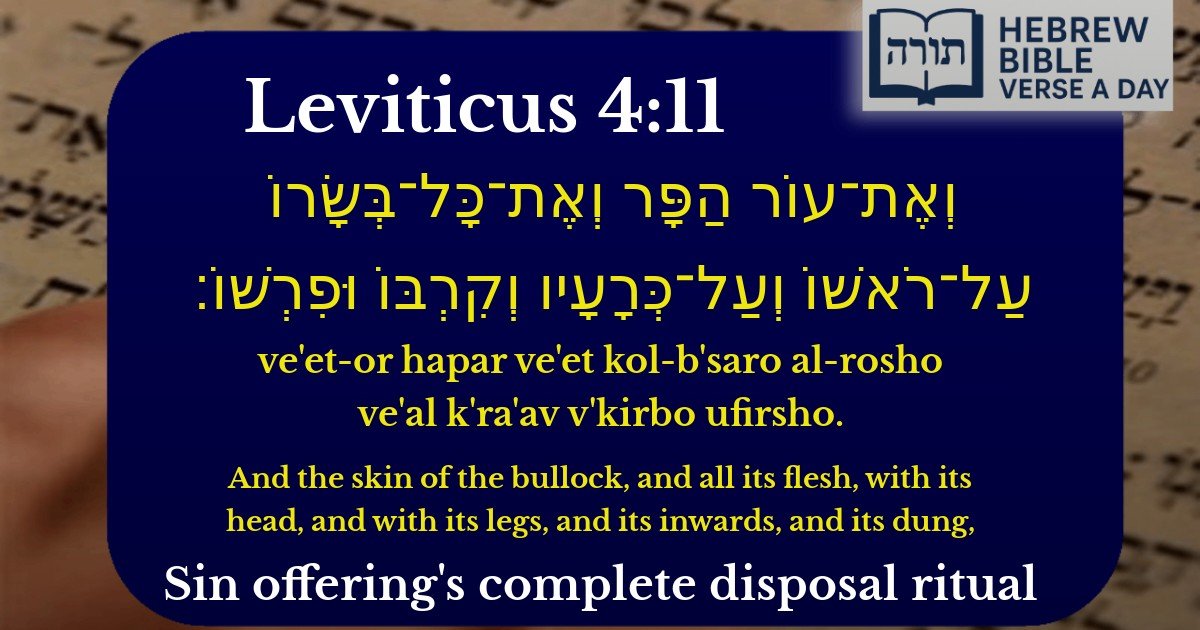
וְאֶת־עוֹר הַפָּר וְאֶת־כָּל־בְּשָׂרוֹ עַל־רֹאשׁוֹ וְעַל־כְּרָעָיו וְקִרְבּוֹ וּפִרְשׁוֹ׃
English Translation
And the skin of the bullock, and all its flesh, with its head, and with its legs, and its inwards, and its dung,
Transliteration
Ve'et-or hapar ve'et kol-b'saro al-rosho ve'al k'ra'av v'kirbo ufirsho.
Hebrew Leining Text
וְאֶת־ע֤וֹר הַפָּר֙ וְאֶת־כׇּל־בְּשָׂר֔וֹ עַל־רֹאשׁ֖וֹ וְעַל־כְּרָעָ֑יו וְקִרְבּ֖וֹ וּפִרְשֽׁוֹ׃
🎵 Listen to leining
Parasha Commentary
📚 Talmud Citations
This verse is quoted in the Talmud.
📖 Zevachim 98b
The verse is discussed in the context of the laws regarding the burning of the sin offering, particularly the parts of the bullock that are to be burned outside the camp.
📖 Yoma 67b
The verse is referenced in the discussion of the rituals performed on Yom Kippur, specifically concerning the disposal of the remains of the sin offerings.
Context in the Torah
This verse (Vayikra 4:11) appears in the context of the parah adumah (red heifer) ritual and the laws of the chatat (sin offering). It details the complete burning of the bullock outside the camp, emphasizing the thoroughness required in the atonement process for certain sins.
Rashi's Explanation
Rashi (Vayikra 4:11) explains that the phrase "and its dung" refers to the undigested food in the animal's intestines. He notes that even this must be burned entirely, teaching that no part of the sin offering may be left unburnt. This underscores the seriousness of atonement—every element of the offering must be consumed by fire.
Rambam's Perspective
In Hilchot Ma'aseh HaKorbanot (Laws of Sacrificial Procedure), the Rambam (Maimonides) emphasizes that the burning of the entire bullock—including its skin, flesh, and even its dung—outside the camp symbolizes the complete eradication of sin. Unlike other offerings where parts may be eaten or used, the chatat of the high priest or community must be entirely destroyed, reflecting the gravity of their transgression.
Midrashic Insights
The Midrash (Vayikra Rabbah 7:3) connects this verse to the idea of teshuvah (repentance). Just as the bullock is wholly consumed, so too must a person’s repentance be complete—leaving no trace of the sin behind. The inclusion of even the dung teaches that no aspect of wrongdoing, no matter how seemingly insignificant, should be overlooked in the process of atonement.
Halachic Implications