

Join Our Newsletter To Be Informed When New Videos Are Posted
Hebrew Text
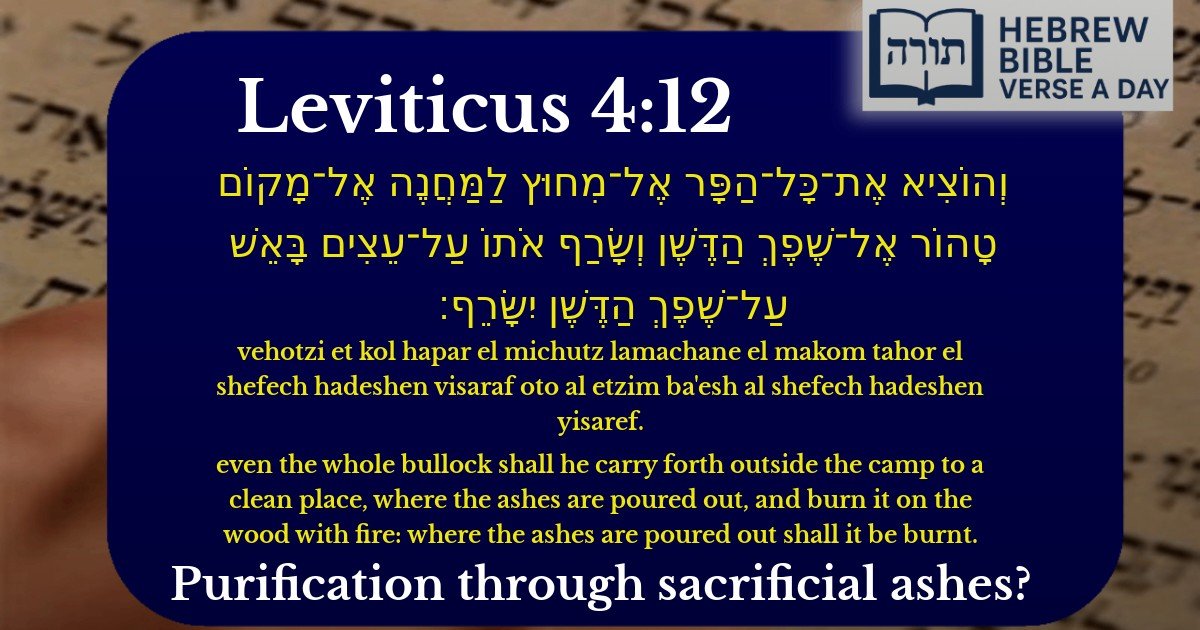
וְהוֹצִיא אֶת־כָּל־הַפָּר אֶל־מִחוּץ לַמַּחֲנֶה אֶל־מָקוֹם טָהוֹר אֶל־שֶׁפֶךְ הַדֶּשֶׁן וְשָׂרַף אֹתוֹ עַל־עֵצִים בָּאֵשׁ עַל־שֶׁפֶךְ הַדֶּשֶׁן יִשָּׂרֵף׃
English Translation
even the whole bullock shall he carry forth outside the camp to a clean place, where the ashes are poured out, and burn it on the wood with fire: where the ashes are poured out shall it be burnt.
Transliteration
Vehotzi et kol hapar el michutz lamachane el makom tahor el shefech hadeshen visaraf oto al etzim ba'esh al shefech hadeshen yisaref.
Hebrew Leining Text
וְהוֹצִ֣יא אֶת־כׇּל־הַ֠פָּ֠ר אֶל־מִח֨וּץ לַֽמַּחֲנֶ֜ה אֶל־מָק֤וֹם טָהוֹר֙ אֶל־שֶׁ֣פֶךְ הַדֶּ֔שֶׁן וְשָׂרַ֥ף אֹת֛וֹ עַל־עֵצִ֖ים בָּאֵ֑שׁ עַל־שֶׁ֥פֶךְ הַדֶּ֖שֶׁן יִשָּׂרֵֽף׃ {פ}
🎵 Listen to leining
Parasha Commentary
📚 Talmud Citations
This verse is quoted in the Talmud.
📖 Yoma 68a
The verse is discussed in the context of the laws regarding the burning of the bullock outside the camp on Yom Kippur.
📖 Zevachim 105b
The verse is referenced in the discussion about the proper place for burning sacrificial remains.
Context in the Torah
This verse (Vayikra 4:12) describes the procedure for disposing of the remains of the par he'elem davar shel tzibbur (the bull brought as a sin offering for an unwitting communal transgression). The Kohen must take the entire bull outside the camp to a designated pure place where the ashes from the altar are deposited and burn it there on a wood fire.
Rashi's Explanation
Rashi (Vayikra 4:12) clarifies several key points:
Symbolism and Halachic Significance
The Rambam (Hilchos Ma'aseh HaKorbanos 7:6) explains that burning the sin offering outside the camp serves as a public demonstration of atonement and removal of sin. The requirement for a "clean place" teaches that even in the process of destroying the remnants of sin, we must maintain holiness.
The Talmud (Yoma 68a) derives from this verse that certain sin offerings (those whose blood is brought into the Kodesh) must be burned outside the camp, while others (whose blood remains in the outer altar) are eaten by the Kohanim.
Midrashic Insights
The Toras Kohanim (4:72) notes that the phrase "where the ashes are poured out shall it be burned" comes to teach that this burning must be done specifically in the ash disposal area, not just anywhere outside the camp. This emphasizes the importance of proper procedure in the avodah.
The Kli Yakar adds that burning the offering where the ashes are deposited symbolizes how the sin is being reduced to nothingness, just as the ashes represent the complete consumption of the sacrifice.