

Join Our Newsletter To Be Informed When New Videos Are Posted
Hebrew Text
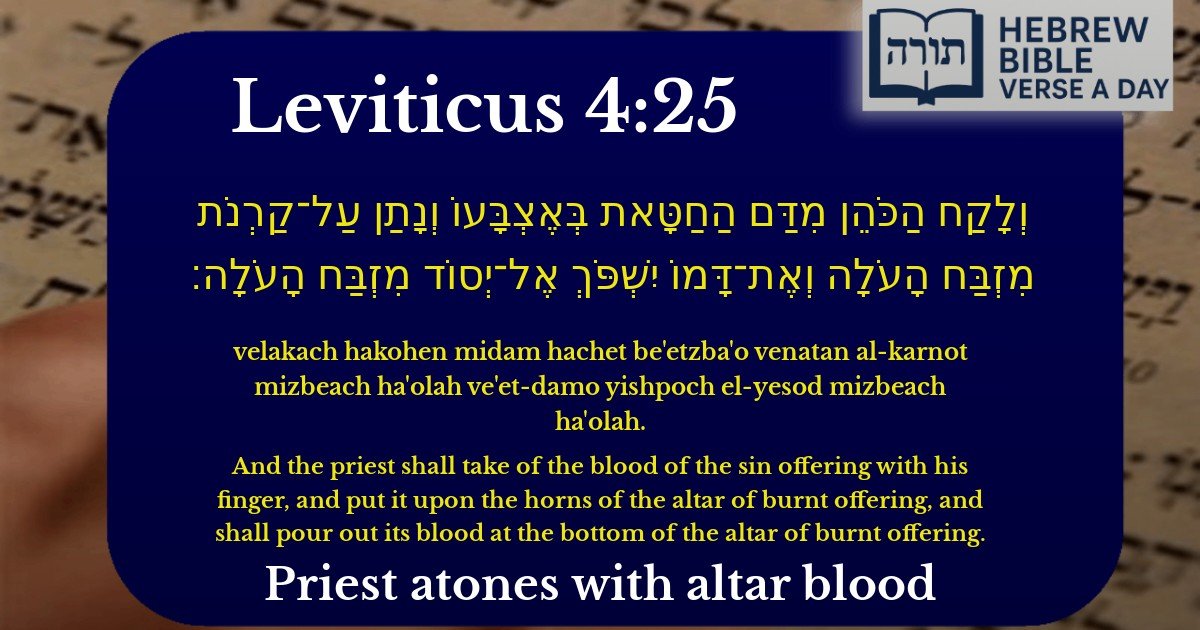
וְלָקַח הַכֹּהֵן מִדַּם הַחַטָּאת בְּאֶצְבָּעוֹ וְנָתַן עַל־קַרְנֹת מִזְבַּח הָעֹלָה וְאֶת־דָּמוֹ יִשְׁפֹּךְ אֶל־יְסוֹד מִזְבַּח הָעֹלָה׃
English Translation
And the priest shall take of the blood of the sin offering with his finger, and put it upon the horns of the altar of burnt offering, and shall pour out its blood at the bottom of the altar of burnt offering.
Transliteration
Velakach hakohen midam hachet be'etzba'o venatan al-karnot mizbeach ha'olah ve'et-damo yishpoch el-yesod mizbeach ha'olah.
Hebrew Leining Text
וְלָקַ֨ח הַכֹּהֵ֜ן מִדַּ֤ם הַֽחַטָּאת֙ בְּאֶצְבָּע֔וֹ וְנָתַ֕ן עַל־קַרְנֹ֖ת מִזְבַּ֣ח הָעֹלָ֑ה וְאֶת־דָּמ֣וֹ יִשְׁפֹּ֔ךְ אֶל־יְס֖וֹד מִזְבַּ֥ח הָעֹלָֽה׃
🎵 Listen to leining
Parasha Commentary
📚 Talmud Citations
This verse is quoted in the Talmud.
📖 Zevachim 37b
The verse is discussed in the context of the proper procedure for offering a sin offering, specifically regarding the placement of the blood on the altar's horns and the pouring of the remaining blood at the base.
📖 Menachot 93b
Referenced in a discussion about the various types of offerings and the specific requirements for each, including the handling of the blood in sin offerings.
The Procedure of the Sin Offering
The verse describes the ritual process for the chatat (sin offering), emphasizing the role of the kohen (priest) in applying the blood to the altar. According to Rashi (Vayikra 4:25), the placement of the blood on the karnot (horns) of the altar symbolizes atonement, as the horns represent strength and elevation—suggesting that the penitent's sins are lifted and forgiven through this sacred act.
Symbolism of Blood Placement
The Rambam (Hilchot Ma'aseh HaKorbanot 5:13) explains that the blood is applied to the horns because they are the highest and most prominent part of the altar, signifying that the atonement reaches upward to Hashem. The pouring of the remaining blood at the base of the altar, as noted in the Talmud (Zevachim 53b), represents the complete submission of the sinner, as the foundation (yesod) signifies humility and sincerity in repentance.
The Role of the Kohen's Finger
The use of the kohen's finger (etzba) is significant. Midrash Tanchuma (Tzav 10) teaches that the finger represents precision and intentionality in the service of Hashem. Unlike other offerings where a vessel might be used, the direct application by hand underscores the personal responsibility of the kohen in facilitating atonement for the individual.
Halachic Implications