

Join Our Newsletter To Be Informed When New Videos Are Posted
Hebrew Text
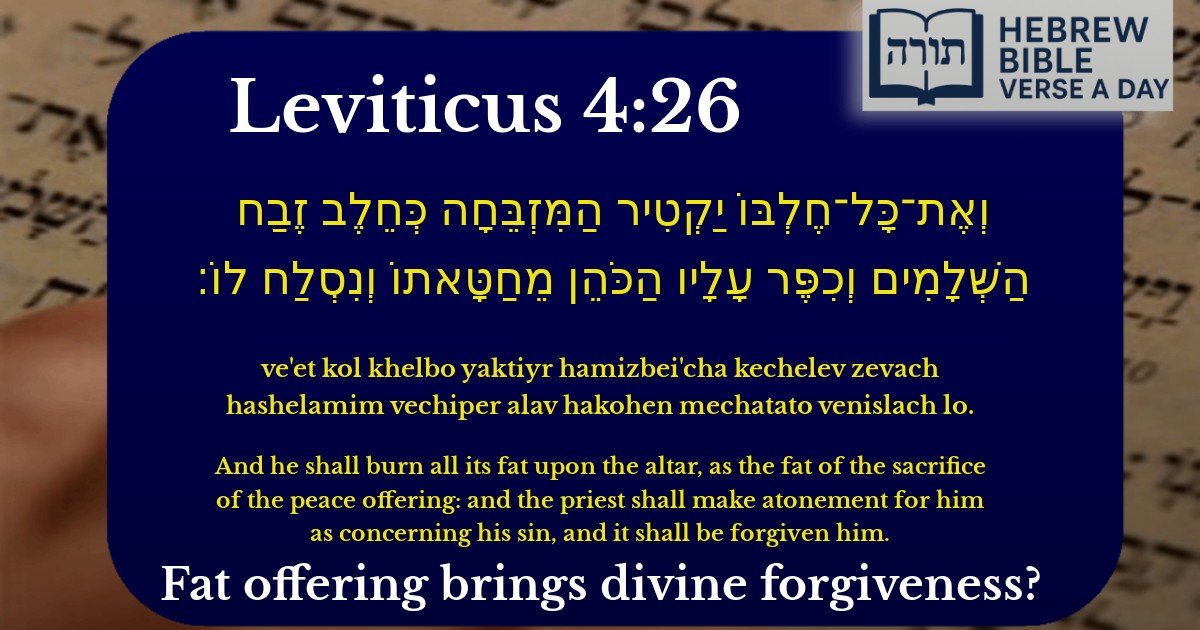
וְאֶת־כָּל־חֶלְבּוֹ יַקְטִיר הַמִּזְבֵּחָה כְּחֵלֶב זֶבַח הַשְּׁלָמִים וְכִפֶּר עָלָיו הַכֹּהֵן מֵחַטָּאתוֹ וְנִסְלַח לוֹ׃
English Translation
And he shall burn all its fat upon the altar, as the fat of the sacrifice of the peace offering: and the priest shall make atonement for him as concerning his sin, and it shall be forgiven him.
Transliteration
Ve'et kol khelbo yaktiyr hamizbei'cha kechelev zevach hashelamim vechiper alav hakohen mechatato venislach lo.
Hebrew Leining Text
וְאֶת־כׇּל־חֶלְבּוֹ֙ יַקְטִ֣יר הַמִּזְבֵּ֔חָה כְּחֵ֖לֶב זֶ֣בַח הַשְּׁלָמִ֑ים וְכִפֶּ֨ר עָלָ֧יו הַכֹּהֵ֛ן מֵחַטָּאת֖וֹ וְנִסְלַ֥ח לֽוֹ׃ {פ}
🎵 Listen to leining
Parasha Commentary
📚 Talmud Citations
This verse is quoted in the Talmud.
📖 Zevachim 44b
The verse is discussed in the context of the laws concerning the burning of fats on the altar and the atonement process performed by the priest.
📖 Keritot 6b
This verse is referenced in a discussion about the atonement process for sins and the role of the priest in achieving forgiveness.
Explanation of the Verse
The verse (Vayikra 4:26) describes the process of atonement for an individual who brings a chatat (sin offering) for an unintentional transgression. The fat of the offering is burned on the altar, similar to the procedure for a zevach shelamim (peace offering), and the kohen effects atonement, resulting in forgiveness.
Key Elements of the Sacrifice
Symbolism of the Fat
The Midrash (Vayikra Rabbah 5:4) notes that fat represents indulgence and physical desires. By burning the fat on the altar, the sinner symbolically dedicates their material inclinations to Hashem, transforming their transgression into an act of devotion.
Atonement and Repentance
The Sefer HaChinuch (Mitzvah 124) explains that the sacrificial process serves as a tangible means of repentance, reinforcing the sinner’s commitment to change. The physical act of bringing an offering helps internalize remorse and resolve to avoid future transgressions.