

Join Our Newsletter To Be Informed When New Videos Are Posted
Hebrew Text
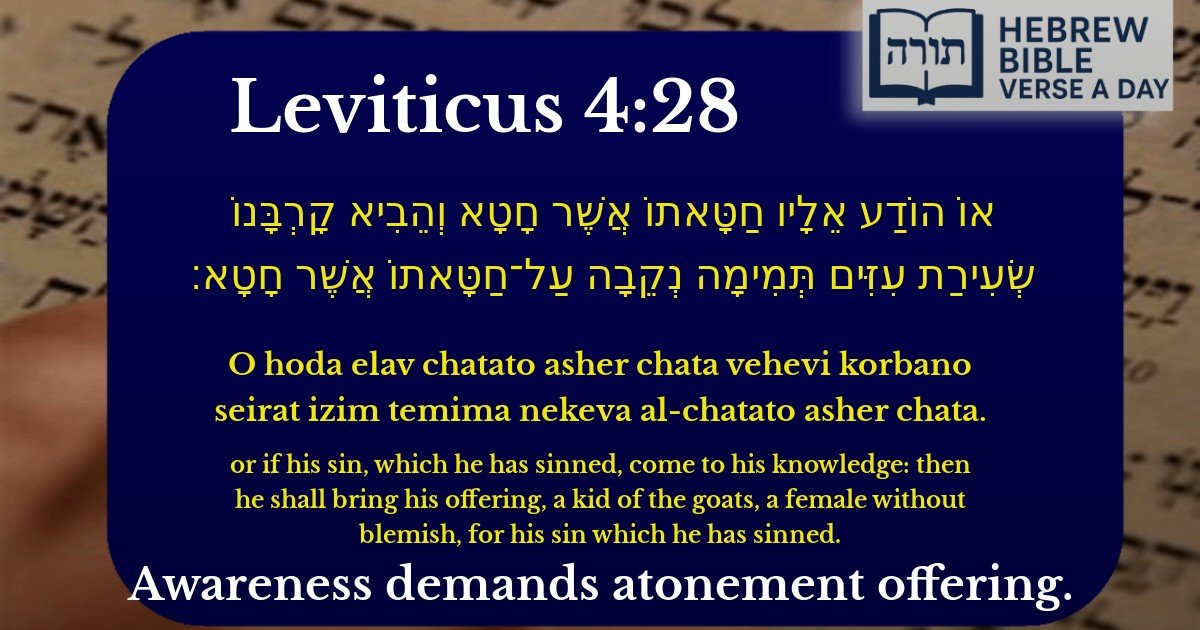
אוֹ הוֹדַע אֵלָיו חַטָּאתוֹ אֲשֶׁר חָטָא וְהֵבִיא קָרְבָּנוֹ שְׂעִירַת עִזִּים תְּמִימָה נְקֵבָה עַל־חַטָּאתוֹ אֲשֶׁר חָטָא׃
English Translation
or if his sin, which he has sinned, come to his knowledge: then he shall bring his offering, a kid of the goats, a female without blemish, for his sin which he has sinned.
Transliteration
O hoda elav chatato asher chata vehevi korbano seirat izim temima nekeva al-chatato asher chata.
Hebrew Leining Text
א֚וֹ הוֹדַ֣ע אֵלָ֔יו חַטָּאת֖וֹ אֲשֶׁ֣ר חָטָ֑א וְהֵבִ֨יא קׇרְבָּנ֜וֹ שְׂעִירַ֤ת עִזִּים֙ תְּמִימָ֣ה נְקֵבָ֔ה עַל־חַטָּאת֖וֹ אֲשֶׁ֥ר חָטָֽא׃
🎵 Listen to leining
Parasha Commentary
📚 Talmud Citations
This verse is quoted in the Talmud.
📖 Keritot 2a
The verse is referenced in the discussion about the types of sacrifices brought for unintentional sins, particularly focusing on the requirement for a female goat without blemish.
📖 Shevuot 7b
The verse is cited in the context of discussing the awareness and acknowledgment of one's sin as a prerequisite for bringing a sacrifice.
Verse Context in Vayikra (Leviticus 4:28)
This verse appears in the Torah portion discussing the korban chatat (sin offering) brought by an individual who unintentionally transgresses a prohibition. The verse specifies the requirement to bring a female goat without blemish once the sinner becomes aware of their transgression.
Rashi's Commentary
Rashi (Vayikra 4:28) explains that the phrase "or if his sin... come to his knowledge" refers to the moment when the person becomes aware of their unintentional sin, either through their own realization or being informed by others. The offering is only required once the sin is recognized, emphasizing the importance of teshuvah (repentance) through acknowledgment.
Nature of the Offering
The requirement for a "female goat without blemish" is addressed by the Rambam (Hilchot Maaseh HaKorbanot 1:3), who notes that the Torah prescribes different animals for different types of sin offerings based on the offender's financial capacity. A female goat represents a middle-tier offering, accessible to most people, as opposed to a bull (for more severe cases) or birds (for those of limited means).
Symbolism of the Female Goat
Halachic Implications
The Mishnah (Horayot 2:6) and Gemara (Horayot 8a) discuss how this verse applies to cases where the sinner only later realizes their transgression. The offering serves as a kaparah (atonement) specifically for shogeg (unintentional sins), highlighting the Torah's distinction between deliberate and accidental violations.