

Join Our Newsletter To Be Informed When New Videos Are Posted
Hebrew Text
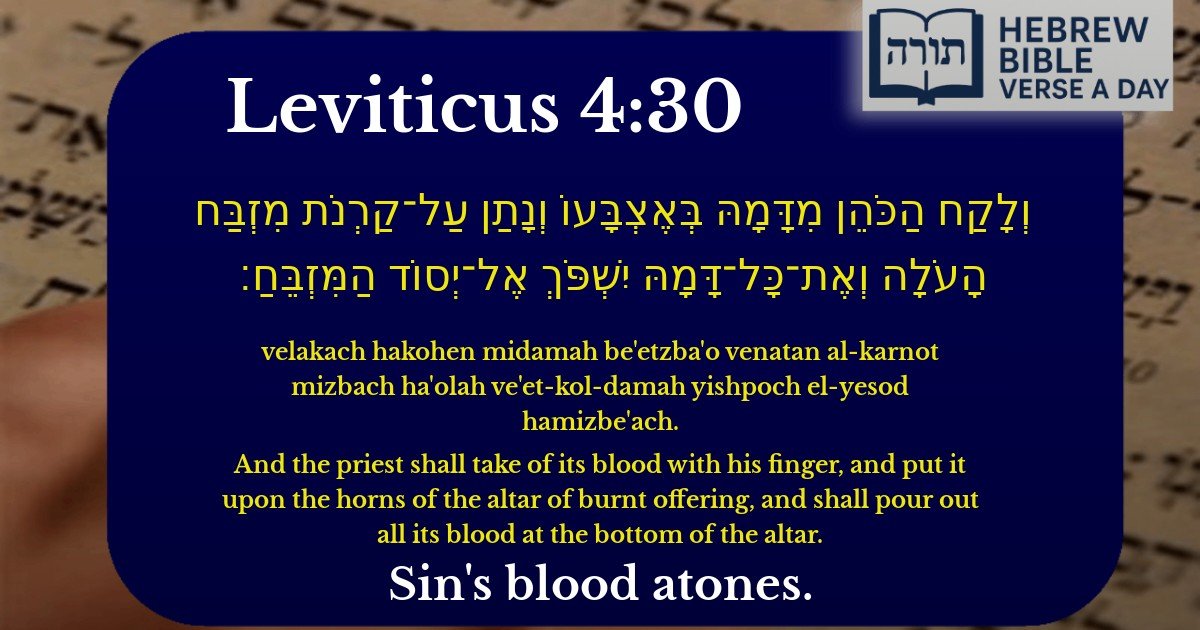
וְלָקַח הַכֹּהֵן מִדָּמָהּ בְּאֶצְבָּעוֹ וְנָתַן עַל־קַרְנֹת מִזְבַּח הָעֹלָה וְאֶת־כָּל־דָּמָהּ יִשְׁפֹּךְ אֶל־יְסוֹד הַמִּזְבֵּחַ׃
English Translation
And the priest shall take of its blood with his finger, and put it upon the horns of the altar of burnt offering, and shall pour out all its blood at the bottom of the altar.
Transliteration
Velakach hakohen midamah be'etzba'o venatan al-karnot mizbach ha'olah ve'et-kol-damah yishpoch el-yesod hamizbe'ach.
Hebrew Leining Text
וְלָקַ֨ח הַכֹּהֵ֤ן מִדָּמָהּ֙ בְּאֶצְבָּע֔וֹ וְנָתַ֕ן עַל־קַרְנֹ֖ת מִזְבַּ֣ח הָעֹלָ֑ה וְאֶת־כׇּל־דָּמָ֣הּ יִשְׁפֹּ֔ךְ אֶל־יְס֖וֹד הַמִּזְבֵּֽחַ׃
🎵 Listen to leining
Parasha Commentary
📚 Talmud Citations
This verse is quoted in the Talmud.
📖 Zevachim 37b
The verse is discussed in the context of the proper procedures for sacrificial offerings, specifically regarding the placement of blood on the altar's horns and the pouring of the remaining blood at the base.
📖 Menachot 93b
The verse is referenced in a discussion about the various types of sacrifices and the specific rituals associated with each, including the handling of the blood.
The Procedure of Blood Application in the Korban Olah
The verse describes the ritual process for the blood of the Korban Olah (burnt offering), which involves two distinct actions by the Kohen (priest): placing blood on the horns of the altar and pouring the remainder at its base. Rashi (Vayikra 4:7) explains that the application of blood on the horns symbolizes atonement, as the horn represents strength and elevation—suggesting that the offering uplifts the penitent before Hashem.
Symbolism of the Blood Placement
The Midrash Tanchuma (Tzav 14) teaches that the four horns of the altar correspond to the four directions of the world, indicating that the altar serves as a conduit for divine mercy to all of humanity. The Rambam (Moreh Nevuchim 3:46) further elaborates that the blood represents the life force (nefesh), and its placement on the altar signifies the donor’s complete devotion to Hashem.
The Pouring of the Blood at the Base
The second part of the verse instructs the priest to pour the remaining blood at the altar’s foundation. The Talmud (Zevachim 53b) explains that this act ensures that no part of the sacrificial process is neglected, reinforcing the principle of hiddur mitzvah (beautifying the commandment). The Kli Yakar (Vayikra 1:5) adds that the blood at the base represents humility, reminding the worshipper that true service to Hashem requires both outward action and inner sincerity.
Halachic Implications