

Join Our Newsletter To Be Informed When New Videos Are Posted
Hebrew Text
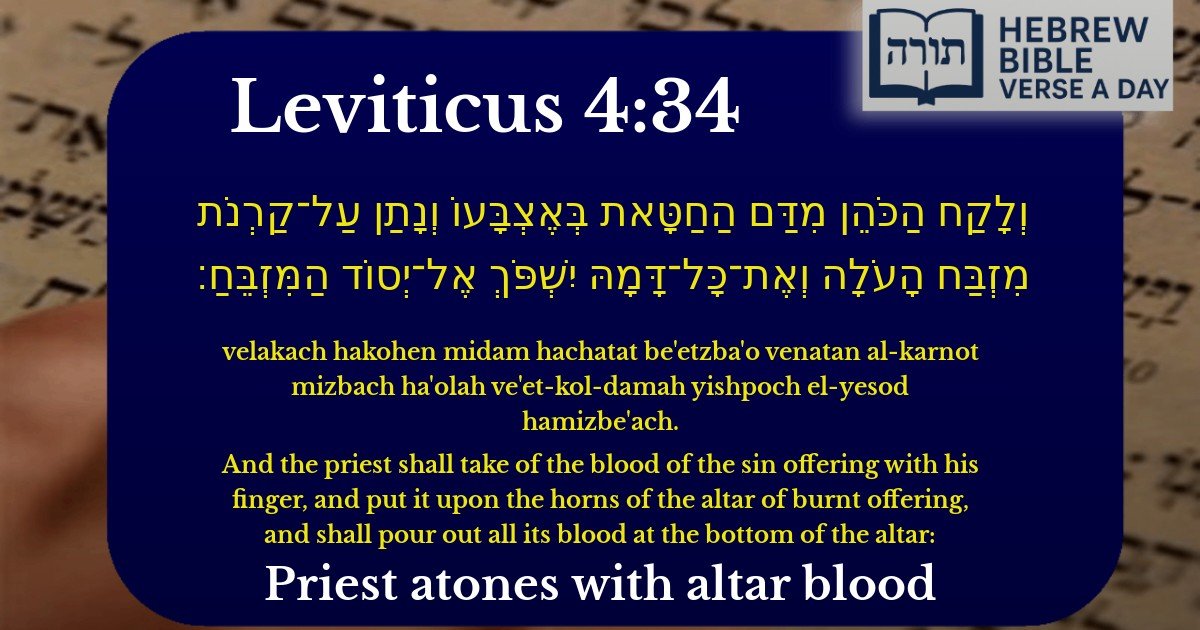
וְלָקַח הַכֹּהֵן מִדַּם הַחַטָּאת בְּאֶצְבָּעוֹ וְנָתַן עַל־קַרְנֹת מִזְבַּח הָעֹלָה וְאֶת־כָּל־דָּמָהּ יִשְׁפֹּךְ אֶל־יְסוֹד הַמִּזְבֵּחַ׃
English Translation
And the priest shall take of the blood of the sin offering with his finger, and put it upon the horns of the altar of burnt offering, and shall pour out all its blood at the bottom of the altar:
Transliteration
Velakach hakohen midam hachatat be'etzba'o venatan al-karnot mizbach ha'olah ve'et-kol-damah yishpoch el-yesod hamizbe'ach.
Hebrew Leining Text
וְלָקַ֨ח הַכֹּהֵ֜ן מִדַּ֤ם הַֽחַטָּאת֙ בְּאֶצְבָּע֔וֹ וְנָתַ֕ן עַל־קַרְנֹ֖ת מִזְבַּ֣ח הָעֹלָ֑ה וְאֶת־כׇּל־דָּמָ֣הּ יִשְׁפֹּ֔ךְ אֶל־יְס֖וֹד הַמִּזְבֵּֽחַ׃
🎵 Listen to leining
Parasha Commentary
📚 Talmud Citations
This verse is quoted in the Talmud.
📖 Zevachim 37b
The verse is discussed in the context of the procedures for the sin offering, particularly how the blood is to be applied to the altar.
📖 Menachot 93b
The verse is referenced in a discussion about the proper handling and placement of sacrificial blood on the altar.
The Procedure of the Sin Offering
The verse describes the detailed procedure for the chatat (sin offering), emphasizing the role of the kohen (priest) in applying the blood to the altar. According to Rashi (Vayikra 4:25), the placement of the blood on the karnot (horns) of the altar symbolizes atonement, as the horns represent strength and elevation—suggesting that the penitent seeks to rise above sin through sincere repentance.
The Symbolism of Blood Application
The Rambam (Hilchot Ma'aseh HaKorbanot 5:13) explains that the blood is applied with the priest's finger to ensure precision and intentionality, reflecting the gravity of the atonement process. The Midrash Tanchuma (Tzav 10) further teaches that the blood represents life (as stated in Devarim 12:23), and its placement on the altar signifies the sinner's recommitment to a sanctified life.
The Pouring of the Blood at the Base
The second part of the verse instructs the priest to pour the remaining blood at the base of the altar. The Talmud (Zevachim 37a) notes that this act completes the atonement process, as the altar's foundation represents stability and permanence in one's return to Hashem. Rabbeinu Bachya (on Vayikra 4:7) adds that this symbolizes the sinner's humility—acknowledging one's flaws and seeking purification at the lowest point of the altar.
Key Teachings from the Verse