

Join Our Newsletter To Be Informed When New Videos Are Posted
Hebrew Text
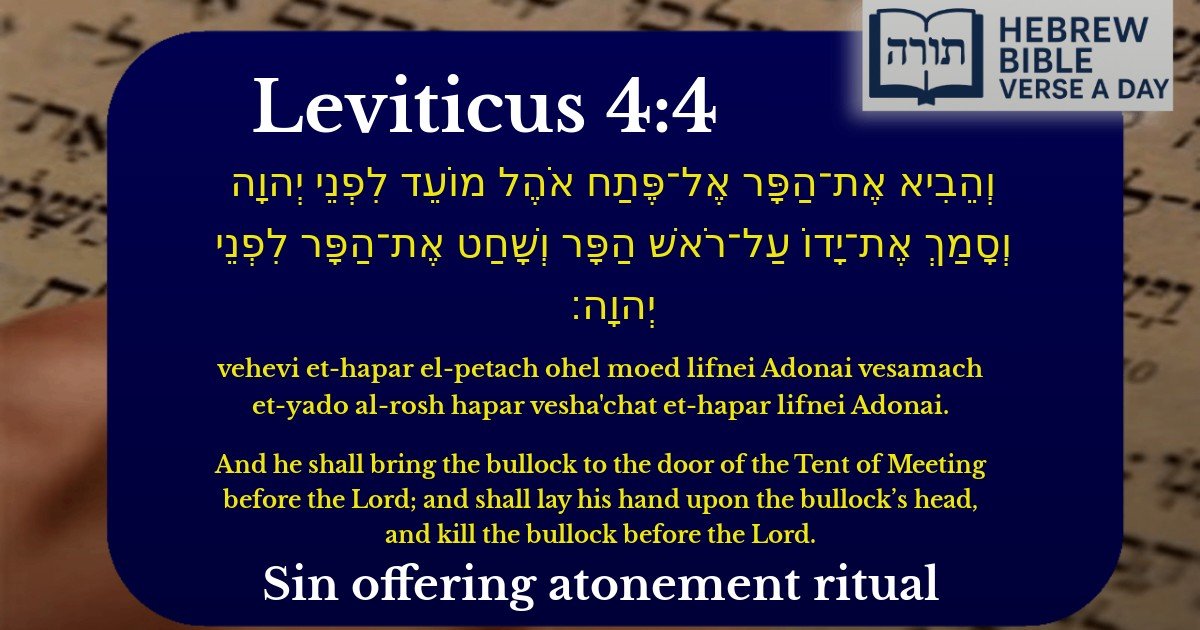
וְהֵבִיא אֶת־הַפָּר אֶל־פֶּתַח אֹהֶל מוֹעֵד לִפְנֵי יְהוָה וְסָמַךְ אֶת־יָדוֹ עַל־רֹאשׁ הַפָּר וְשָׁחַט אֶת־הַפָּר לִפְנֵי יְהוָה׃
English Translation
And he shall bring the bullock to the door of the Tent of Meeting before the Lord; and shall lay his hand upon the bullock’s head, and kill the bullock before the Lord.
Transliteration
Vehevi et-hapar el-petach ohel moed lifnei Adonai vesamach et-yado al-rosh hapar vesha'chat et-hapar lifnei Adonai.
Hebrew Leining Text
וְהֵבִ֣יא אֶת־הַפָּ֗ר אֶל־פֶּ֛תַח אֹ֥הֶל מוֹעֵ֖ד לִפְנֵ֣י יְהֹוָ֑ה וְסָמַ֤ךְ אֶת־יָדוֹ֙ עַל־רֹ֣אשׁ הַפָּ֔ר וְשָׁחַ֥ט אֶת־הַפָּ֖ר לִפְנֵ֥י יְהֹוָֽה׃
🎵 Listen to leining
Parasha Commentary
📚 Talmud Citations
This verse is quoted in the Talmud.
📖 Zevachim 32b
The verse is discussed in the context of the laws concerning the sacrificial service, specifically the procedure for bringing a bullock as a sin offering.
📖 Menachot 93b
Referenced in a discussion about the proper place and manner of performing sacrifices, emphasizing the requirement to bring the offering before the Lord at the Tent of Meeting.
Context of the Verse
This verse (Vayikra 4:4) describes part of the process of the korban chatat (sin offering) brought by the Kohen Gadol (High Priest) when he unintentionally transgresses a commandment. The procedure involves bringing a bull to the entrance of the Ohel Moed (Tent of Meeting), performing semichah (laying hands on the animal's head), and slaughtering it before Hashem.
Significance of Bringing the Bull to the Entrance
Rashi (Vayikra 4:4) explains that the bull is brought specifically to the entrance of the Ohel Moed to emphasize that this is a sacred act performed in the presence of Hashem. The Ohel Moed represents the dwelling place of the Divine Presence, and bringing the offering there underscores the seriousness of atonement and the need for closeness to Hashem in the process of repentance.
The Act of Semichah (Laying Hands)
The semichah is a critical component of the sacrificial process. The Rambam (Hilchos Ma'aseh HaKorbanos 3:6) teaches that semichah symbolizes the transfer of the sinner's guilt onto the animal, as if to say, "This animal is taking my place." The Sefer HaChinuch (Mitzvah 119) adds that this physical act helps the transgressor internalize the gravity of their actions and inspires sincere repentance.
Slaughtering Before Hashem
The phrase "lifnei Hashem" (before Hashem) appears twice in this verse, highlighting that the entire process is directed toward Divine service. The Kli Yakar (Vayikra 4:4) notes that the repetition emphasizes that both the semichah and the slaughter must be performed with pure intentions, as if standing directly before the Divine Presence. This aligns with the Talmudic principle (Menachot 110a) that sacrifices are only valid when offered with proper kavanah (intent).
Spiritual Lessons