

Join Our Newsletter To Be Informed When New Videos Are Posted
Hebrew Text
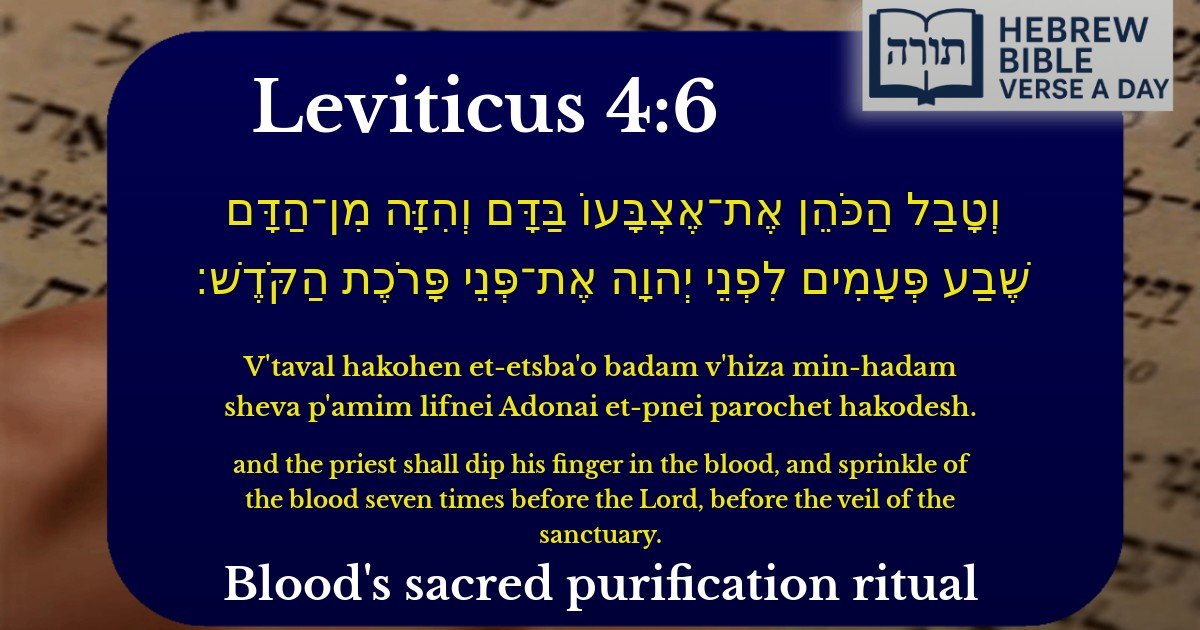
וְטָבַל הַכֹּהֵן אֶת־אֶצְבָּעוֹ בַּדָּם וְהִזָּה מִן־הַדָּם שֶׁבַע פְּעָמִים לִפְנֵי יְהוָה אֶת־פְּנֵי פָּרֹכֶת הַקֹּדֶשׁ׃
English Translation
and the priest shall dip his finger in the blood, and sprinkle of the blood seven times before the Lord, before the veil of the sanctuary.
Transliteration
V'taval hakohen et-etsba'o badam v'hiza min-hadam sheva p'amim lifnei Adonai et-pnei parochet hakodesh.
Hebrew Leining Text
וְטָבַ֧ל הַכֹּהֵ֛ן אֶת־אֶצְבָּע֖וֹ בַּדָּ֑ם וְהִזָּ֨ה מִן־הַדָּ֜ם שֶׁ֤בַע פְּעָמִים֙ לִפְנֵ֣י יְהֹוָ֔ה אֶת־פְּנֵ֖י פָּרֹ֥כֶת הַקֹּֽדֶשׁ׃
🎵 Listen to leining
Parasha Commentary
📚 Talmud Citations
This verse is quoted in the Talmud.
📖 Yoma 5b
The verse is referenced in the discussion about the rituals performed by the High Priest on Yom Kippur, particularly concerning the sprinkling of blood in the Holy of Holies.
📖 Zevachim 53b
The verse is cited in the context of discussing the proper procedures for sacrificial offerings, emphasizing the importance of the priest's actions with the blood.
Understanding the Ritual of Sprinkling Blood
The verse describes a key component of the sacrificial service performed by the kohen (priest) in the Mishkan (Tabernacle) and later in the Beit HaMikdash (Temple). According to Rashi (Vayikra 4:6), the act of dipping the finger and sprinkling the blood seven times before the parochet (veil of the sanctuary) symbolizes purification and atonement. The number seven is significant in Jewish tradition, representing completeness and divine perfection, as seen in creation (seven days) and other sacred contexts.
The Symbolism of the Blood
The Rambam (Hilchot Ma’aseh HaKorbanot 5:12) explains that blood represents the life force (nefesh), and its sprinkling serves as a reminder of the gravity of sin and the need for repentance. The blood is not merely a physical substance but a spiritual medium through which atonement is achieved. The parochet, separating the Holy of Holies from the rest of the sanctuary, signifies the boundary between the physical and the divine, emphasizing that the sprinkling is directed toward Hashem’s presence.
The Role of the Kohen
The Talmud (Zevachim 53b) elaborates on the precision required in this ritual. The kohen must use his right hand’s finger (as per Halacha) and sprinkle the blood in a specific manner—upward and outward—to ensure the mitzvah is performed correctly. This meticulousness reflects the sanctity of the service and the importance of adhering to divine commandments without deviation.
Midrashic Insights
The Midrash (Vayikra Rabbah 5:5) connects the seven sprinklings to the seven heavens, suggesting that the act ascends through all spiritual realms to reach Hashem. Additionally, the parochet is seen as a symbol of mercy, as it shields the Ark and the Divine Presence, yet allows for atonement through the blood of the korban (offering).
Practical and Spiritual Lessons