

Join Our Newsletter To Be Informed When New Videos Are Posted
Hebrew Text
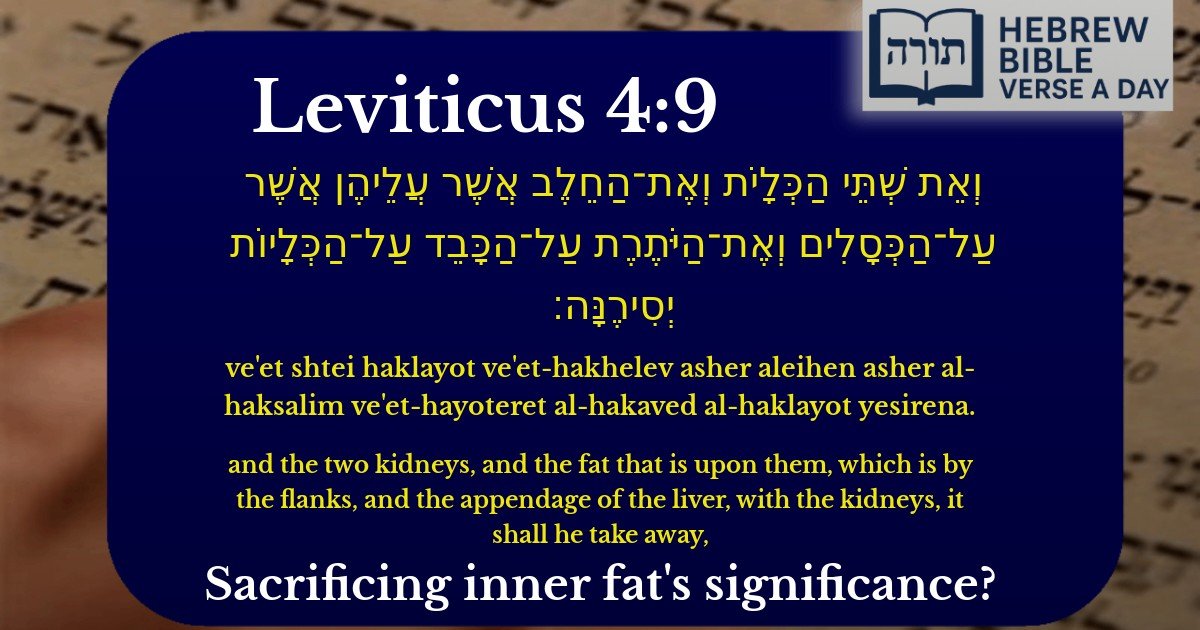
וְאֵת שְׁתֵּי הַכְּלָיֹת וְאֶת־הַחֵלֶב אֲשֶׁר עֲלֵיהֶן אֲשֶׁר עַל־הַכְּסָלִים וְאֶת־הַיֹּתֶרֶת עַל־הַכָּבֵד עַל־הַכְּלָיוֹת יְסִירֶנָּה׃
English Translation
and the two kidneys, and the fat that is upon them, which is by the flanks, and the appendage of the liver, with the kidneys, it shall he take away,
Transliteration
Ve'et shtei haklayot ve'et-hakhelev asher aleihen asher al-haksalim ve'et-hayoteret al-hakaved al-haklayot yesirena.
Hebrew Leining Text
וְאֵת֙ שְׁתֵּ֣י הַכְּלָיֹ֔ת וְאֶת־הַחֵ֙לֶב֙ אֲשֶׁ֣ר עֲלֵיהֶ֔ן אֲשֶׁ֖ר עַל־הַכְּסָלִ֑ים וְאֶת־הַיֹּתֶ֙רֶת֙ עַל־הַכָּבֵ֔ד עַל־הַכְּלָי֖וֹת יְסִירֶֽנָּה׃
🎵 Listen to leining
Parasha Commentary
📚 Talmud Citations
This verse is quoted in the Talmud.
📖 Chullin 49b
The verse is discussed in the context of the laws of sacrifices, specifically regarding the parts of the animal that are to be offered on the altar.
📖 Menachot 62a
The verse is referenced in a discussion about the proper procedures for handling the sacrificial parts of offerings.
Explanation of the Verse
The verse (Vayikra 3:4) describes the parts of an animal sacrifice (korban shelamim) that are to be removed and offered on the altar. These include the kidneys, the fat surrounding them, and the lobe of the liver. The removal and burning of these specific parts are central to the sacrificial service.
Rashi's Commentary
Rashi (Vayikra 3:4) explains that the verse refers to the chelev (forbidden fat) and the yoteret (the lobe of the liver), which must be separated and burned on the altar. He notes that the kidneys are mentioned because they are the seat of human counsel and desire (based on Talmudic sources), symbolizing that one must dedicate their innermost thoughts to Hashem when bringing a sacrifice.
Rambam's Perspective
In Hilchot Ma'aseh HaKorbanot (Laws of Sacrificial Procedure), the Rambam (Maimonides) details the practical steps for removing these parts, emphasizing precision in fulfilling the mitzvah. He explains that the kidneys and their fat are designated for the altar because they represent the innermost parts of the animal, paralleling the need for sincerity in divine service.
Midrashic Interpretation
The Midrash (Vayikra Rabbah 3:4) connects these organs to moral lessons:
Halachic Significance
The Talmud (Chullin 49b) discusses the precise definitions of the forbidden fats (chelev) and the proper method of their removal. The Gemara emphasizes that only the specific fats mentioned in the Torah are prohibited, highlighting the importance of exactitude in halachic observance.