Frequently Asked Questions
Q: What does Leviticus 5:10 mean?
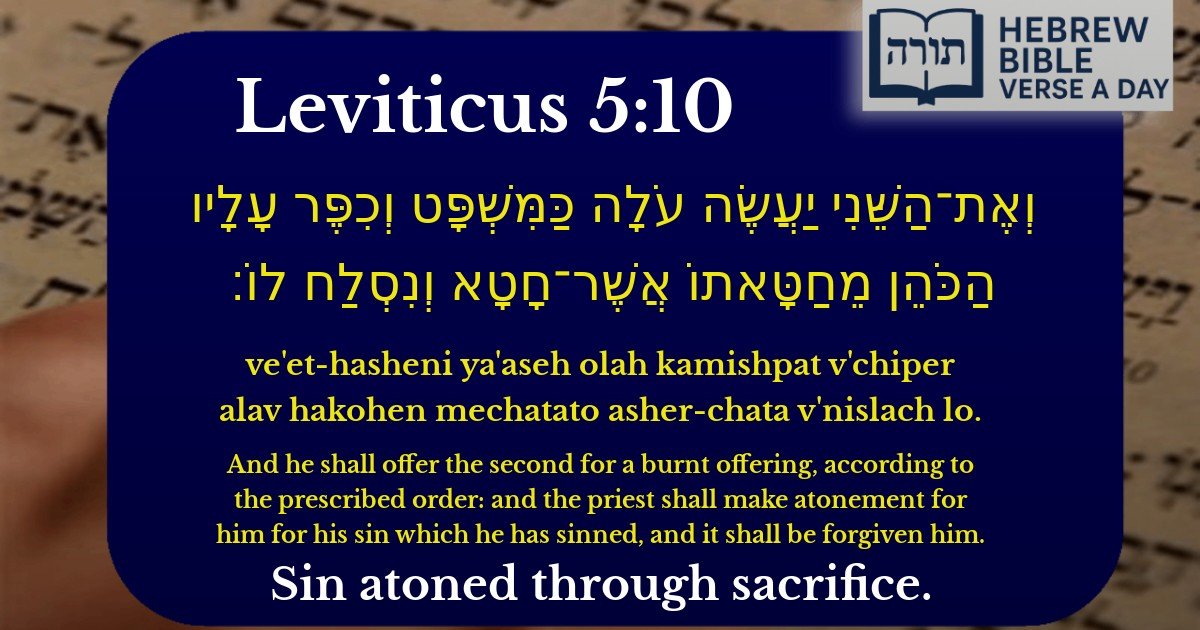
A: Leviticus 5:10 describes the process of atonement for certain sins through bringing two offerings—a sin offering (חַטָּאת) and a burnt offering (עֹלָה). The verse explains that after the sin offering, the second animal is offered as a burnt offering 'according to the prescribed order,' and the Kohen (priest) atones for the person’s sin so they can be forgiven. Rashi explains that this applies to someone who unintentionally violated a prohibition that, if done intentionally, would incur karet (spiritual excision).
Q: Why is the burnt offering mentioned after the sin offering in this verse?
A: The burnt offering follows the sin offering because each serves a different purpose. The sin offering (חַטָּאת) atones for the specific transgression, while the burnt offering (עֹלָה) represents complete submission to Hashem and elevates the person spiritually. The Talmud (Zevachim 7a) teaches that the burnt offering helps rectify the person’s relationship with Hashem after the sin offering addresses the wrongdoing itself.
Q: What can we learn from Leviticus 5:10 about repentance?
A: This verse teaches that true repentance involves both atonement (כַּפָּרָה) and spiritual renewal. The Rambam (Hilchot Teshuva 1:1) explains that repentance requires acknowledging the sin, feeling remorse, and committing not to repeat it. The offerings in this verse symbolize that process—correcting the past (sin offering) and dedicating oneself to a higher spiritual level (burnt offering).
Q: How does this verse apply today without the Temple?
A: Although we cannot bring offerings today, the principles still apply. The Talmud (Berachot 17a) teaches that prayer, charity, and sincere repentance substitute for sacrifices. The Rambam (Hilchot Teshuva 2:8) emphasizes that sincere repentance alone brings forgiveness, especially on Yom Kippur, which serves as a spiritual atonement similar to the offerings described in this verse.
Q: Why does the verse say 'it shall be forgiven him' only after both offerings?
A: Forgiveness is granted only after both offerings because atonement is a two-step process. The sin offering addresses the transgression, while the burnt offering elevates the person’s entire being toward Hashem. The Midrash (Vayikra Rabbah 7:3) compares this to a person who cleans a stain (sin offering) and then perfumes the garment (burnt offering)—complete purification requires both steps.


Context of the Verse
The verse (Vayikra 5:10) appears in the context of the korban oleh v'yored (the sliding-scale offering), which varies based on the financial means of the penitent. This particular verse discusses the procedure for one who brings two birds—one as a chatat (sin offering) and the second as an olah (burnt offering).
Explanation of the Procedure
Rashi explains that the second bird is offered as an olah "according to the prescribed order" (k'mishpat), meaning it follows the standard laws of burnt offerings as detailed in Vayikra 1:14-17. The olah is entirely consumed on the altar, symbolizing complete devotion to Hashem.
Atonement and Forgiveness
The verse states that the kohen "shall make atonement for him" (v'chiper alav hakohen). Rambam (Hilchot Teshuva 1:2) emphasizes that true atonement requires both the korban and sincere repentance (teshuva). The korban serves as a physical expression of remorse, but forgiveness ultimately depends on the sinner's inward change.
Why Two Offerings?
The Role of the Kohen
The Talmud (Zevachim 7a) teaches that the kohen's service is essential for the korban's validity. The phrase "v'nislach lo" (and it shall be forgiven him) appears only after the kohen completes the atonement process, highlighting the divine role of the priesthood in facilitating repentance.