
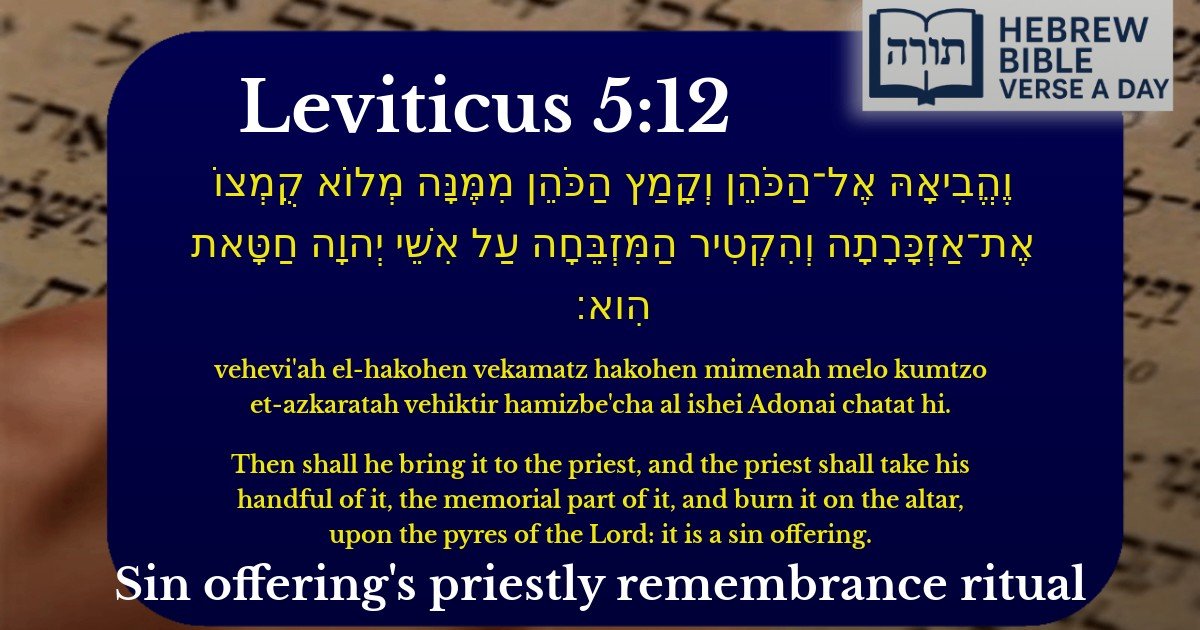

Leviticus 5:12 - Sin offering's priestly remembrance ritual

Leviticus 5:12 - ויקרא 5:12

Hebrew Text

וֶהֱבִיאָהּ אֶל־הַכֹּהֵן וְקָמַץ הַכֹּהֵן מִמֶּנָּה מְלוֹא קֻמְצוֹ אֶת־אַזְכָּרָתָה וְהִקְטִיר הַמִּזְבֵּחָה עַל אִשֵּׁי יְהוָה חַטָּאת הִוא׃

English Translation

Then shall he bring it to the priest, and the priest shall take his handful of it, the memorial part of it, and burn it on the altar, upon the pyres of the Lord: it is a sin offering.

Transliteration

Vehevi'ah el-hakohen vekamatz hakohen mimenah melo kumtzo et-azkaratah vehiktir hamizbe'cha al ishei Adonai chatat hi.

Hebrew Leining Text

וֶהֱבִיאָהּ֮ אֶל־הַכֹּהֵן֒ וְקָמַ֣ץ הַכֹּהֵ֣ן ׀ מִ֠מֶּ֠נָּה מְל֨וֹא קֻמְצ֜וֹ אֶת־אַזְכָּרָתָהּ֙ וְהִקְטִ֣יר הַמִּזְבֵּ֔חָה עַ֖ל אִשֵּׁ֣י יְהֹוָ֑ה חַטָּ֖את הִֽוא׃

🎵 Listen to leining

Parasha Commentary

Context of the Verse

This verse (Vayikra 5:12) describes the procedure for bringing a minchat choteh (a flour offering for sin) by an individual who cannot afford an animal sacrifice. The Torah outlines the specific actions the kohen must perform when offering this korban (sacrifice).

Explanation of Key Phrases

  • "וֶהֱבִיאָהּ אֶל־הַכֹּהֵן" (Then shall he bring it to the priest): Rashi explains that this emphasizes the obligation to bring the offering specifically to a kohen, not to any other individual, as the kohanim are designated for sacred service (Rashi on Vayikra 5:12).
  • "מְלוֹא קֻמְצוֹ" (his handful of it): The Rambam (Hilchot Maaseh HaKorbanot 13:5) clarifies that the kohen must take a precise handful—no more, no less—symbolizing the importance of exactness in divine service.
  • "אֶת־אַזְכָּרָתָה" (the memorial part of it): The Talmud (Menachot 11a) teaches that this portion is called a "memorial" because it ascends to Hashem as a pleasing aroma, invoking His mercy for the sinner.
  • "חַטָּאת הִוא" (it is a sin offering): The Sifra (Torat Kohanim) notes that even though this is a flour offering, it carries the same atoning power as an animal chatat when brought with sincere repentance.

Symbolism and Halachic Insights

The minchat choteh demonstrates that atonement is accessible to all, regardless of financial means. The Ibn Ezra highlights that the absence of oil and frankincense (unlike other flour offerings) signifies humility—appropriate for one seeking forgiveness (Ibn Ezra on Vayikra 5:11).

The Kli Yakar adds that the act of burning the memorial portion on the altar represents the sinner’s desire to elevate their spiritual state, turning transgression into devotion (Kli Yakar, Vayikra 5:12).

📚 Talmud Citations

This verse is quoted in the Talmud.

📖 Menachot 11a
The verse is discussed in the context of the proper procedure for the meal offering (mincha), particularly focusing on the priest's action of taking a handful (kometz) and burning it on the altar.
📖 Zevachim 48b
The verse is referenced in a discussion about the laws of sacrifices, specifically regarding the sin offering (chatat) and the priest's role in the offering process.

Frequently Asked Questions

Q: What does Leviticus 5:12 mean?
A: Leviticus 5:12 describes part of the process for bringing a sin offering (חַטָּאת) when someone cannot afford a lamb. Instead, they bring fine flour, and the kohen (priest) takes a handful (קֻמְצוֹ) as a memorial portion (אַזְכָּרָתָה) to burn on the altar. This teaches that repentance and atonement are accessible even to those with limited means (Rashi, Vayikra 5:11).
Q: Why is the handful of flour important in this verse?
A: The handful (קֻמְצוֹ) represents the essential part of the offering dedicated to Hashem. Unlike other meal offerings, a sin offering is entirely burned on the altar (except for the kohen’s portion in some cases). This shows complete devotion in seeking atonement (Rambam, Hilchot Maaseh HaKorbanot 1:4).
Q: What can we learn from the sin offering of flour?
A: This teaches that sincere repentance does not depend on wealth—Hashem accepts offerings according to one’s means (Talmud, Menachot 110a). Even a simple flour offering, brought with the right intention, achieves atonement. Today, when we lack the Temple, prayer and teshuvah (repentance) replace sacrifices (Midrash Tanchuma, Vayikra 8).
Q: Why does the priest burn only a handful and not all the flour?
A: The Torah specifies that only a 'memorial portion' (אַזְכָּרָתָה) is burned to symbolize the person’s repentance being 'remembered' before Hashem. The rest of the flour belongs to the kohanim (priests), showing that atonement also involves supporting those who serve in the Mishkan (Tabernacle) (Rashi, Vayikra 5:12; Talmud, Menachot 10a).
Q: How does this verse apply today without the Temple?
A: While we cannot bring physical offerings today, our prayers (תפילה) and sincere repentance (תשובה) take their place (Hoshea 14:3, Talmud, Berachot 26b). The lesson remains: Hashem values humility and sincere effort, whether through a flour offering or heartfelt prayer (Rambam, Hilchot Teshuvah 1:3).