
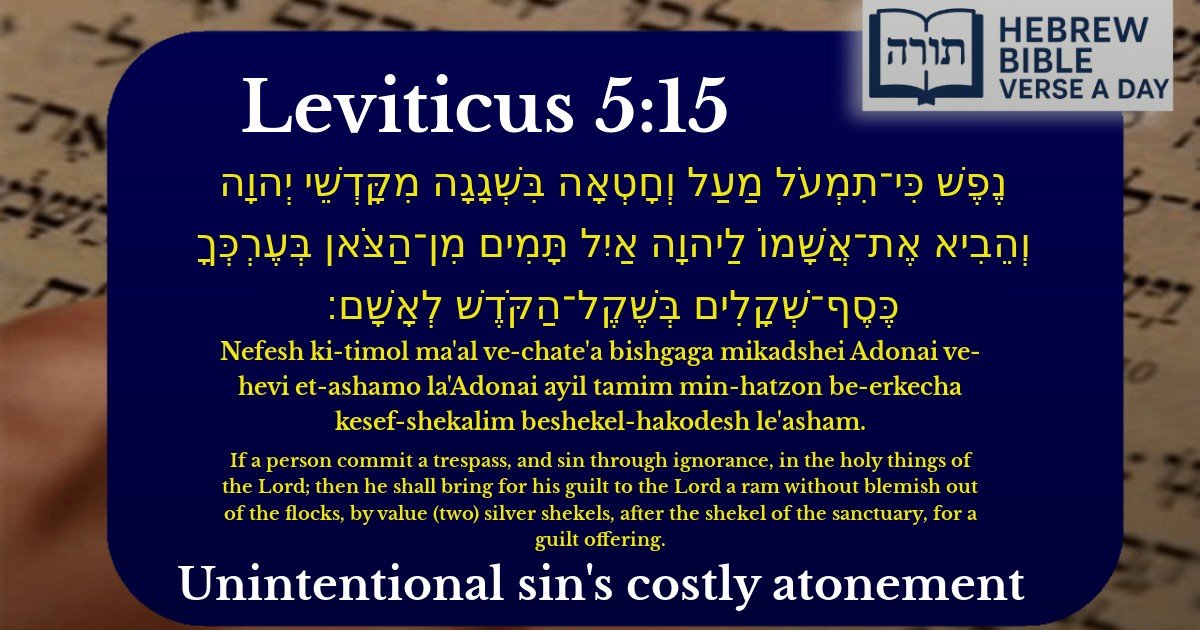

Leviticus 5:15 - Unintentional sin's costly atonement

Leviticus 5:15 - ויקרא 5:15

Hebrew Text

נֶפֶשׁ כִּי־תִמְעֹל מַעַל וְחָטְאָה בִּשְׁגָגָה מִקָּדְשֵׁי יְהוָה וְהֵבִיא אֶת־אֲשָׁמוֹ לַיהוָה אַיִל תָּמִים מִן־הַצֹּאן בְּעֶרְכְּךָ כֶּסֶף־שְׁקָלִים בְּשֶׁקֶל־הַקֹּדֶשׁ לְאָשָׁם׃

English Translation

If a person commit a trespass, and sin through ignorance, in the holy things of the Lord; then he shall bring for his guilt to the Lord a ram without blemish out of the flocks, by value (two) silver shekels, after the shekel of the sanctuary, for a guilt offering.

Transliteration

Nefesh ki-timol ma'al ve-chate'a bishgaga mikadshei Adonai ve-hevi et-ashamo la'Adonai ayil tamim min-hatzon be-erkecha kesef-shekalim beshekel-hakodesh le'asham.

Hebrew Leining Text

נֶ֚פֶשׁ כִּֽי־תִמְעֹ֣ל מַ֔עַל וְחָֽטְאָה֙ בִּשְׁגָגָ֔ה מִקׇּדְשֵׁ֖י יְהֹוָ֑ה וְהֵבִיא֩ אֶת־אֲשָׁמ֨וֹ לַֽיהֹוָ֜ה אַ֧יִל תָּמִ֣ים מִן־הַצֹּ֗אן בְּעֶרְכְּךָ֛ כֶּֽסֶף־שְׁקָלִ֥ים בְּשֶֽׁקֶל־הַקֹּ֖דֶשׁ לְאָשָֽׁם׃

🎵 Listen to leining

Parasha Commentary

General Context of the Verse

This verse (Vayikra 5:15) discusses the case of someone who unintentionally misuses or withholds sacred property belonging to the Beit HaMikdash (Temple). The Torah prescribes a specific korban asham (guilt offering) to atone for this transgression, along with monetary restitution.

Key Terms and Their Meanings

  • נֶפֶשׁ כִּי־תִמְעֹל מַעַל (If a person commits a trespass): Rashi explains that "מַעַל" refers to misusing or misappropriating sanctified items, such as Temple property or consecrated objects (hekdesh). The term implies a breach of trust regarding holy matters.
  • בִּשְׁגָגָה (through ignorance): The transgression must be unintentional. The Rambam (Hilchot Me’ilah 1:1) clarifies that this includes cases where the person was unaware that the item was sacred or forgot its sanctity.
  • אַיִל תָּמִים (a ram without blemish): The offering must be a flawless ram, symbolizing complete repentance and the seriousness of the sin, even if committed unintentionally.
  • בְּעֶרְכְּךָ כֶּסֶף־שְׁקָלִים (by value, two silver shekels): The Torah requires restitution equal to the value of the misused item, plus an additional fifth (חֹמֶשׁ), as specified in the following verses. The shekel mentioned is the sacred shekel used in the Temple.

Halachic Implications

The Gemara (Keritot 26a) discusses the details of this korban, emphasizing that the asham offering is unique because it requires both the sacrifice and financial compensation. The Rambam (Hilchot Me’ilah 8:1) rules that one who misuses sanctified property must bring this offering and repay the principal plus a fifth.

Moral and Spiritual Lessons

  • Respect for Sacred Property: The verse teaches the gravity of treating holy objects with care, even in error. The requirement for atonement underscores that negligence in sacred matters demands correction.
  • Restitution and Repentance: The dual obligation—bringing a korban and repaying the value—highlights that true repentance involves both spiritual atonement and tangible restitution.
  • Divine Accountability: The Sforno notes that even unintentional misuse of sanctified items requires atonement, teaching that holiness demands heightened awareness and responsibility.

Connection to Broader Torah Themes

This law parallels other Torah teachings on restitution (such as in cases of theft or damage), reinforcing the principle that wrongdoing, even accidental, must be rectified. It also reflects the broader concept of kedushah (holiness), emphasizing that proximity to the sacred demands greater vigilance.

📚 Talmud Citations

This verse is quoted in the Talmud.

📖 Keritot 25a
The verse is discussed in the context of the laws regarding guilt offerings for unintentional sins involving sacred things.
📖 Shevuot 8b
The verse is referenced in a discussion about the types of oaths and the atonement required for their violation.

Frequently Asked Questions

Q: What does Leviticus 5:15 mean?
A: Leviticus 5:15 discusses a situation where a person unintentionally misuses or withholds something consecrated to Hashem (like tithes or Temple property). The verse teaches that even accidental misuse requires atonement through bringing a guilt offering (an unblemished ram) and repaying the value plus an additional fifth (as stated in later verses). Rashi explains that this applies to cases where someone benefits from holy items without realizing it was forbidden.
Q: Why is bringing a guilt offering important for accidental sins?
A: According to Jewish tradition, even unintentional misuse of holy items shows a lack of proper care for sacred matters. The Rambam (Hilchot Me'ilah 1:1) teaches that this law instills reverence for holy objects. The guilt offering (Asham) helps the person rectify their mistake, repay what was taken, and reconnect with Hashem after the spiritual damage caused by the oversight.
Q: How does this verse apply today without the Temple?
A: While we cannot bring sacrifices today, the Talmud (Yoma 86a) teaches that sincere repentance, prayer, and charity serve as substitutes. The principle remains relevant—we must be careful with holy items (like Torah books, synagogue property, or charity funds) and make amends if we accidentally misuse them. The Chofetz Chaim emphasizes that this includes being scrupulous with other people's money or possessions entrusted to us.
Q: Why does the verse specify a ram and silver shekels?
A: The ram represents a substantial sacrifice (unlike birds used for poorer individuals), showing the seriousness of misusing holy items. The fixed value of two silver sanctuary shekels (approx. 9.6 grams of pure silver, per Talmud, Bekhorot 50a) creates a uniform standard, ensuring fairness regardless of the actual item misused. Rashi notes this prevents people from undervaluing their repayment.
Q: What lesson can we learn from this verse about mistakes?
A: The Midrash (Torat Kohanim) derives from here that Judaism holds us accountable even for unintentional wrongs. This teaches responsibility—we must educate ourselves about holy matters and act carefully. The Sefer HaChinuch (Mitzvah 123) adds that the repayment process cultivates honesty and attentiveness in our relationship with Hashem and the community.