

Join Our Newsletter To Be Informed When New Videos Are Posted
Hebrew Text
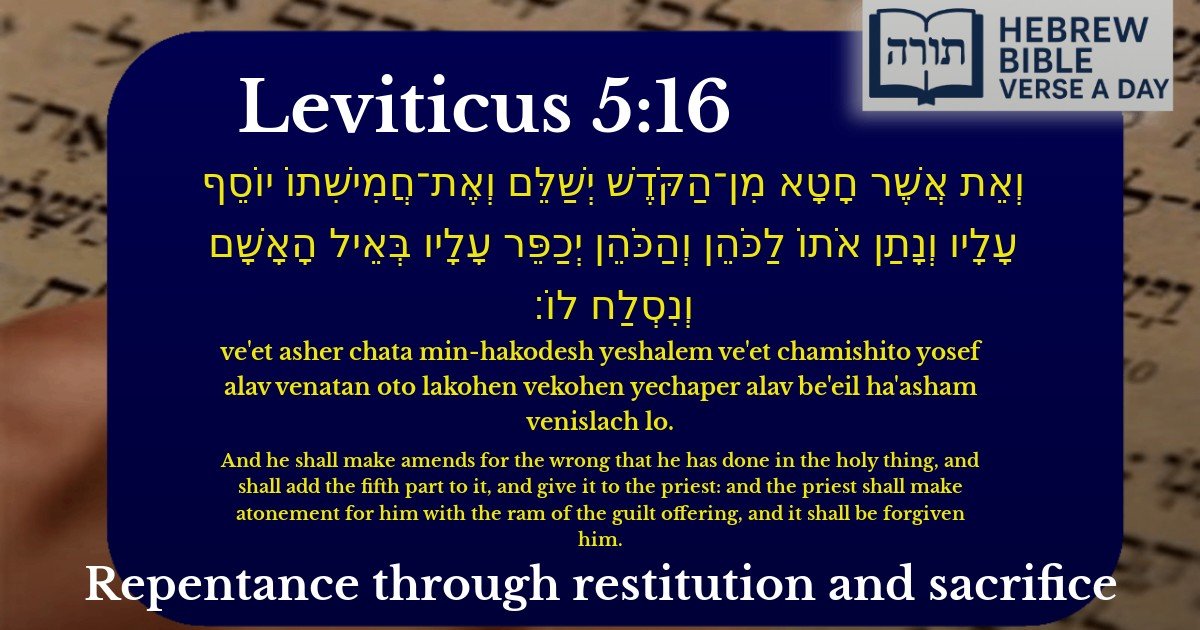
וְאֵת אֲשֶׁר חָטָא מִן־הַקֹּדֶשׁ יְשַׁלֵּם וְאֶת־חֲמִישִׁתוֹ יוֹסֵף עָלָיו וְנָתַן אֹתוֹ לַכֹּהֵן וְהַכֹּהֵן יְכַפֵּר עָלָיו בְּאֵיל הָאָשָׁם וְנִסְלַח לוֹ׃
English Translation
And he shall make amends for the wrong that he has done in the holy thing, and shall add the fifth part to it, and give it to the priest: and the priest shall make atonement for him with the ram of the guilt offering, and it shall be forgiven him.
Transliteration
Ve'et asher chata min-hakodesh yeshalem ve'et chamishito yosef alav venatan oto lakohen vekohen yechaper alav be'eil ha'asham venislach lo.
Hebrew Leining Text
וְאֵ֣ת אֲשֶׁר֩ חָטָ֨א מִן־הַקֹּ֜דֶשׁ יְשַׁלֵּ֗ם וְאֶת־חֲמִֽישִׁתוֹ֙ יוֹסֵ֣ף עָלָ֔יו וְנָתַ֥ן אֹת֖וֹ לַכֹּהֵ֑ן וְהַכֹּהֵ֗ן יְכַפֵּ֥ר עָלָ֛יו בְּאֵ֥יל הָאָשָׁ֖ם וְנִסְלַ֥ח לֽוֹ׃ {פ}
🎵 Listen to leining
Parasha Commentary
📚 Talmud Citations
This verse is quoted in the Talmud.
📖 Keritot 25a
The verse is discussed in the context of the laws of guilt offerings (asham) and the requirement to add a fifth when making restitution for misusing sacred property.
📖 Bava Kamma 110a
The verse is referenced in a discussion about the obligation to repay the principal plus a fifth when one has misappropriated sacred property.
General Context of the Verse
This verse (Vayikra 5:16) discusses the laws of me'ilah (misuse of sanctified property) and the required restitution when someone unintentionally benefits from hekdesh (property consecrated to the Beit HaMikdash). The Torah outlines a process of repentance, restitution, and atonement for such transgressions.
Explanation of the Restitution Process
Rashi explains that the phrase "וְאֵת אֲשֶׁר חָטָא מִן־הַקֹּדֶשׁ יְשַׁלֵּם" ("he shall make amends for the wrong that he has done in the holy thing") refers to repaying the principal amount of the misused sanctified property. The additional "חֲמִישִׁתוֹ" (a fifth) is a penalty imposed by the Torah, bringing the total repayment to 125% of the original value (Rashi on Vayikra 5:16).
The Role of the Kohen
The verse states that the repayment must be given to the Kohen. The Rambam (Hilchot Me'ilah 8:8) clarifies that this applies specifically to cases where the misused property belonged to the Kohanim (such as terumah). If the property belonged to the Beit HaMikdash treasury (hekdesh), it would be returned there instead.
Atonement Through the Asham Offering
The "אֵיל הָאָשָׁם" (ram of the guilt offering) serves as the means of atonement. The Talmud (Keritot 25a) explains that this offering atones even if the sinner was unaware of his transgression at the time. The Kohen's role in offering the sacrifice facilitates divine forgiveness, as indicated by the concluding words "וְנִסְלַח לוֹ" ("and it shall be forgiven him").
Key Lessons from the Verse