

Join Our Newsletter To Be Informed When New Videos Are Posted
Hebrew Text
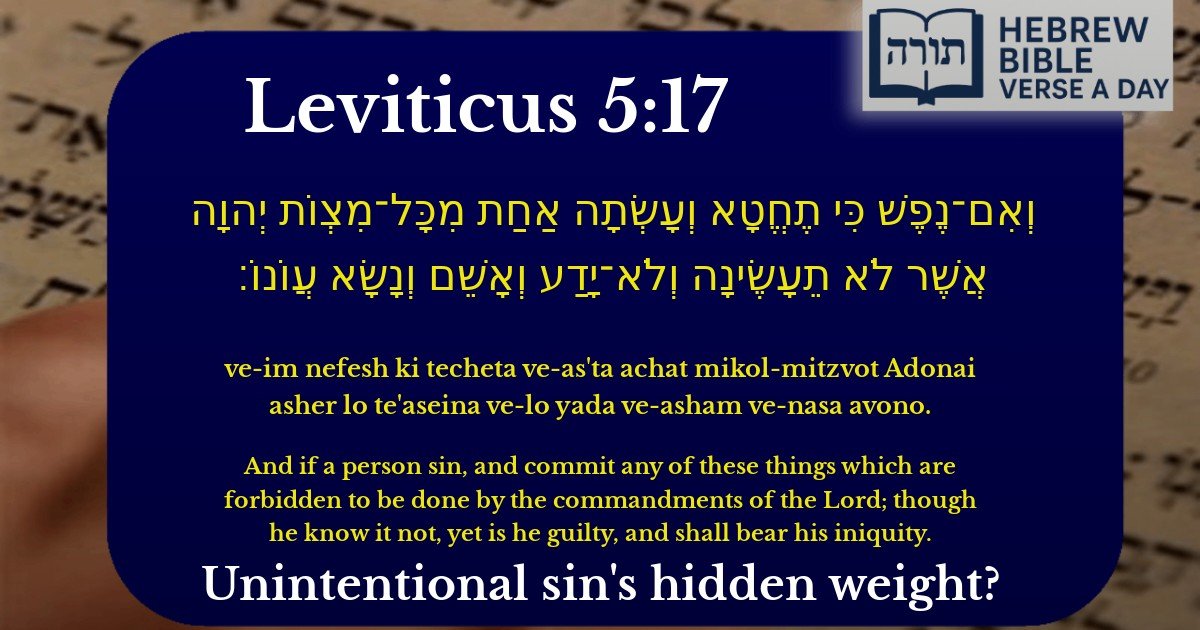
וְאִם־נֶפֶשׁ כִּי תֶחֱטָא וְעָשְׂתָה אַחַת מִכָּל־מִצְוֺת יְהוָה אֲשֶׁר לֹא תֵעָשֶׂינָה וְלֹא־יָדַע וְאָשֵׁם וְנָשָׂא עֲוֺנוֹ׃
English Translation
And if a person sin, and commit any of these things which are forbidden to be done by the commandments of the Lord; though he know it not, yet is he guilty, and shall bear his iniquity.
Transliteration
Ve-im nefesh ki techeta ve-as'ta achat mikol-mitzvot Adonai asher lo te'aseina ve-lo yada ve-asham ve-nasa avono.
Hebrew Leining Text
וְאִם־נֶ֙פֶשׁ֙ כִּ֣י תֶֽחֱטָ֔א וְעָֽשְׂתָ֗ה אַחַת֙ מִכׇּל־מִצְוֺ֣ת יְהֹוָ֔ה אֲשֶׁ֖ר לֹ֣א תֵעָשֶׂ֑ינָה וְלֹֽא־יָדַ֥ע וְאָשֵׁ֖ם וְנָשָׂ֥א עֲוֺנֽוֹ׃
🎵 Listen to leining
Parasha Commentary
📚 Talmud Citations
This verse is quoted in the Talmud.
📖 Horayot 8b
The verse is discussed in the context of unintentional sins and the atonement required for them.
📖 Keritot 26b
The verse is referenced in a discussion about the guilt of unintentional sins and the sacrifices needed for atonement.
General Context
The verse (Vayikra 5:17) discusses the case of an individual who unknowingly violates a commandment of Hashem. Though the transgression was unintentional, the Torah still considers the person accountable and requires atonement.
Rashi's Explanation
Rashi explains that this verse refers to a shogeg (unintentional sin) involving issurim (prohibitions) rather than mitzvot aseh (positive commandments). The phrase "מִכָּל־מִצְוֺת יְהוָה" ("any of the commandments of the Lord") specifically denotes negative commandments (לא תעשה). Rashi further clarifies that the person becomes aware of their sin after the fact, leading to a feeling of guilt and the need for repentance.
Rambam's Perspective
In Hilchot Shegagot, the Rambam (Maimonides) elaborates that even unintentional sins require a korban oleh v'yored (a sliding-scale offering) based on one's financial means. This underscores the principle that ignorance does not absolve responsibility—spiritual damage occurs regardless of intent, and atonement is necessary.
Talmudic Discussion (Horayot 8b)
The Talmud discusses whether this verse applies only to individuals or also to communal unintentional sins. The conclusion is that while individuals bring personal offerings, the community also has a collective responsibility to atone for inadvertent transgressions through the par he’elem davar (the bull offering for an erroneous ruling).
Midrashic Insight (Torat Kohanim)
The Midrash emphasizes that the phrase "וְנָשָׂא עֲוֺנוֹ" ("he shall bear his iniquity") teaches that sincere repentance and the korban lead to forgiveness. However, if one fails to repent, the iniquity remains. This aligns with the broader Torah principle that teshuva (repentance) is essential even for unintentional sins.
Practical Halachic Implications