

Join Our Newsletter To Be Informed When New Videos Are Posted
Hebrew Text
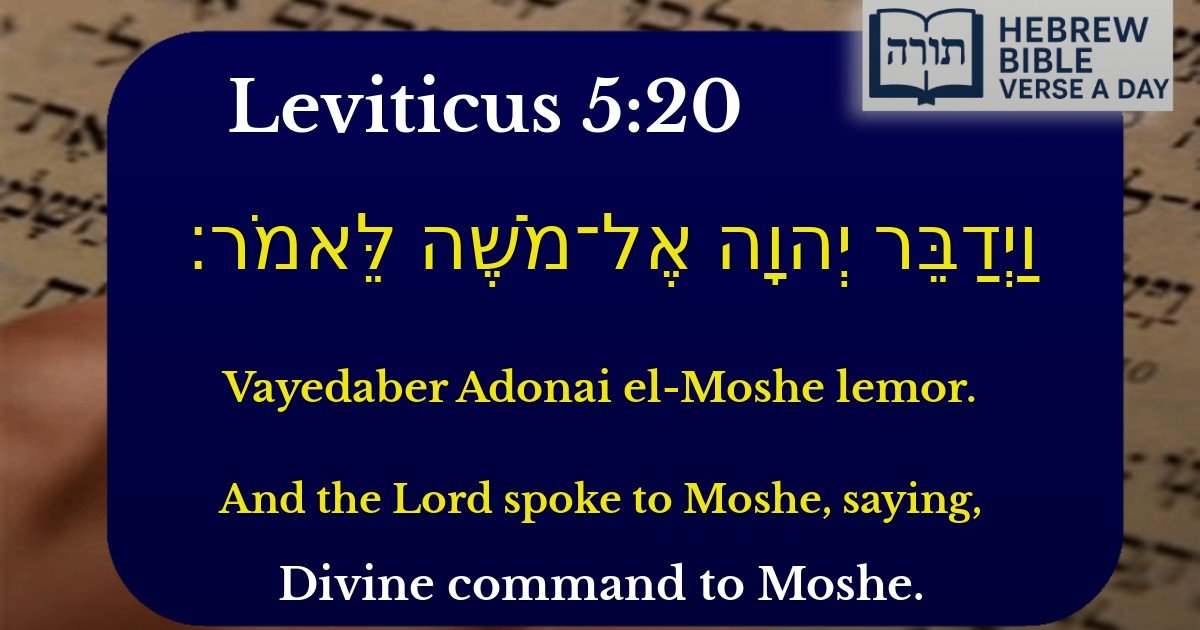
וַיְדַבֵּר יְהוָה אֶל־מֹשֶׁה לֵּאמֹר׃
English Translation
And the Lord spoke to Moshe, saying,
Transliteration
Vayedaber Adonai el-Moshe lemor.
Hebrew Leining Text
וַיְדַבֵּ֥ר יְהֹוָ֖ה אֶל־מֹשֶׁ֥ה לֵּאמֹֽר׃
🎵 Listen to leining
Parasha Commentary
📚 Talmud Citations
This verse is not quoted in the Talmud.
The Divine Communication to Moshe
The phrase "וַיְדַבֵּר יְהוָה אֶל־מֹשֶׁה לֵּאמֹר" ("And the Lord spoke to Moshe, saying") appears frequently in the Torah, marking the transmission of divine commandments and teachings. Rashi (on Shemot 6:2) explains that this expression signifies a clear and direct communication from Hashem to Moshe, emphasizing the unique prophetic level of Moshe Rabbeinu, who received the Torah with unparalleled clarity (aspaklaria ha-me'ira).
The Significance of "לֵּאמֹר" ("Saying")
The word "לֵּאמֹר" is interpreted in multiple ways by our sages:
Moshe's Unique Prophecy
The Rambam (Hilchos Yesodei HaTorah 7:6) elaborates that Moshe's prophecy differed from all other prophets in three key ways:
The Structure of Divine Commandments
Ibn Ezra (Shemot 6:10) notes that this phrasing often introduces mitzvos, highlighting the authoritative chain of transmission from Hashem to Moshe to Klal Yisrael. The Mechilta (Bo 1) adds that each instance of "וַיְדַבֵּר יְהוָה אֶל־מֹשֶׁה" reinforces the divine origin of halacha.