

Join Our Newsletter To Be Informed When New Videos Are Posted
Hebrew Text
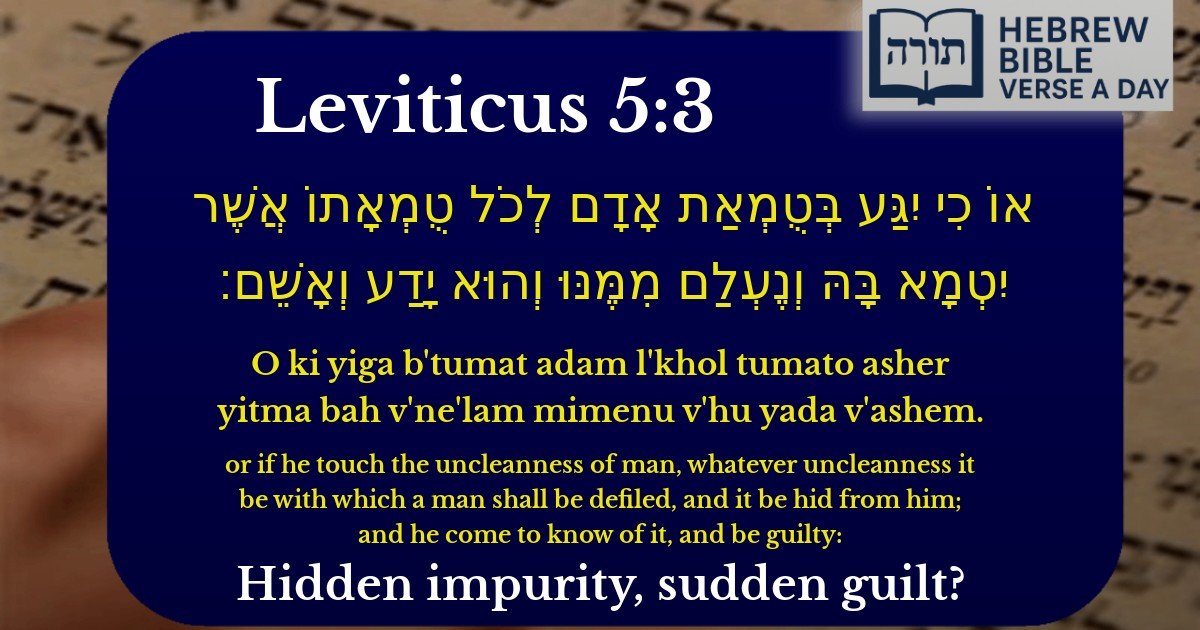
אוֹ כִי יִגַּע בְּטֻמְאַת אָדָם לְכֹל טֻמְאָתוֹ אֲשֶׁר יִטְמָא בָּהּ וְנֶעְלַם מִמֶּנּוּ וְהוּא יָדַע וְאָשֵׁם׃
English Translation
or if he touch the uncleanness of man, whatever uncleanness it be with which a man shall be defiled, and it be hid from him; and he come to know of it, and be guilty:
Transliteration
O ki yiga b'tumat adam l'khol tumato asher yitma bah v'ne'lam mimenu v'hu yada v'ashem.
Hebrew Leining Text
א֣וֹ כִ֤י יִגַּע֙ בְּטֻמְאַ֣ת אָדָ֔ם לְכֹל֙ טֻמְאָת֔וֹ אֲשֶׁ֥ר יִטְמָ֖א בָּ֑הּ וְנֶעְלַ֣ם מִמֶּ֔נּוּ וְה֥וּא יָדַ֖ע וְאָשֵֽׁם׃
🎵 Listen to leining
Parasha Commentary
📚 Talmud Citations
This verse is quoted in the Talmud.
📖 Keritot 8b
The verse is discussed in the context of the laws of impurity and the sacrifices required for atonement when one becomes aware of their impurity.
📖 Shevuot 7b
The verse is referenced in a discussion about the conditions under which one becomes guilty and requires atonement for unknowingly contracting impurity.
Context in Vayikra (Leviticus)
The verse (Vayikra 5:3) discusses a case where a person unknowingly becomes impure (tamei) by coming into contact with a source of human impurity (tum'at adam), such as a corpse, a zav, or other forms of ritual impurity. The Torah prescribes a korban oleh v'yored (a sliding-scale offering) for atonement once the person becomes aware of their transgression.
Rashi's Explanation
Rashi (Vayikra 5:3) clarifies that this verse refers to someone who forgot their state of impurity and subsequently entered the Beit HaMikdash or ate kodashim (sacred food) while impure. The phrase "וְנֶעְלַם מִמֶּנּוּ" ("and it be hid from him") indicates that the person was unaware of their impurity at the time of the transgression, but later realized their error.
Types of Tum'at Adam
Rambam's Legal Perspective
In Hilchot Shegagot (Laws of Unintentional Sins 1:1), the Rambam explains that this verse establishes the principle of "שגגה" (unintentional sin), where one is held accountable only after becoming aware of their transgression. The atonement process involves:
Midrashic Insight
The Sifra (Torat Kohanim) connects this verse to the broader theme of teshuvah (repentance). Even though the transgression was unintentional, the Torah mandates atonement to teach that spiritual purity requires vigilance. The Midrash emphasizes that Hashem provides a path for rectification, reinforcing the idea of divine compassion.