Frequently Asked Questions
Q: What does Leviticus 5:8 mean in simple terms?
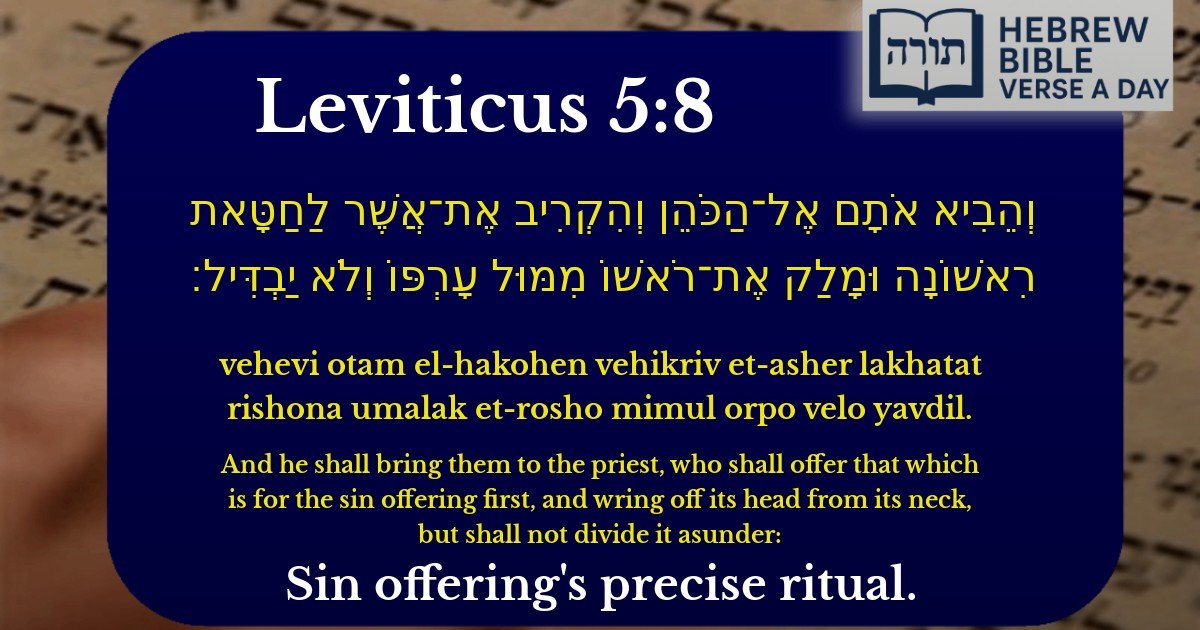
A: Leviticus 5:8 describes part of the process for bringing a sin offering (korban chatat) when someone unintentionally violates certain commandments. The verse explains that the person brings the offering to the kohen (priest), who first offers it as a sin offering, then wrings off the bird's head without completely separating it from the body. This was one of several types of offerings described in the Torah for atonement.
Q: Why does the kohen wring the bird's head without completely separating it in Leviticus 5:8?
A: According to Rashi and Talmudic sources (Zevachim 64b), the Torah specifies this unique method (melikah) only for bird sin offerings to distinguish it from other types of slaughter. The head isn't completely severed to ensure the blood can be properly sprinkled on the altar, which is an essential part of the atonement process. This teaches us the precision required in Divine service.
Q: What practical lesson can we learn from Leviticus 5:8 today?
A: Though we currently lack the Temple service, this verse teaches important spiritual principles: 1) The seriousness of atonement, even for unintentional mistakes, 2) The need for proper procedure when approaching spiritual matters (represented by bringing it to the kohen), and 3) That repentance requires both internal commitment (represented by the offering) and external actions. The Rambam explains these concepts in Hilchot Teshuvah.
Q: Why is the sin offering brought first in Leviticus 5:8?
A: The Talmud (Zevachim 90a) and Rashi explain that the sin offering takes precedence because it addresses the most pressing spiritual need - atonement for the transgression. Only after achieving atonement can one properly proceed with other offerings or spiritual matters. This teaches the priority of repairing our relationship with Hashem before other religious acts.
Q: What kind of sin does Leviticus 5:8 refer to?
A: This verse refers specifically to certain unintentional sins (shogeg) mentioned earlier in the chapter, such as failing to testify when one has information, touching impurity, or swearing carelessly. The Torah provides this offering as a means of atonement. The Rambam (Hilchot Shegagot 1:1) explains these laws in detail, noting they apply only to violations done without willful intent.


Context of the Verse
This verse (Vayikra 5:8) describes the procedure for bringing a korban chatat (sin offering) by someone who cannot afford a sheep or goat and instead brings two turtledoves or young pigeons. The verse specifies the order of the sacrifice and the method of slaughtering the bird.
Rashi's Explanation
Rashi (Vayikra 5:8) explains that the phrase "which is for the sin offering first" teaches that the chatat must precede the olah (burnt offering) when both are brought. He notes that the priest does not completely sever the head from the body but leaves it hanging by a k'zayit (an olive's bulk) of skin, as derived from the words "but shall not divide it asunder."
Halachic Details from Rambam
Rambam (Hilchot Ma'aseh HaKorbanot 6:1-2) elaborates on the procedure:
Symbolism in Midrashic Sources
The Midrash (Vayikra Rabbah 3:4) connects this procedure to teshuva (repentance):
Talmudic Discussion
Chullin 21a analyzes why this offering requires melikah (pinching off the head) rather than standard slaughter: