

Join Our Newsletter To Be Informed When New Videos Are Posted
Hebrew Text
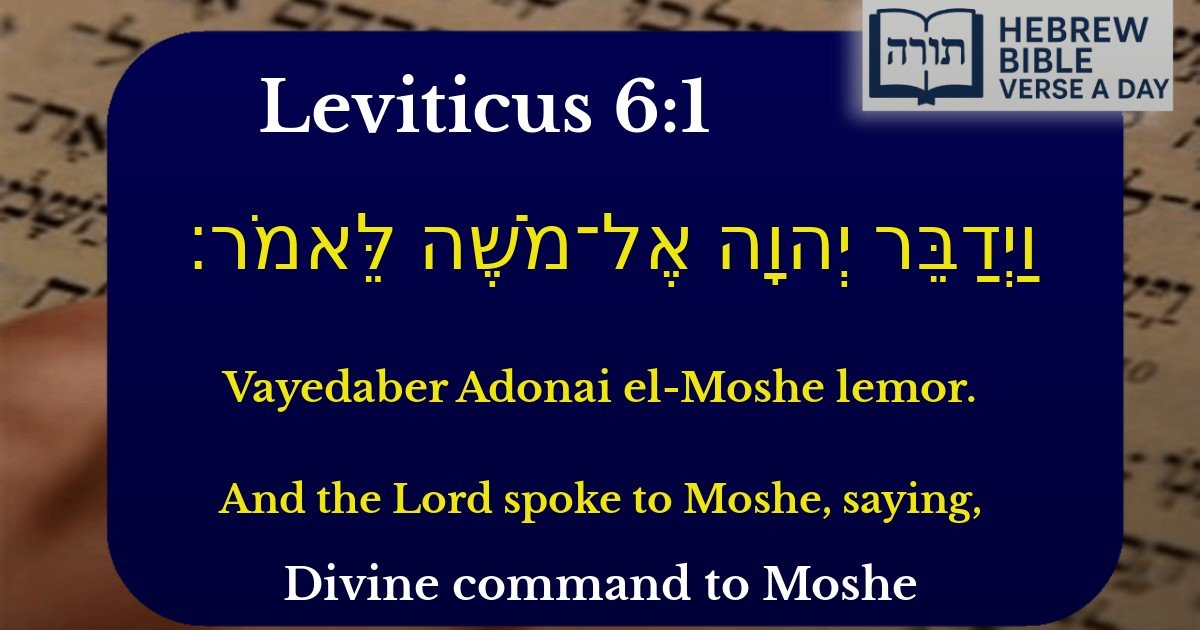
וַיְדַבֵּר יְהוָה אֶל־מֹשֶׁה לֵּאמֹר׃
English Translation
And the Lord spoke to Moshe, saying,
Transliteration
Vayedaber Adonai el-Moshe lemor.
Hebrew Leining Text
וַיְדַבֵּ֥ר יְהֹוָ֖ה אֶל־מֹשֶׁ֥ה לֵּאמֹֽר׃
🎵 Listen to leining
Parasha Commentary
📚 Talmud Citations
This verse is not quoted in the Talmud.
The Divine Communication to Moshe
The phrase "וַיְדַבֵּר יְהוָה אֶל־מֹשֶׁה לֵּאמֹר" ("And the Lord spoke to Moshe, saying") appears frequently in the Torah, marking the transmission of divine commandments and teachings. Rashi (Shemot 6:2) explains that this expression signifies a clear and direct communication from Hashem to Moshe, often introducing mitzvot or prophetic messages intended for Bnei Yisrael.
The Significance of "Dibbur" (Speaking)
Rambam (Hilchos Yesodei HaTorah 7:6) emphasizes that Moshe's prophecy was unique in that he received divine communication in a state of complete wakefulness, unlike other prophets who experienced visions or dreams. The term "וַיְדַבֵּר" (spoke) underscores the clarity and immediacy of this revelation.
The Role of "Lemor" (Saying)
The word "לֵּאמֹר" ("saying") indicates that Moshe was to transmit the message to others, typically to Bnei Yisrael or Aharon. The Talmud (Yoma 4b) derives from this that Moshe faithfully relayed Hashem's words without alteration.