

Join Our Newsletter To Be Informed When New Videos Are Posted
Hebrew Text
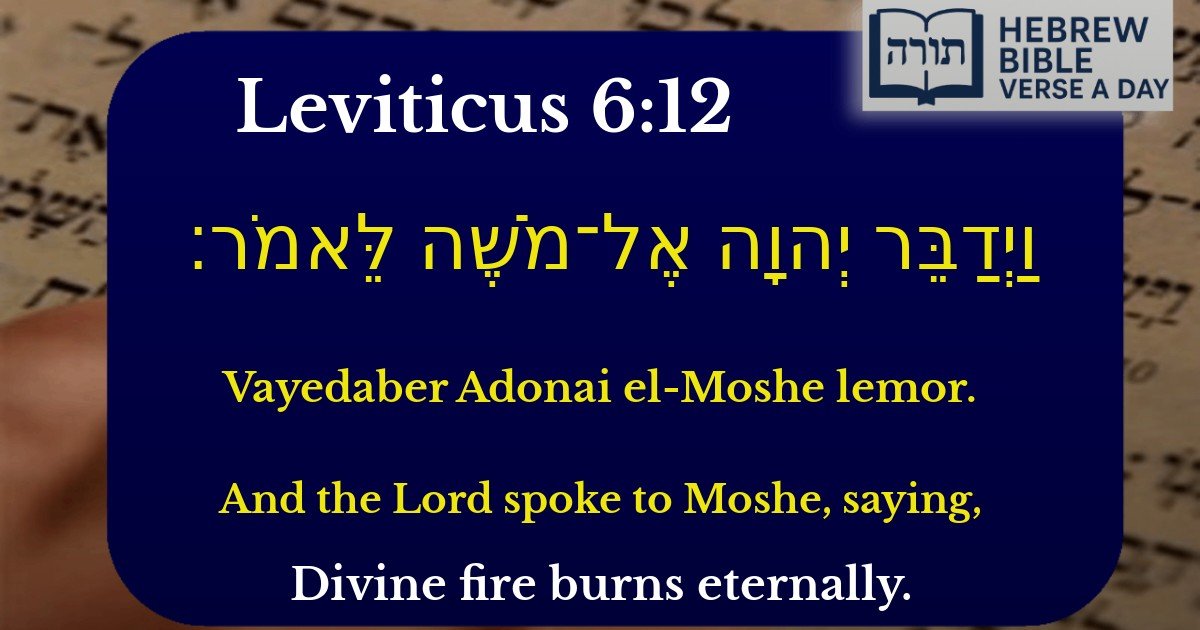
וַיְדַבֵּר יְהוָה אֶל־מֹשֶׁה לֵּאמֹר׃
English Translation
And the Lord spoke to Moshe, saying,
Transliteration
Vayedaber Adonai el-Moshe lemor.
Hebrew Leining Text
וַיְדַבֵּ֥ר יְהֹוָ֖ה אֶל־מֹשֶׁ֥ה לֵּאמֹֽר׃
🎵 Listen to leining
Parasha Commentary
📚 Talmud Citations
This verse is not quoted in the Talmud.
Understanding the Phrase "וַיְדַבֵּר יְהוָה אֶל־מֹשֶׁה לֵּאמֹר"
This verse, which appears frequently in the Torah, introduces divine communication between Hashem and Moshe Rabbeinu. The phrase "וַיְדַבֵּר יְהוָה אֶל־מֹשֶׁה לֵּאמֹר" ("And the Lord spoke to Moshe, saying") serves as a foundational formula for conveying mitzvot and divine instruction.
Rashi's Commentary on the Phrase
Rashi (on Shemot 6:2) explains that the term "וַיְדַבֵּר" ("and He spoke") indicates a strong and clear communication, often used for commandments that are to be transmitted with urgency or severity. The addition of "לֵּאמֹר" ("saying") implies that Moshe was to relay these words to Bnei Yisrael, emphasizing his role as the intermediary.
Rambam's Perspective on Divine Communication
In Moreh Nevuchim (1:65), Rambam discusses the nature of divine speech, clarifying that when the Torah states "וַיְדַבֵּר יְהוָה," it refers to a form of communication unique to prophecy, which Moshe experienced at the highest level (as described in Bamidbar 12:6-8). Unlike other prophets, Moshe received divine words clearly and directly, without allegory or dream-like states.
Midrashic Insights
The Midrash (Shemot Rabbah 28:6) highlights the significance of Moshe being the recipient of divine speech, noting that this phrase underscores his unique status as the greatest of all prophets. The Midrash contrasts this with other prophets, who often received visions or parables, whereas Moshe heard Hashem's words with absolute clarity.
Key Themes in Traditional Interpretation