

Join Our Newsletter To Be Informed When New Videos Are Posted
Hebrew Text
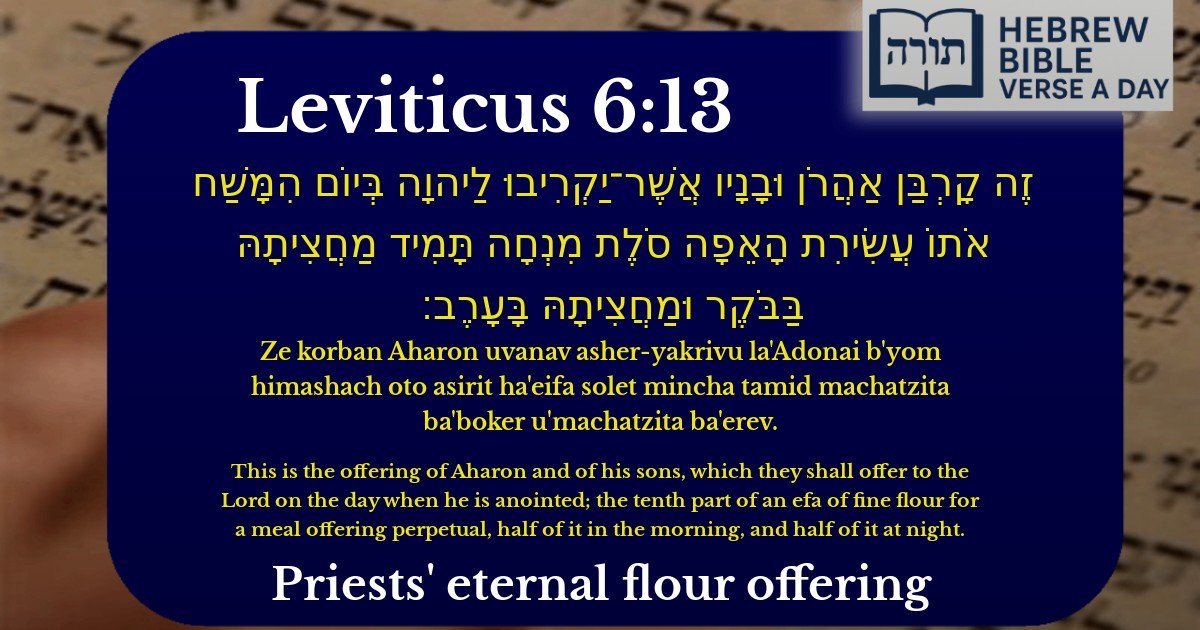
זֶה קָרְבַּן אַהֲרֹן וּבָנָיו אֲשֶׁר־יַקְרִיבוּ לַיהוָה בְּיוֹם הִמָּשַׁח אֹתוֹ עֲשִׂירִת הָאֵפָה סֹלֶת מִנְחָה תָּמִיד מַחֲצִיתָהּ בַּבֹּקֶר וּמַחֲצִיתָהּ בָּעָרֶב׃
English Translation
This is the offering of Aharon and of his sons, which they shall offer to the Lord on the day when he is anointed; the tenth part of an efa of fine flour for a meal offering perpetual, half of it in the morning, and half of it at night.
Transliteration
Ze korban Aharon uvanav asher-yakrivu la'Adonai b'yom himashach oto asirit ha'eifa solet mincha tamid machatzita ba'boker u'machatzita ba'erev.
Hebrew Leining Text
זֶ֡ה קׇרְבַּן֩ אַהֲרֹ֨ן וּבָנָ֜יו אֲשֶׁר־יַקְרִ֣יבוּ לַֽיהֹוָ֗ה בְּיוֹם֙ הִמָּשַׁ֣ח אֹת֔וֹ עֲשִׂירִ֨ת הָאֵפָ֥ה סֹ֛לֶת מִנְחָ֖ה תָּמִ֑יד מַחֲצִיתָ֣הּ בַּבֹּ֔קֶר וּמַחֲצִיתָ֖הּ בָּעָֽרֶב׃
🎵 Listen to leining
Parasha Commentary
📚 Talmud Citations
This verse is quoted in the Talmud.
📖 Menachot 51a
The verse is discussed in the context of the meal offering of Aaron and his sons, particularly regarding the quantity and timing of the offering.
📖 Yoma 14a
The verse is referenced in a discussion about the priestly offerings and the procedures for the anointment day.
The Minchat Chinuch Offering
The verse describes the special meal offering (mincha) brought by Aharon and his sons upon their inauguration as Kohanim. Rashi (Vayikra 6:13) explains that this offering was brought daily, half in the morning and half in the evening, symbolizing the perpetual service of the Kohanim in the Mishkan and later the Beit HaMikdash.
Quantity and Significance
The offering consisted of a tenth of an efa (approximately 2.2 liters) of fine flour. The Rambam (Hilchot Ma'aseh HaKorbanot 13:3) notes that this measurement teaches precision in divine service, as even small details in avodat Hashem are significant. The Talmud (Menachot 50b) further discusses how this amount was consistent for both high-ranking and ordinary Kohanim, demonstrating equality before Hashem.
Daily Division
The division into morning and evening portions reflects the continuous nature of the priestly service. The Midrash (Sifra Tzav 1:13) connects this to the perpetual fire on the altar (Vayikra 6:6), teaching that our devotion to Hashem must be constant, like the eternal flame.
Symbolism of the Mincha
The flour offering, as opposed to animal sacrifices, represents the basic sustenance of life. The Or HaChaim (Vayikra 6:13) explains that this teaches that even our most mundane activities should be elevated to divine service. The fact that it was brought specifically at the time of anointing (b'yom himshach oto) shows that leadership requires humility and simple devotion alongside grandeur.