Frequently Asked Questions
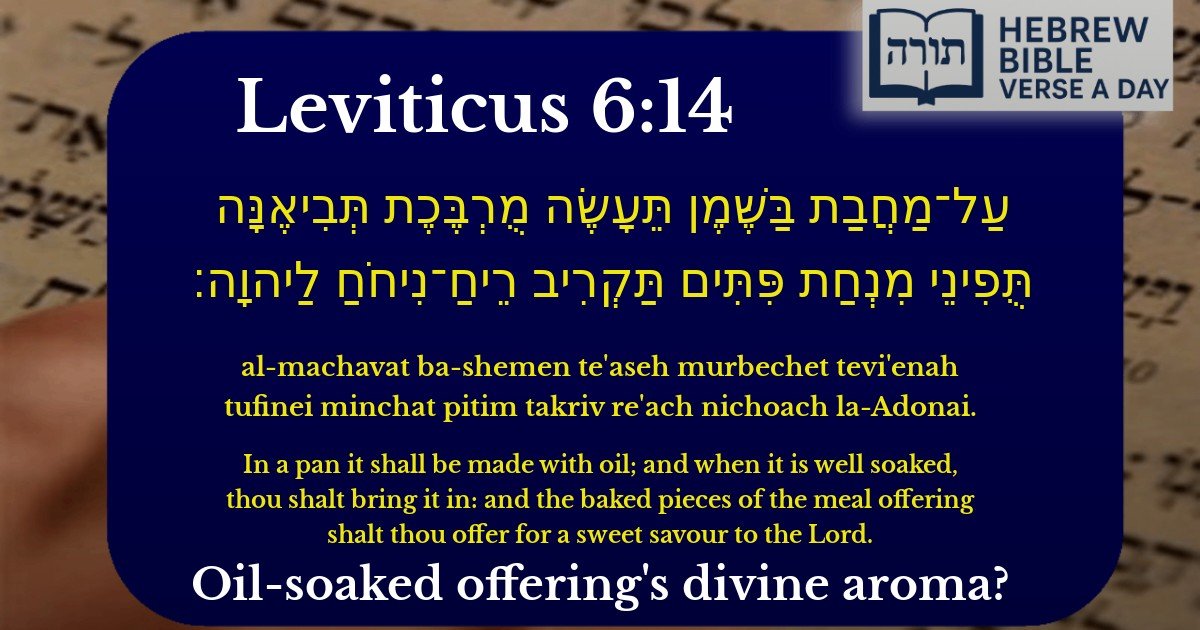
Q: What does Leviticus 6:14 teach about the meal offering (mincha)?
A: Leviticus 6:14 describes the preparation of the 'mincha' (meal offering) in a pan with oil, baked until well-soaked, and then brought as an offering to Hashem. According to Rashi, this verse specifies the method of preparing the 'mincha' that is brought by a Kohen (priest) as part of his daily service. The Torah emphasizes that it must be made carefully to produce a 'rei'ach nichoach' (pleasing aroma) for Hashem.
Q: Why is oil used in the meal offering (mincha)?
A: Oil represents richness and quality in Jewish tradition. The Rambam explains that using oil in the mincha offering symbolizes dedicating the best of our possessions to Hashem. Just as oil rises above other liquids, our service to Hashem should be elevated and sincere. The Talmud (Menachot 86a) also discusses the importance of properly mixing the oil with the flour to fulfill the mitzvah correctly.
Q: What is the significance of the 'rei'ach nichoach' (pleasing aroma) mentioned in this verse?
A: The term 'rei'ach nichoach' appears frequently in the Torah regarding offerings. Rashi explains that this expression means the offering is pleasing to Hashem when brought with proper intentions. The Midrash (Vayikra Rabbah 3:2) teaches that it's not the physical smell that matters, but rather the 'fragrance' of a Jew fulfilling Hashem's will with devotion.
Q: How does this verse about the meal offering apply to us today without the Temple?
A: While we cannot bring physical offerings today, the Talmud (Berachot 26b) teaches that prayer replaced the sacrifices. The mincha offering in particular corresponds to the afternoon prayer (Mincha). Additionally, the concept of dedicating our best efforts to Hashem applies always - whether through Torah study, acts of kindness, or refining our character, as the Rambam discusses in Hilchos Dei'os.
Q: Why does the Torah specify baking the mincha in a pan?
A: The pan (machavas) preparation is one of several ways to prepare a mincha offering. Rashi notes that this method creates a different texture than other preparations (like the oven-baked mincha). The Talmud (Menachot 63a) discusses how each preparation method produces distinct halachic results, teaching us that there are multiple proper ways to serve Hashem, each with its own significance and beauty.


Context in Vayikra (Leviticus)
The verse (Vayikra 2:7) describes the preparation of the minchat maḥavat, a type of meal offering brought in the Mishkan and later the Beit HaMikdash. This offering is distinct from other meal offerings due to its method of preparation—being fried on a flat pan (maḥavat) with oil.
Rashi's Explanation
Rashi (Vayikra 2:7) clarifies that "מֻרְבֶּכֶת" (well soaked) means the dough must be thoroughly mixed with oil before frying, ensuring it is fully saturated. He emphasizes that this step is crucial for the offering to be valid (kasher). Additionally, Rashi notes that the term "תֻּפִינֵי" (baked pieces) refers to breaking the offering into small pieces after frying, as required for this type of mincha.
Rambam's Halachic Perspective
In Hilchot Ma'aseh HaKorbanot (13:5), the Rambam codifies the laws of this offering, stating that the oil must be mixed into the flour before frying, and the frying must be done in a flat pan (maḥavat). He further rules that the offering must be broken into pieces before being brought to the Mizbe'ach (altar).
Symbolism and Midrashic Insights
The Midrash (Torat Kohanim) connects the preparation of this offering to the refinement of human character. Just as the flour is carefully mixed with oil and fried to perfection, a person must refine their deeds with sincerity (lev tov) to be pleasing before Hashem. The rei'ach nichoach (sweet savor) represents Divine acceptance when mitzvot are performed with proper intent.
Practical Halachic Details