

Join Our Newsletter To Be Informed When New Videos Are Posted
Hebrew Text
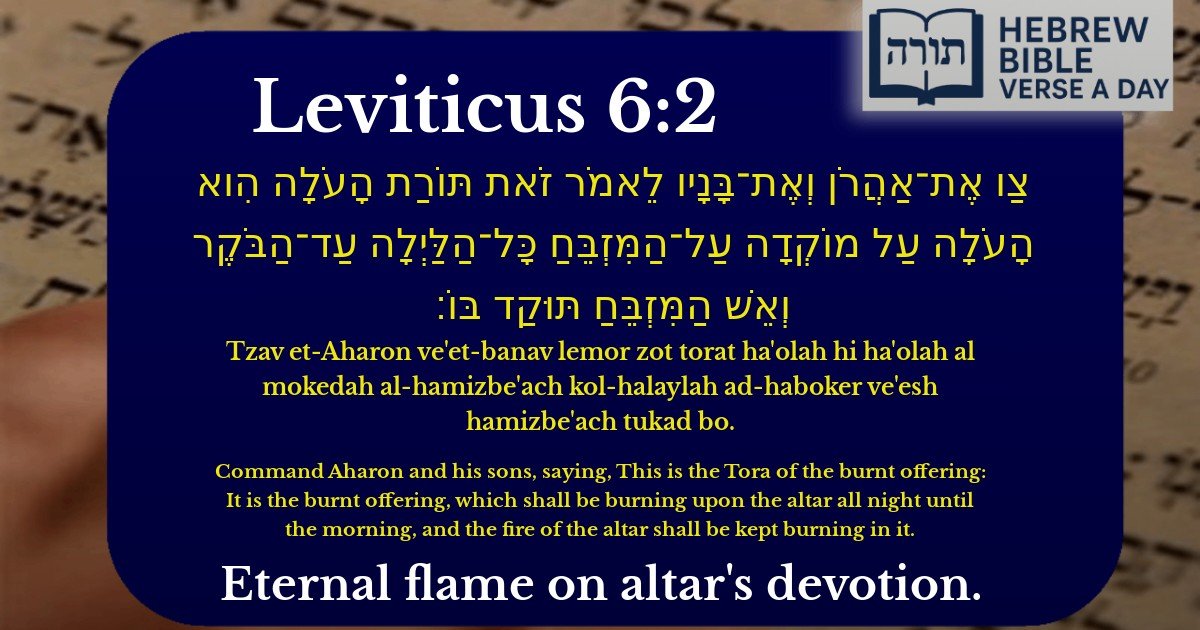
צַו אֶת־אַהֲרֹן וְאֶת־בָּנָיו לֵאמֹר זֹאת תּוֹרַת הָעֹלָה הִוא הָעֹלָה עַל מוֹקְדָה עַל־הַמִּזְבֵּחַ כָּל־הַלַּיְלָה עַד־הַבֹּקֶר וְאֵשׁ הַמִּזְבֵּחַ תּוּקַד בּוֹ׃
English Translation
Command Aharon and his sons, saying, This is the Tora of the burnt offering: It is the burnt offering, which shall be burning upon the altar all night until the morning, and the fire of the altar shall be kept burning in it.
Transliteration
Tzav et-Aharon ve'et-banav lemor zot torat ha'olah hi ha'olah al mokedah al-hamizbe'ach kol-halaylah ad-haboker ve'esh hamizbe'ach tukad bo.
Hebrew Leining Text
צַ֤ו אֶֽת־אַהֲרֹן֙ וְאֶת־בָּנָ֣יו לֵאמֹ֔ר זֹ֥את תּוֹרַ֖ת הָעֹלָ֑ה הִ֣וא הָעֹלָ֡ה עַל֩ מוֹקְדָ֨הֿ*(בספרי תימן מוֹקְדָ֨הֿ במ״ם רגילה) עַל־הַמִּזְבֵּ֤חַ כׇּל־הַלַּ֙יְלָה֙ עַד־הַבֹּ֔קֶר וְאֵ֥שׁ הַמִּזְבֵּ֖חַ תּ֥וּקַד בּֽוֹ׃
🎵 Listen to leining
Parasha Commentary
📚 Talmud Citations
This verse is quoted in the Talmud.
📖 Yoma 45a
The verse is referenced in the discussion about the laws of the burnt offering and the perpetual fire on the altar.
📖 Zevachim 59b
The verse is cited in the context of discussing the proper procedures for sacrifices and the maintenance of the altar fire.
The Command to Aharon and His Sons
The verse begins with the directive "צַו אֶת־אַהֲרֹן וְאֶת־בָּנָיו" ("Command Aharon and his sons"), emphasizing the unique role of the Kohanim in the sacrificial service. Rashi (Vayikra 6:2) notes that the term "צַו" (command) implies urgency and continuity, indicating that this mitzvah must be performed diligently and without delay. The Kohanim are entrusted with maintaining the sanctity of the Korban Olah (burnt offering), which is entirely consumed by the fire of the Mizbe'ach (altar).
The Nature of the Korban Olah
The verse describes "זֹאת תּוֹרַת הָעֹלָה" ("This is the Tora of the burnt offering"). The term "תּוֹרַת" (Tora) suggests a set of laws and principles governing the offering. Rambam (Hilchos Ma'aseh HaKorbanos 9:1) explains that the Olah differs from other sacrifices in that it is wholly dedicated to Hashem, with no portion consumed by humans. This total devotion symbolizes complete submission to the Divine will.
The Perpetual Fire on the Mizbe'ach
The verse states "עַל מוֹקְדָה עַל־הַמִּזְבֵּחַ כָּל־הַלַּיְלָה עַד־הַבֹּקֶר" ("burning upon the altar all night until the morning"). The Talmud (Yoma 45a) teaches that the fire of the Mizbe'ach must never be extinguished, as it represents the eternal bond between Hashem and Klal Yisrael. The Midrash (Vayikra Rabbah 7:3) compares this fire to the flame of Torah, which must continuously illuminate our lives.
Symbolism of the Olah
The Olah is unique in that it is entirely consumed by fire, ascending ("עֹלָה") to Heaven. The Sforno (Vayikra 1:3) teaches that this represents the total dedication of one's physical and spiritual faculties to Hashem. The offering remains on the altar all night, symbolizing the need for continuous devotion, even in times of darkness or challenge.