

Join Our Newsletter To Be Informed When New Videos Are Posted
Hebrew Text
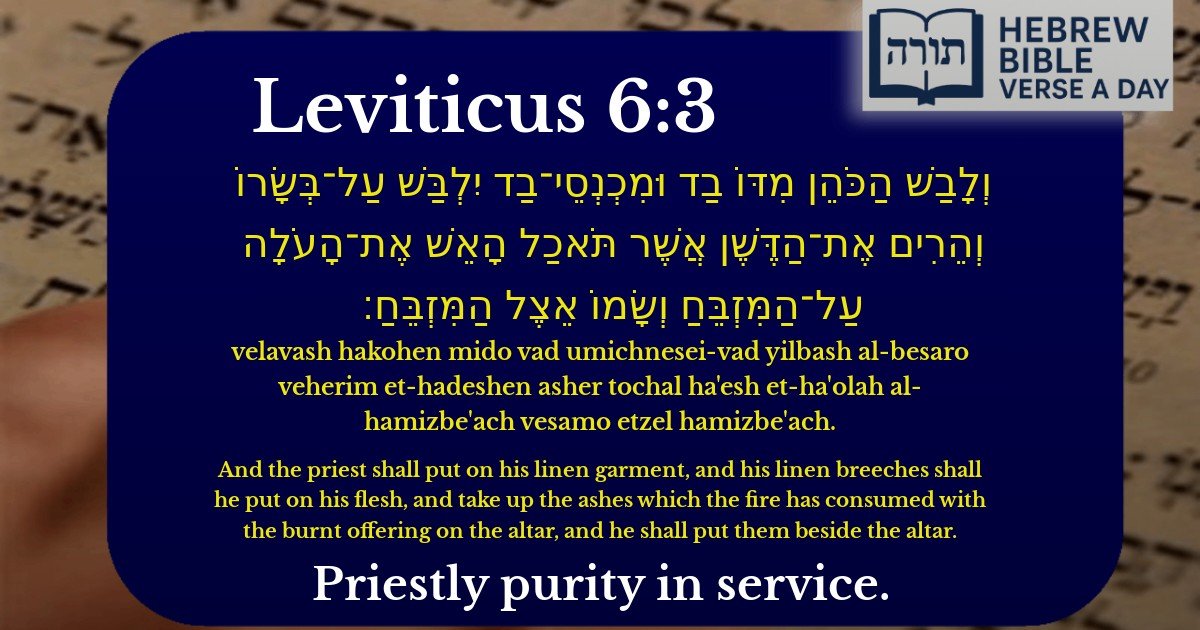
וְלָבַשׁ הַכֹּהֵן מִדּוֹ בַד וּמִכְנְסֵי־בַד יִלְבַּשׁ עַל־בְּשָׂרוֹ וְהֵרִים אֶת־הַדֶּשֶׁן אֲשֶׁר תֹּאכַל הָאֵשׁ אֶת־הָעֹלָה עַל־הַמִּזְבֵּחַ וְשָׂמוֹ אֵצֶל הַמִּזְבֵּחַ׃
English Translation
And the priest shall put on his linen garment, and his linen breeches shall he put on his flesh, and take up the ashes which the fire has consumed with the burnt offering on the altar, and he shall put them beside the altar.
Transliteration
Velavash hakohen mido vad umichnesei-vad yilbash al-besaro veherim et-hadeshen asher tochal ha'esh et-ha'olah al-hamizbe'ach vesamo etzel hamizbe'ach.
Hebrew Leining Text
וְלָבַ֨שׁ הַכֹּהֵ֜ן מִדּ֣וֹ בַ֗ד וּמִֽכְנְסֵי־בַד֮ יִלְבַּ֣שׁ עַל־בְּשָׂרוֹ֒ וְהֵרִ֣ים אֶת־הַדֶּ֗שֶׁן אֲשֶׁ֨ר תֹּאכַ֥ל הָאֵ֛שׁ אֶת־הָעֹלָ֖ה עַל־הַמִּזְבֵּ֑חַ וְשָׂמ֕וֹ אֵ֖צֶל הַמִּזְבֵּֽחַ׃
🎵 Listen to leining
Parasha Commentary
📚 Talmud Citations
This verse is quoted in the Talmud.
📖 Yoma 23b
The verse is referenced in the discussion about the priestly garments and the service of removing the ashes from the altar.
📖 Zevachim 19b
The verse is cited in the context of laws pertaining to the priestly garments and the proper conduct of sacrificial services.
The Priestly Garments for Removing Ashes
The verse (Vayikra 6:3) describes the procedure for the Kohen when removing ashes (terumat hadeshen) from the altar. Rashi explains that this refers to the daily removal of ashes, which was performed in the morning by a Kohen wearing special linen garments. The Torah emphasizes that these garments must be made of bad (linen), as opposed to the more elaborate bigdei kehunah worn for other services.
Significance of Linen Garments
Rambam (Hilchot Klei Hamikdash 8:2) notes that these linen garments were simpler than the regular priestly vestments, as this was a menial task. The Talmud (Yoma 23b) teaches that humility is required when performing this service, as it involves handling the remnants of the offerings. The linen (bad) garments symbolize purity and simplicity, appropriate for this act of service.
The Procedure of Removing Ashes
Spiritual Lessons
The Midrash (Vayikra Rabbah 7:3) connects this mitzvah to humility—even the most elevated individuals (the Kohanim) must perform seemingly lowly tasks in service of Hashem. Additionally, the removal of ashes teaches that one must "clear away" the old to make room for new spiritual growth, just as the altar was prepared each day for new offerings.