

Join Our Newsletter To Be Informed When New Videos Are Posted
Hebrew Text
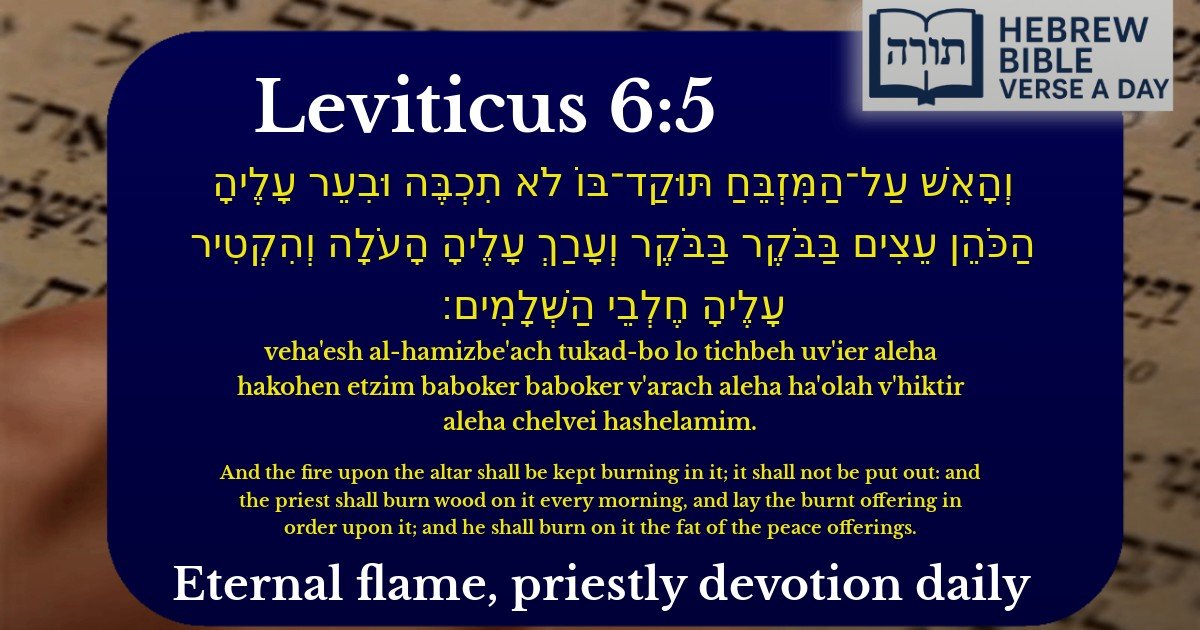
וְהָאֵשׁ עַל־הַמִּזְבֵּחַ תּוּקַד־בּוֹ לֹא תִכְבֶּה וּבִעֵר עָלֶיהָ הַכֹּהֵן עֵצִים בַּבֹּקֶר בַּבֹּקֶר וְעָרַךְ עָלֶיהָ הָעֹלָה וְהִקְטִיר עָלֶיהָ חֶלְבֵי הַשְּׁלָמִים׃
English Translation
And the fire upon the altar shall be kept burning in it; it shall not be put out: and the priest shall burn wood on it every morning, and lay the burnt offering in order upon it; and he shall burn on it the fat of the peace offerings.
Transliteration
Veha'esh al-hamizbe'ach tukad-bo lo tichbeh uv'ier aleha hakohen etzim baboker baboker v'arach aleha ha'olah v'hiktir aleha chelvei hashelamim.
Hebrew Leining Text
וְהָאֵ֨שׁ עַל־הַמִּזְבֵּ֤חַ תּֽוּקַד־בּוֹ֙ לֹ֣א תִכְבֶּ֔ה וּבִעֵ֨ר עָלֶ֧יהָ הַכֹּהֵ֛ן עֵצִ֖ים בַּבֹּ֣קֶר בַּבֹּ֑קֶר וְעָרַ֤ךְ עָלֶ֙יהָ֙ הָֽעֹלָ֔ה וְהִקְטִ֥יר עָלֶ֖יהָ חֶלְבֵ֥י הַשְּׁלָמִֽים׃
🎵 Listen to leining
Parasha Commentary
📚 Talmud Citations
This verse is quoted in the Talmud.
📖 Yoma 45a
The verse is referenced in the discussion about the perpetual fire on the altar and the duties of the priests in maintaining it.
📖 Tamid 27b
The verse is cited in the context of the daily service in the Temple, particularly regarding the burning of the offerings and the maintenance of the altar fire.
The Eternal Flame on the Altar
The verse (Vayikra 6:5) commands that the fire on the Mizbe'ach (altar) must burn continuously and never be extinguished. Rashi explains that this refers to the "Aish Tamid" (eternal fire), which was one of the primary responsibilities of the Kohanim in the Beit HaMikdash. Even when no korbanot (offerings) were being brought, the fire had to be maintained.
Daily Wood Arrangement
The instruction for the Kohen to add wood "ba'boker ba'boker" (every morning) teaches, as the Rambam writes in Hilchot Temidin u'Musafin (2:1), that arranging the wood was part of the daily Avodah (Temple service). The Talmud (Yoma 27b) states that this mitzvah took precedence even on Shabbat and Yom Kippur.
Order of the Service
Symbolic Meaning
The Kli Yakar teaches that the eternal flame represents the continuous relationship between Hashem and Klal Yisrael. Just as the fire never extinguishes, so too does the divine connection remain constant. The daily renewal of the wood symbolizes our obligation to constantly renew our avodat Hashem with fresh enthusiasm.
Halachic Implications
The Sefer HaChinuch (Mitzvah 132) derives from this verse the prohibition against allowing the fire to extinguish. The Ramban adds that this mitzvah applies even when the Beit HaMikdash is not standing, preparing us for its future rebuilding.