
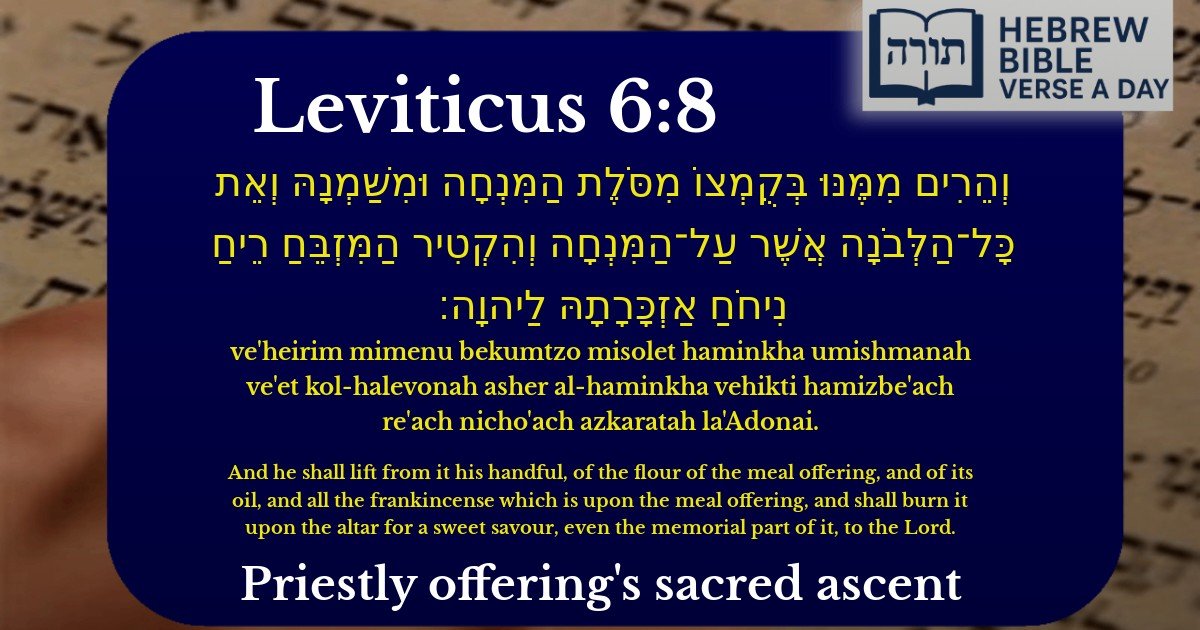

Leviticus 6:8 - Priestly offering's sacred ascent

Leviticus 6:8 - ויקרא 6:8

Hebrew Text

וְהֵרִים מִמֶּנּוּ בְּקֻמְצוֹ מִסֹּלֶת הַמִּנְחָה וּמִשַּׁמְנָהּ וְאֵת כָּל־הַלְּבֹנָה אֲשֶׁר עַל־הַמִּנְחָה וְהִקְטִיר הַמִּזְבֵּחַ רֵיחַ נִיחֹחַ אַזְכָּרָתָהּ לַיהוָה׃

English Translation

And he shall lift from it his handful, of the flour of the meal offering, and of its oil, and all the frankincense which is upon the meal offering, and shall burn it upon the altar for a sweet savour, even the memorial part of it, to the Lord.

Transliteration

Ve'heirim mimenu bekumtzo misolet haminkha umishmanah ve'et kol-halevonah asher al-haminkha vehikti hamizbe'ach re'ach nicho'ach azkaratah la'Adonai.

Hebrew Leining Text

וְהֵרִ֨ים מִמֶּ֜נּוּ בְּקֻמְצ֗וֹ מִסֹּ֤לֶת הַמִּנְחָה֙ וּמִשַּׁמְנָ֔הּ וְאֵת֙ כׇּל־הַלְּבֹנָ֔ה אֲשֶׁ֖ר עַל־הַמִּנְחָ֑ה וְהִקְטִ֣יר הַמִּזְבֵּ֗חַ רֵ֧יחַ נִיחֹ֛חַ אַזְכָּרָתָ֖הּ לַיהֹוָֽה׃

🎵 Listen to leining

Parasha Commentary

Overview of the Verse

The verse (Vayikra 2:2) describes the procedure for offering the mincha (meal offering) in the Beit HaMikdash. The Kohen takes a handful (kometz) of the flour, oil, and frankincense, and burns it on the altar as a "sweet savor" (rei'ach nichoach) and a "memorial portion" (azkaratah) to Hashem.

Explanation of Key Terms

  • בְּקֻמְצוֹ (Bekumtzo) – "His Handful": Rashi explains that the Kohen uses his right hand to take a handful of the mincha, specifically with three fingers, as derived from the Talmud (Menachot 11a). This precision ensures the mitzvah is performed correctly.
  • מִסֹּלֶת הַמִּנְחָה (Misolet HaMincha) – "The Flour of the Meal Offering": The mincha was made from fine wheat flour, symbolizing humility, as flour is ground and refined (Rambam, Moreh Nevuchim 3:46).
  • רֵיחַ נִיחֹחַ (Rei'ach Nichoach) – "A Sweet Savor": The Sforno teaches that this phrase indicates divine acceptance, as the offering ascends in a manner pleasing to Hashem.
  • אַזְכָּרָתָהּ (Azkaratah) – "Its Memorial": The Midrash (Vayikra Rabbah 3:2) explains that this portion serves as a remembrance before Hashem, invoking merit for the one bringing the offering.

Symbolism of the Mincha Offering

The mincha represents the dedication of one's material possessions to Hashem. Unlike animal offerings, which signify life, the mincha (a non-living offering) underscores the sanctification of mundane resources—flour, oil, and incense—for divine service (Ramban on Vayikra 2:1). The frankincense (levonah) adds fragrance, alluding to the spiritual elevation of physical deeds (Talmud, Keritot 6b).

Halachic Insights

  • The kometz must be taken precisely, as any deviation invalidates the offering (Mishnah, Menachot 1:2).
  • The oil and frankincense are integral; omitting either renders the mincha unfit (Rashi on Vayikra 2:1).
  • The burning of the memorial portion parallels the emurim (fat portions) of animal sacrifices, symbolizing total devotion (Rambam, Hilchot Ma'aseh HaKorbanot 9:6).

📚 Talmud Citations

This verse is quoted in the Talmud.

📖 Menachot 11a
The verse is discussed in the context of the proper procedure for the meal offering, specifically regarding the priest's action of lifting a handful (kometz) from the offering.
📖 Zevachim 47b
The verse is referenced in a discussion about the laws of sacrifices, particularly concerning the burning of the memorial portion (azkarah) on the altar.

Frequently Asked Questions

Q: What is the meaning of the 'meal offering' (mincha) mentioned in Leviticus 6:8?
A: The 'meal offering' (mincha) is one of the sacrifices described in the Torah, made from fine flour, oil, and frankincense. Unlike animal offerings, it is vegetarian and represents gratitude and devotion to Hashem. Rashi explains that the mincha is often brought by those who cannot afford animal sacrifices, showing that sincere worship is accessible to all.
Q: Why does the verse mention burning a 'handful' of the meal offering?
A: The Kohen (priest) takes a 'handful' (kometz) of the flour mixture to burn on the altar, symbolizing the portion dedicated to Hashem. The Talmud (Menachot 11a) teaches that this act represents giving our best to Hashem, even from modest offerings. The rest of the mincha is eaten by the Kohanim, showing a balance between divine service and sustaining those who serve.
Q: What is the significance of the 'sweet savour' (rei'ach nichoach) in this verse?
A: The phrase 'sweet savour' (rei'ach nichoach) means that the offering is pleasing to Hashem when given with the right intentions. Rambam (Hilchot Ma'aseh HaKorbanot) explains that sacrifices are not for Hashem's 'need' but for our spiritual refinement. The pleasant smell symbolizes sincere repentance and devotion.
Q: How does the frankincense (levonah) relate to the meal offering?
A: Frankincense (levonah) is a fragrant spice added to the meal offering, enhancing its aroma. The Midrash (Vayikra Rabbah 3:1) compares it to the righteous, whose good deeds 'rise' like a pleasing fragrance. Even a small amount of levonah—like small acts of kindness—can have a powerful spiritual impact.
Q: Can we apply the lessons of the meal offering today without the Temple?
A: Yes! While we cannot bring sacrifices today, the Talmud (Berachot 26b) teaches that prayer replaces sacrifices. The mincha reminds us to offer our gratitude and devotion daily. Additionally, acts of charity (tzedakah) and Torah study are considered 'offerings' in a spiritual sense, as Rambam writes in Hilchot Teshuvah.