

Join Our Newsletter To Be Informed When New Videos Are Posted
Hebrew Text
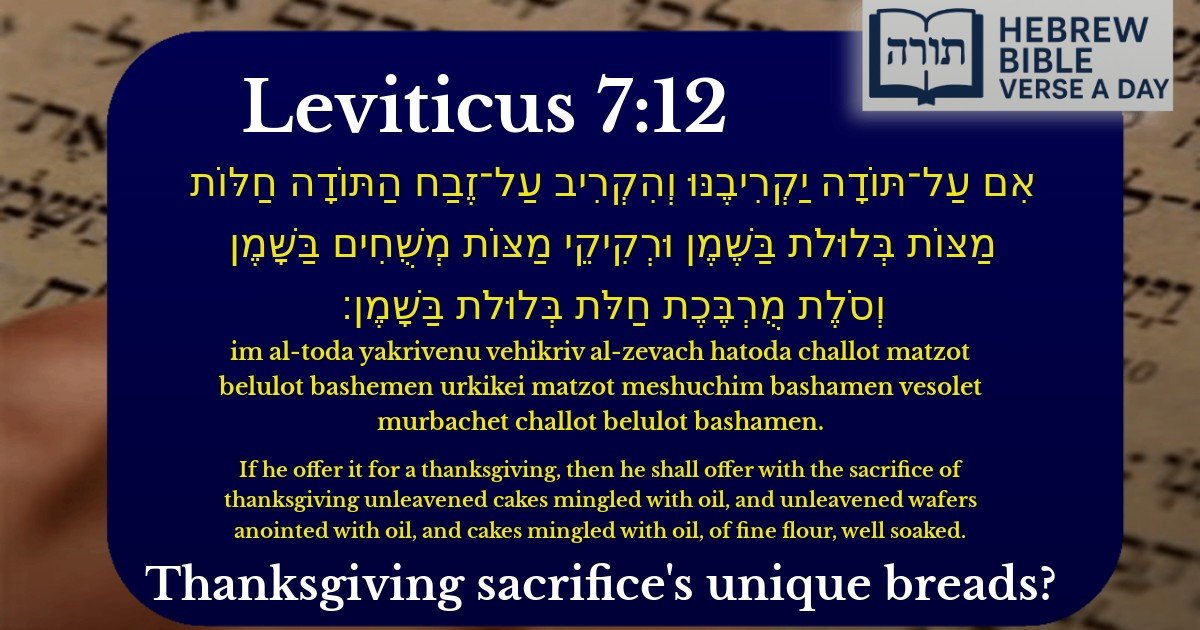
אִם עַל־תּוֹדָה יַקְרִיבֶנּוּ וְהִקְרִיב עַל־זֶבַח הַתּוֹדָה חַלּוֹת מַצּוֹת בְּלוּלֹת בַּשֶּׁמֶן וּרְקִיקֵי מַצּוֹת מְשֻׁחִים בַּשָּׁמֶן וְסֹלֶת מֻרְבֶּכֶת חַלֹּת בְּלוּלֹת בַּשָּׁמֶן׃
English Translation
If he offer it for a thanksgiving, then he shall offer with the sacrifice of thanksgiving unleavened cakes mingled with oil, and unleavened wafers anointed with oil, and cakes mingled with oil, of fine flour, well soaked.
Transliteration
Im al-toda yakrivenu vehikriv al-zevach hatoda challot matzot belulot bashemen urkikei matzot meshuchim bashamen vesolet murbachet challot belulot bashamen.
Hebrew Leining Text
אִ֣ם עַל־תּוֹדָה֮ יַקְרִיבֶ֒נּוּ֒ וְהִקְרִ֣יב ׀ עַל־זֶ֣בַח הַתּוֹדָ֗ה חַלּ֤וֹת מַצּוֹת֙ בְּלוּלֹ֣ת בַּשֶּׁ֔מֶן וּרְקִיקֵ֥י מַצּ֖וֹת מְשֻׁחִ֣ים בַּשָּׁ֑מֶן וְסֹ֣לֶת מֻרְבֶּ֔כֶת חַלֹּ֖ת בְּלוּלֹ֥ת בַּשָּֽׁמֶן׃
🎵 Listen to leining
Parasha Commentary
📚 Talmud Citations
This verse is quoted in the Talmud.
📖 Menachot 77b
The verse is discussed in the context of the laws regarding the thanksgiving offering and the types of bread offerings that accompany it.
📖 Zevachim 35b
The verse is referenced in a discussion about the proper procedures for sacrifices, particularly the thanksgiving offering.
Overview of the Thanksgiving Offering (Korban Todah)
The verse (Vayikra 7:12) details the requirements for the Korban Todah (thanksgiving offering), a type of shelamim (peace offering) brought to express gratitude to Hashem for deliverance from danger, such as recovery from illness or surviving a perilous journey (Rashi, based on Tehillim 107). Unlike other offerings, the Todah must be accompanied by a large quantity of bread—specifically, matzah (unleavened cakes) in three forms:
Symbolism of the Bread and Oil
The Ramban explains that the abundance of bread (40 loaves in total, as derived from the Talmud, Menachot 77a) symbolizes the overflowing gratitude one must feel when saved from distress. The use of matzah (unleavened bread) rather than chametz (leavened bread) teaches that thanksgiving must be immediate—just as matzah is prepared quickly, so too must our recognition of Hashem’s kindness be swift (Sifra). The oil represents richness and joy, indicating that gratitude should be expressed with a full heart.
Halachic Details from the Talmud
The Talmud (Menachot 76b-77a) elaborates on the preparation:
Connection to Future Redemption
The Midrash (Vayikra Rabbah 9:7) notes that in the future, all sacrifices will cease except for the Korban Todah, as gratitude will remain eternally relevant. This highlights the enduring importance of hakarat hatov (recognizing kindness), a foundational principle in Jewish thought (Rambam, Hilchot Berachot 1:1).